BUCK OWENS – Bridge Over Troubled Water – (Capitol) – 1971

If you don't know who Buck Owens is, you should. If, for no other reason than there are a number of significant rock links to his music, not least being the fact that The Beatles recorded his song "Act Naturally".
 
Owens, born 1929 in Texas (died: 2006), was in the right place at the right time in the right age group to be influenced by the increasing accessibility to all music in the post World War 2 period. Across the South young white boys were taking country music and fusing it with black music and creating rock 'n' roll. Buck, however, took the technology, the electric guitars, the emotional intensity and even the "spirit of rebellion" (as twee as that sounds) and fused that with the Texas honky tonk (already a rabble rousing music if there ever was one) and brought a edge to country music that hadn't existed since Hank Williams' death in 1953.
 
He and like minded others could do that as they were relatively isolated from the (frowns of the) country music establishment.
 
Owens had settled in Bakersfield, California in 1950 and started playing music in bars. Many others from west Texas and the dustbowl areas settled there also and they all shared a love of the hard country of their youth and played music in that style. Being isolated also meant they could incorporate other influences into their music that the country music establishment would have looked down on … especially the rock 'n' roll that was increasing in popularity. Eventually there was quite a large group of musicians playing in that style in and around Bakersfield and when that started translating into hits the "Bakersfield Sound" was born. Buck Owens and Merle Haggard are the most well known exponents of the sound though Dave Dudley, Hank Thompson and Wynn Stewart all loom large also.
 
Even more importantly, the Bakersfield sound was the direct precursor to country rock. When Gram Parsons and others started experimenting in incorporating country into rock it had already been done by Owens though in reverse – he incorporated rock into country. Incidentally, Elvis, Charlie Feathers and others had predated Gram with the "experiment" by some ten years or so but no one noticed.
 
The influence of the Bakersfield sound of which Owens was central has been substantial on Gram Parson, The Flying Burrito Brothers, Dwight Yoakam, Dave Alvin, The Derailers, Dale Watson, The Mavericks, Brad Paisley, Dave Gleason and many others as well as on the "alt country" and "cow punk" genres.
 
Allmusic: "Buck Owens, along with Merle Haggard, was the leader of the Bakersfield sound, a twangy, electricified, rock-influenced interpretation of hardcore honky tonk that emerged in the '60s. Owens was the first bona fide country star to emerge from Bakersfield, scoring a total of 15 consecutive number one hits in the mid-'60s. In the process, he provided an edgy alternative to the string-laden country-pop that was being produced during the '60s. Later in his career, his musical impact was forgotten by some as he became a television personality through the country comedy show Hee Haw. Nevertheless, several generations of musicians — from Gram Parsons in the late '60s to Dwight Yoakam in the '80s — were influenced by his music, which wound up being one of the blueprints for modern country music".
 
Having said all that, this album comes at mid-point in Owens career and the electric honky tonk is toned down. The album is made up of ballads and mid-tempo songs and there are backing voices and various instrumental incidentals around the edges that smooth out some of those edges. On top of that Buck has covered three Paul Simon songs, a Dylan and a Donovan. As a result of all this the album moves closer to the country pop sound popular at the time, but, regardless, it does not sound like anything coming out of Nashville. The regional accents are alive and well and even the most maudlin of tracks have a crisp little bite to them. So, there is no mistaking that this is anything but regional country music.
 
It would be easy to suggest that Buck is cashing in with the covers, and maybe he was but a man has to eat. In his defence, given his attitude to music and his interpretations of these songs, I would think that this is a genuine effort. He has made his covers interesting and even the old war horse "Bridge Over Troubled Water" sounds fresh. His own songs on this album are as good also. Most noticeably, there is an underlying sadness, or perhaps thoughtful regret that runs across the album. Though maybe that is explainable – after all it was 1971 … Nixon was in power, Vietnam was raging, prison riots, rising inflation, the first wide scale obvious effects of environmental pollution were being publicized etc … the optimism of the 60s was over. 
 
This is around his 45th album in 12 years so he was no slouch … and it should be noted that music was his job not his "art".
 
Songs (best in italics)
  • Bridge over Troubled Water – Simon – #9 on the country US charts. It's not easy to get something original out of this song which is up there with "Yesterday" and "Blowing in the Wind" as one of the most recorded tunes but Buck makes a memorable version. Well sung with tasteful use of backing vocals, country style.
  • Within My Loving Arms – Owens –  a good original with the usual country sentiment
  • (I'm Goin') Home – Clements, English – Susan Raye, also did a version of this in 1971 which was produced by Buck Owens, oddly.
  • The Devil Made Me Do That – Owens – an excellent song about drinking and regret … in other words a typical country song.
                        Got off work at five o'clock and started home to you
                        Running to an old acquaintance and we had one or two
                        And when I woke up this morning didn't know where I was at
                        My one excuse to offer you the devil made me do that
                        I only meant to say hello to an old memory
                        But when I tried to say goodbye he took a hold of me
                        And when he let go this morning didn't know where I was at
                        My one excuse to offer you the devil made me do that
                        The devil made me taste the wine and helped the glass abide
                        And like the blind man leads the blind I drank till the lid ran dry
                        And when I woke up this morning didn't know where I was at
                        My one excuse to offer you the devil made me do that
                        Oh when I got home this morning didn't know where you were at
                        My one excuse to offer you the devil made me do that
  • Catch the Wind  – Donovan – a excellent cover and a slightly different emphasis … and to my ear, as good as the Donovan original and possibly better because it doesn't have the slight hippie smugness of the Donovan version.
  • San Francisco Town – Owens – yet another San Francisco song – how many were written? This one is quite funny and sympathetic told from the point of view of a hippie hobo … as if Ray Davies went straight country.
  • Everything Reminds Me You're Gone – Owens –  a typical country ballad about a lost love …
  • Homeward Bound – Simon –  Simon's quiet folk ballad … here, really well sung and quite effective … and when sung by Buck it "becomes" a country song. Thematically the song ticks all the country bases anyway. An astute song choice.
  • Love Minus Zero – No Limit – Dylan – again, despite lyrics which are obscure and almost a stream of consciousness in Dylan fashion this comes across as if it was a country song. Oddly, Rick Nelson also covered the song on his country rock album "Rudy The Fifth", also from 1971.
  • I Am a Rock  – Simon – another astute take on well known song … with the crescendo of voices and jittery keyboards effective against the insistent backbeat. Not many country singers can get away with Simon's lines " I have my books and my poetry to protect me". A hoot.
And …
 
This may not be up with some of his other albums but this is still a great album … and could be great late night drinking (and lamenting) music.
 
Chart Action
 
The album went to #11 in US Country charts.It did not cross over.

Songs

The Devil Made Me Do That 
attached
 
Catch the Wind 
attached
 
Love Minus Zero – No Limit
attached 
 
Extra clips:
 
 
Buck doin' The Beatles
 
Review
 
 
Bio
 
 
Bakersfield Sound:
 
Website
 
 
Trivia
  • Buck Owens was born on August 12, 1929 in Sherman, Texas. His full name was Alvis Edgar Owens, Jr.
  • He recorded some rockabilly sides in 1957 as Corky Jones.
(originally posted: 22/11/2009)
Posted in Country | Tagged | Leave a comment

SLADE – The Amazing Kamikaze Syndrome – (RCA) – 1983

I've been dreading this.
 
I was never big on 1970s Slade, when they were at the peak of their powers, so I'm not sure how I wiould deal with Slade from 1983. I may be pleasantly surprised.
 
I was wrong.
 
This is loud, and not loud good. It's also none too original. Don't get me wrong I like loud music and I'm not looking for answers in music because that's what we have books for. But, I like things that make me tap my foot, make me reflect, or tickle my funny bone. This album doesn't do any of those things for me as it is paint by the numbers glam rock, updated to the 80s, by which time the genre was well and truly dead, or should have been. Hello punk.
 
I should say I have nothing against glam – I have bits and pieces of The Sweet, Mott the Hoople, Alex Harvey, T Rex, Roxy Music, Queen, lots of of Bowie and Suzi Quatro as well as the New York Dolls (if you want to call them glam) but there is unsubtle and derivative and then there is unsubtle and derivative. And this is as unsubtle and derivative as it comes. The legions of Slade fans didn't seem to notice though as the album went to # 49 in the UK in 1983 and #33 in the US (where it was called "Keep You Hands Off My Power Supply"), and the singles also did well: Run Runaway  (#7 1984, #20USA), My Oh My (#2 1983, #37USA), (And Now the Waltz) C'est la Vie (#50  1982).
 
Which just goes to show the influence of punk was more on the underground than in the charts.
 
Lead singer Noddy can sure belt out a tune but I think some of the loudness (though they were always loud) can be attributed to the rising popularity of English New Metal and bands like Iron Maiden etc.
 
Slade traverse all musical roads from point A to point B and back again on this album. There is the thumping hard rock with dumb song titles ("Slam the Hammer Down", "Cocky Rock Boys", "Cheap 'N' Nasty Luv" (obviously a homage to their 70s song titles) ) as well as the careers summation song in "Razzle Dazzle Man" and then back again with a small stop for the obligatory ridiculous cigarette lighter held up high ballad song, "My Oh My"  … no original thoughts have been wasted.
 
Though, to my ears, it is also a scam as they don't have the courage of their 70s recordings … there are some new waving stylings a la Big Country on "High and Dry" (which also has a rip off "All Day and All of the Night" intro riff  – which sounds like the 80s Kinks who were coincidentally riding high on the charts in 1983), the Queen-ish "C'est La Vie", and the rock 'n' roll-ish "In the Doghouse" (though 50s rock always loomed large in glam – think "Mud", Roxy Music" and even some Slade). Then of course there is the post modern feminist Slade with  "My Oh My" –
 
            I believe in woman, my oh my
            I believe in lovin', my oh my
            Don' a women need a man
            Try and catch one if you can
            I believe in woman, my oh my
            We all need someone to talk to my oh my
            We all need someone to talk to my oh my
 
Is this the band that wrote: "Get Down and Get with It", "Skweeze me Pleeze Me", "Bangin 'Man" and "Lock Up Your Daughters"?
 
Where is the mindless, primitive sounding, thumping hard rock?
 
Ultimately glam was the the working class persons music of choice and it may have been the "pop" side of hard rock but it did rock … even though there is no mistaking glam for Led Zeppelin, Deep Purple, Status Quo, Black Sabbath or Mountain.
 
And, I know there are people out there who love the sheer dumbness of it and find the genre signposts hysterical but I must say I never understood that (just like I never understood "The Darkness"). I find "This is Spinal Tap" hilarious but the music still sucks. Maybe I take my hard rock too seriously … which would indicate I have the problem. I would have thought it wasn't Noddy's (lead singer) intention for you to laugh at him. I think he would tear your bleedin head off then again he might be laughing all the way to the bank. I know that Noddy likes to take the piss but this album is witless.
 
Having said all that, I would probably see them live if they were playing at the pub down the road … I just wouldn't buy their records, unless they were $1.
 
Slade may have had their time but in 1983 this is as redundant as Kiss or Alice Cooper were at the same time though all the hard rock poodle bands in the US were certainly influenced by it … think Motley Crue, Poison etc.
 
Best Tracks
  • In the Dog House      
  • My Oh My      
And …
 
Tape maybe 1 song and sell …
 
Sounds
 
Slam the Hammer Down    
    live
In the Dog House 
Run Runaway  
High and Dry   
My Oh My 
    studio
    video clip
    live
 
Cocky Rock Boys  
Ready to Explode The Warm Up/The Grid/The Race/The Dream      
(And Now the Waltz) C'est la Vie      
Cheap 'N' Nasty Luv      
Razzle Dazzle Man      
http://www.youtube.com/watch?v=OqL-nyNH2QU
 
Bio
 
 
Website
 
 
Pictures
 
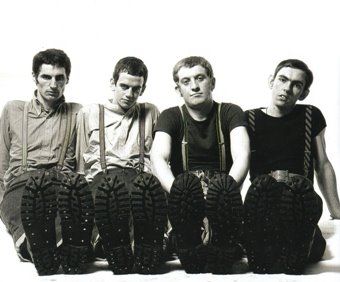
ps: serious or not I still think of the photos I saw of Slade when they were skins (or bootboys)  … and it worries me.
 
[Slade_Boots.jpg]  
from that to:
 
(Originally posted: 21/11/2009)
Posted in Hard Rock | Tagged | Leave a comment

DION – Wonder Where I’m Bound – (Columbia) – 1969

I have commented on Dion in the past …
 
We all remember Dion for the white doo-wop and rock hits but there was a time when he made inroads into the charts playing singer-songwriter material.
 
allmusic: "Bridging the era between late-'50s rock and the British Invasion, Dion DiMucci (born July 18, 1939) was one of the top white rock singers of his time, blending the best elements of doo wop, teen idol, and R&B styles. Some revisionists have tried to cast him as a sort of early blue-eyed soul figure, although he was probably more aligned with pop/rock, at first as the lead singer of the Belmonts, and then as a solo star. Drug problems slowed him down in the mid-'60s, yet he made some surprisingly interesting progressions into blues-rock and folk-rock as the decade wore on, culminating in a successful comeback in the late '60s".
 
Back in "What Frank is listening to # 99"  I asked and answered (no, it's not a sign of lunacy):
 
So why Dion?
 
He was very street. In his early period he rarely wrote material. that came later in the late 60s and early 70s. And he wrote quite well. What he does bring top his early stuff with Dion and the Belmonts but more specifically in his early to mid 60s solo material is the sound of a kid from the Bronx. Specifically an Italian American kid but generally any poor kid from the wrong side of the tracks. Of all the teen vocalists from New York in the late 50s and early 60s only Bobby Darin and Dion transcended their material and brought individual voices to their music … Listening to it now it may not sound like much but at the time it was the sound of the street. And at its best his music beats with that sound. At least with a couple of wines with your eyes closed. It sounds like a wank but truly within the simple pop structure he has incorporated the cultures that made New York such a melting pot : Afro American R&B and doo wop, Jewish tin pan alley, early rock 'n' roll and Italian street corner singing. He also incorporated the vocalists he loved into his style … Skip James, Hank Williams, Frank Sinatra and Elvis Presley … Later he would incorporate Greenwich Village folk, Bob Dylan and singer songwriter into his style.
 
Dion had success as a singer-songwriter but regardless of that success he was always best when singing about ordinary people from the street with ordinary concerns … he brought his "street" background with him and he was always very perceptive in his singing, whether it be through a song written by him or written by someone else. He could find the meaning in a song and communicate that to his audience, which is no mean feat.

This album is the follow up to his groundbreaking singer-songwriter comeback album from 1968 called "Dion". In that album Dion established himself as singer-songwriter come folkie singing in a beautiful voice about the world of 1968.

This album may be a follow up but it's also a record company cash-in as it contains material recorded prior to that breakthrough album from 1968. It's made up of the bits and pieces that Dion liked and liked to fool around with in the studio which were not released at the time. Accordingly, we have all of Dion's previously "hidden" musical personalities over the course of the album; Greenwich Village type folk music, Bob Dylan-ite, and urban acoustic blues singer. A lot of it is not very personal but the seeds are there and it's easy to see where the 1968 album came from.  

Greasers might not take to this and the counter-culture may hold his past against him but there is a lot of feeling in these grooves.

Vocal group The Wanderers do support on *

Tracks (best in italics)
  • I Can't Help But Wonder Where I'm Bound*- Tom Paxton – the great Tom Paxton song – a very 60s folk song, typical of the US folk boom. But then again Paxton was typical of the 60s folk boom.
  • It's All Over Now Baby Blue – Bob Dylan – the often covered Dylan song. A good version  but there are so many good versions to pick from. 
  • A Sunday Kind Of Love – Belle,Prima, Leonard, Rhodes –  A step back to the doo-wop of his youth. As per usual it is always pleasant but it doesn't fit in on this album.
  • Knowing I Won't Go Back There*- Dion – Dion turns his hand to writing in the folk style and it works.
  • 900 Miles – Guthrie – The Woody Guthrie standard. If you don't know who Woody Guthrie is you shouldn't be reading this blog perhaps.
  • Now* – Dion, Mastrangelo – a strange big beat pop song. As if the Righteous Brothers went folk. Great.
  • Southern Train – Trad – a very convincing rhythm and blues in the vein of the Paul Butterfield Blues Band. To my ears it's more convincing than anything out of England at the same time … probably because the emphasis is on the blues rather than on the rhythm. On the other hand there was a truck load of authentic sounding, though fairly anonymous R&B bands in the 60s.
  • The Seventh Son – Willie Dixon – another convincing blues. It doesn't sound like the Dion of old but people will never make it beyond their pre-conceptions.
  • Farewell*- Bob Dylan – Dylan is always good – regardless of who sings him … and Dion "got" Dylan. Despite Dion's teen idol roots their musical influences were similar.
  • Wake Up Baby*- Dion – a good folk rock song from Dion.
  • Baby Please Don't Go – Williams – a slowed down "mood" blues very different to The Animals or Them more well known versions, and though not as high octane as those versions a great reading of the song
And …
 
Not a great album but a good one with a couple of great tracks ….. Dion comes across as a East Coast PF Sloan. The pop is turned up and the folk and blues is used as a backbeat. But hey he was an Italian-American white kid from New York City, he took what he liked from the music and inserted it into his musical palette. If you want authentic blues go listen to the Rolling Stones or Eric Clapton*. (* sarcasm obviously) .
I suggest you listen without prejudice (sorry George):
 

Sounds

I Can't Help But Wonder Where I'm Bound

http://www.youtube.com/watch?v=u173u6zlkHM

It's All Over Now Baby Blue

Farewell

Baby Please Don't Go

Bio

http://en.wikipedia.org/wiki/Dion_DiMucci

a very good critical biography of Dion and rock 'n' roll by Dave Marsh. A must if you want to understand this aspect of "rock".

http://www.diondimucci.com/king_albums/dm_notes.html

 
Website
 
Trivia
  • I saw Dion live in 1995
(Originally posted: 20/11/2009)


Posted in Folk Rock, Rockabilly and Rock n Roll | Tagged | Leave a comment

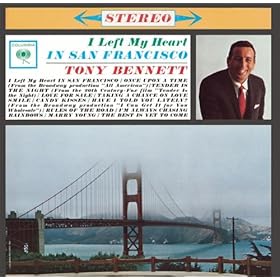
TONY BENNETT – I Left My Heart in San Francisco – (CBS) – 1962

This is probably the first Tony Bennett album I heard back in the 1980s … and I'm not sure where that LP is now. Which annoys me as I don't like losing things. I have a vague recollection that I chucked it as it was little too scratchy and worn. In any event I picked this up the other day and am listening to it afresh.

Does anyone not know who Tony Bennett is? We all do, of course, at least for a couple of his signature tunes and renewed reverence as a Generation X swing kids icon. But there is more to Bennett than that … he was a (is a) consummate artist who was (is) forever testing the boundaries of expression within his vocal range. This is singing.

He is not as well known as Dean Martin of Frank Sinatra perhaps because like fellow traveller Guy Mitchell he never had a film career to successfully establish his face or image in the mind of the masses. He is however, with those three aforementioned, in the top rank of post-war "popular music" artists.

The beauty of his voice is that as he got older he changed his style ever so slightly to accommodate the changes in his voice with age. Sinatra the consummate master of vocalising (he practically invented modern pop phrasing) set the pattern by showing what can be done when age, alcohol, cigarettes or all three begin to affect the voice. Despite opinions to the contrary I am of the view that this is not a instinctive thing but an intellectual process. Bennett and Sinatra would study the arrangers charts and figure out what can and can't be done to elicit as much from a lyric as possible. Any fool with good vocal chords can sing but not all of them are "singers".

That's not to say that Bennett recorded one master work after another. There have been missteps and questionable choices but generally there is always a gem on his albums and occasionally an album soars from start to finish.

This album is one of those.

By way of bio, from wikipedia: "Anthony Benedetto was born in Astoria, Queens, New York City, the son of Ann (née Suraci) and John Benedetto. His father was a grocer who had emigrated from Podàrgoni, a rural eastern district of the southern Italian city of Reggio Calabria, and his mother was a seamstress. With two other children and a father who was ailing and unable to work, the siblings grew up in poverty. John Benedetto died when Anthony was 10 years old.

Young "Tony" Benedetto grew up listening to Al Jolson, Eddie Cantor, Judy Garland and Bing Crosby as well as jazz artists such as Louis Armstrong, Jack Teagarden and Joe Venuti. An uncle was a tap dancer in vaudeville, giving him an early window into show business. By age 10 he was already singing, and performed at the opening of the Triborough Bridge. Drawing and caricatures were also an early passion of his. He attended New York's High School of Industrial Art where he was studying painting and music, but dropped out at age 16 to help support his family. He worked as a copy boy and runner for the Associated Press in Manhattan. But mostly he set his sights on a professional singing career, performing as a singing waiter in several Italian restaurants around the borough of Queens".

He subsequently served and fought in France in Germany in WW2 (read up on him, it's interesting) and then took up singing again releasing some unsuccessful singles in the late 40s and then hitting it big with some pop songs in the early 1950s.

Allmusic accurately summarizes his career, thus far: "Tony Bennett's career has enjoyed three distinct phases, each of them very successful. In the early '50s, he scored a series of major hits that made him one of the most popular recording artists of the time. In the early '60s, he mounted a comeback as more of an adult-album seller. And from the mid-'80s on, he achieved renewed popularity with generations of listeners who hadn't been born when he first appeared. This, however, defines Bennett more in terms of marketing than music. He himself probably would say that, in each phase of his career, he has remained largely constant to his goals of singing the best available songs the best way he knows how. Popular taste may have caused his level of recognition to increase or decrease, but he continued to sing popular standards in a warm, husky tenor, varying his timing and phrasing with a jazz fan's sense of spontaneity to bring out the melodies and lyrics of the songs effectively. By the start of the 21st century, Bennett seemed like the last of a breed, but he remained as popular as ever".

I should add that in every interview I have ever read or seen with the man he comes across as a good natured, thoughtful and pleasant (to the point of simplicity) individual. It seems that his youth and war experiences affected him like so many of his generation.

This album was a sort of comeback – in the late 50s Bennett produced many artistically creative and critically lauded jazz sides which were unsuccessful. With this album he became a mature (at the age of 36) album artist. Though there are some outstanding songs on this album you can only really listen to it as a whole, as a mood is created across the album in the best tradition of the concept album. 

"Concept album"? What? before the Beatles? No way.

Yes way … Sinatra pioneered the concept album and "song cycle" idea in the mid to late 50s.

Here, it is the mood, the thoughtful vocals, the perfect arrangements that make the album one of his best.

The punters liked it also:

  • the album went to #5 in 1962

  • 1962  I Left My Heart in San Francisco   Adult Contemporary #7  (the song stayed in the charts for 3 years) 

  • 1962  I Left My Heart In San Francisco   The Billboard Hot 100 #19

  • He won two 1962 Grammy Awards for "I Left My Heart In San Francisco"  : Record of the Year and Best Solo Vocal Performance, Male

Tracks (best in italics)

  • I Left My Heart in San Francisco  – Cory, Cross  –  hello, if you don't know this track you are a dolt. One of the greatest of all popular ballads.

  • Once Upon a Time   – Adams, Strouse  – From the Broadway show "All American" … all musical theatre and all genius…

            Once upon a time
            A girl with moonlight in her eyes
            Put her hand in mine
            And said she loved me so
            But, that was once upon a time
            Very long ago.

            Once upon a time
            We sat beneath a willow tree
            Counting all the stars
            And waiting for the dawn
            But, that was once upon a time
            Now the tree is gone.

            How the breeze ruffled through her hair
            How we always laughed
            As though tomorrow wasn't there
            We were young
            And didn't have a care

            Where did it go?

            Once upon a time
            The world was sweeter than we knew
            Everything was ours
            How happy we were then
            But, somehow once upon a time
            Never comes again.

  • Tender Is the Night   – Fain, Webster  –  a big soundtrack ballad.

  • Smile   – Chaplin, Parsons, Turner  – Chaplin wrote the music to this for his film "Modern Times",1936 – and if you haven't seen that and you think Jim Carrey is the bees knees you are a knob stick. Words were subsequently added and the song became a standard … and this is one of the best versions.

  • Love for Sale   – Porter  –  Cole Porter wrote this, nuff said.

  • Taking a Chance on Love   – Duke, Fetter, LaTouche  –  what it says.

  • Candy Kisses   – Morgan  –  the Nashville country standard turned into a popular ballad beautifully.

  • Have I Told You Lately That I Love You   – Rome  –  another big ballad.

  • Rules of the Road   – Coleman, Leigh  –  pleasant but not up to the standard of the rest.

  • Marry Young   – Coleman, Leigh  –  sage advice, maybe?

  • I'm Always Chasing Rainbows  –  Carroll, McCarthy  –  aren't we all … pithy comment yes but the lyric of the song is more evocative than anything I could write here.

  • The Best Is Yet to Come  –  Coleman, Leigh  –  "we're gonna taste of the wine, we're gonna drain the cup dry" ….. the equivalent of "hope I die before I get old"? Tellingly Tony giggles to himself half way through … he knows it's all shit?

 And … 

Tasty yes. Late at night get a bottle of wine, red preferably, turn down the lights, sit down, put on the album, recline back and listen. It is a tonic for what ails you (well at least the wine is, and this facilitates the consumption of that).

Keeping … most definitely.

Sounds

I Left My Heart in San Francisco 

http://www.youtube.com/watch?v=q1x8W29pDRw&feature=related

    with Doris Day

http://www.youtube.com/watch?v=ZYHzJ5lwYtY

    with Judy Garland

http://www.youtube.com/watch?v=I6d03gbmAzc

Once Upon a Time [From All American] 

http://www.youtube.com/watch?v=zAaKt6_1qpE

Tender Is the Night  

http://www.youtube.com/watch?v=y7HaeqDnYNI

Smile 

http://www.youtube.com/watch?v=d6MOnNm3u2Y

The Best Is Yet to Come 

http://www.youtube.com/watch?v=0Owlz9zEiSA

extras:

he is everywhere

http://www.youtube.com/watch?v=uqvoRMjKHqs

http://www.youtube.com/watch?v=wK6Ci6rUq2Y&feature=fvw

Review

http://www.allmusic.com/cg/amg.dll?p=amg&sql=10:jpftxqe5ldae

Bio

http://en.wikipedia.org/wiki/Tony_Bennett

Website

http://www.tonybennett.net/

http://www.myspace.com/tonybennett

his art:

(he is a good painter also)

http://www.benedettoarts.com/index2.html

(Originally posted: 15/11/2009)

Posted in Popular & Crooners | Tagged | Leave a comment

SUGARLOAF with Jerry Corbetta – Don’t Call Us – We’ll Call You – (Claridge) – 1975

 
Hmmm … I didn't know much about this group (though there are a couple of their albums in the pile behind me).
 
Sugarloaf – in brief according to allmusic.com:"Best known for their 1970 AM pop classic "Green-Eyed Lady," Sugarloaf was formed in 1969 in Denver out of the ashes of the Moonrakers, which had released an album in 1968. Singer/keyboardist Jerry Corbetta and guitarist Bob Webber founded the group, adding Moonraker mates Bob MacVittie on drums and Veeder Van Dorn on rhythm guitar, plus bassist Bob Raymond".
 
This album was their 4th and final album and also provided them with a follow up to their #3 hit from 1970, "Green Eyed Lady"… (the single "Don't Call Us – We'll Call You …" went to #9 but the album stalled at #152). For whatever reason this album (from 1975) was a re-release of their 1973 album "I Got A Song" with one of the tracks on the earlier album replaced by the title track of the later album, which had become a hit single. (I suspect because the 1973 album was on a small label, "Brut",  and didn't get pushed but who knows…).
 
The "with Jerry Corbetta" in the title is a pretty fair indication of what was going on … Corbetta wrote or co–wrote all bar one of the songs, sings and plays keyboards. The music is pretty much MOR rock, albeit more "rock" than MOR but still in that muddy field. There are substantial jazz fusion and psychedelic elements in there also and there are also some prog rock elements. It's sort of like a jazz rock fusion version of "Three Dog Night".
 
The album also has its own pomposities (the deep lyrics, strings, and slight spacey feel) as well as its eccentricities (there is a crazy violin interlude at the end of "Lay Me Down" which is out of place though endearing). As it is, it is extremely keyboard driven by Corbetta who also plays organ, piano, clavinet and arp (Corbetta later went on to perform with Wild Cherry, Disco-Tex and the Sex-O-Lettes and then in 1980 he became a member of The Four Seasons). There are a few good tunes though most of the album isn't distinctive (to my ears).
 
Best Tracks
  • I Got a Song – a big MOR rock ballad.
  • Wild Child – a jazz fusion cross over with some psychedelic elements.
  • Don't Call Us – We'll Call You – a dig at a record company and quite funny … and a touch biting (though not as angry as Lynyrd Skynyrd's "Working for MCA" from 1974). And, it actually works a groove. From wikipedia"  The song includes the sound of a touch-tone telephone number being dialed near the beginning and ending of the song. Those numbers were an unlisted phone number at CBS Records and a public number at the White House respectively. In addition, the recording includes snippets of the guitar riff of The Beatles' "I Feel Fine," Stevie Wonder's "Superstition," and a line of dialogue from Wolfman Jack stating the call sign of a radio station".
  • Colorado Jones – a country rock flavoured up-tempo ballad.
And …
 
I'll tape a couple of tracks and flog it off.
 
Sounds

I Got a Song

 
Don't Call Us – We'll Call You
 
The hit: "Green Eyed Lady"
a recent clip – Corbetta looks like he would be happier making a pizza rather than "rocking" out on stage
 
Bio
 
 
Website
 
the new guitarists site – and quite a hoot if you want to see what a working muso had to go through in the 60s and 70s … (he didn't play on this LP)
 
the official site – they still tour
 
(Originally posted: 14/11/2009)
Posted in Rock & Pop | Tagged | Leave a comment

GREAT SPECKLED BIRD – Great Speckled Bird – (Ampex) – 1969

I got this for $5 at a sale and it was well worth it, if for no other reason than it is worth more than $5. Money aside it was a Ian & Sylvia side project and I have been partial to Ian & Sylvia since I went through a 60s folk kick in the mid-80s. That kick was largely based on the fact that there were many, many old folk records on the Vanguard and Elektra labels to be found in op shops.
 
Ian & Sylvia were one of the best of the new folk acts to come out in the 60s probably cause they were a little older (and wiser) ... they were certainly the best thing to come out of Canada in the 60s along with (but behind) The Band. Yes I know Neil Young and Joni Mitchell came from Canada in the 60s, but I ain't changing my position.
 
Allmusic: "One of the most popular acts of the early-'60s folk revival, Canadian duo Ian Tyson (b. 1933) and Sylvia Tyson (b. 1940) made several fine albums that spotlighted their stirring harmonies on a mixture of traditional and contemporary material. While these recordings can seem a tad earnest and dated today, they were overlooked influences upon early folk-rockers such as the Jefferson Airplane, the We Five, the Mamas and the Papas, and Fairport Convention, all of whom utilized similar blends of male/female lead/harmony vocals."
 
This album was recorded in 1968 and was recorded by a band that Ian & Sylvia had formed with Buddy Cage (pedal steel guitar – later with New Riders of the Purple Sage), Amos Garrett (guitar, background vocals – later with Paul Butterfield's Better Days and Maria Muldaur), N.D. Smart (drums), and Ken Kalmusky (bass guitar). As the instruments would suggest this is full on country rock and quite early in the genre though the International Submarine Band (with Gram Parsons),The Byrds (with Gram), Buffalo Springfield, The Band, and Bob Dylan had already been fooling around with a country rock mutation. The ancestry of the same can be traced back even further to Elvis' Sun records in 1954-55 and even the Beatles had dabbled in some countryish moods – check out "Beatles for Sale" from 1964.
 
In any event the album, when released in 1970, sold nothing because, I assume, Ian & Sylvia's folk fans were none to happy about the change in direction. This is a bit silly because there have always been country influences in Ian Tyson 's music (he was pretty much a Canadian cowboy), though admittedly it wasn't amped up as it was here. There is also quite a bit of gospel in the mix. Ian comes off best (his solo stuff is better than Sylvia's also) because Sylvia hasn't really lost her "folk voice" which, when she is not in harmony with Ian, can grate a little. Ultimately, I'm not sure if  her voice is suited to country music. The band play well and like a lot of early country rock, before the genre became defined (and eventually stagnated), there are a lot of odd bits and pieces of sound going on which keep the attention.
 
Most bios will go to some length establishing that Great Speckled Bird was a band and not just Ian & Sylvia with backing, but be that as it may, Ian & Sylvia are at the forefront of the sound and unmistakeable. But, despite a smattering of really good tunes and the fact that the album does hold together it never reached the heights, either artistically or in sales, of other early country rock albums.
 
The album was produced by Todd Rundgren and how that happened I have no idea as it's not his style of music and he was just a kid (yes I know he was a boy genius but he produced this when he was 20!). Very little of his sound filters through though. Interestingly, the album was recorded in Nashville and legendary session musicians David Briggs and Norbert Putnam, played on the album. Briggs recorded and toured with Elvis and Putnam recorded with Elvis.
 
It's not the great lost country rock album but it is a must for lovers of the genre and for Ian & Sylvia fans – of which I am both.
 
Tracks (Best in Italics)
  • Love What You're Doing Child (Ian Tyson) – Possibly the least country rock song on the album … more of a country soul song.
  • Calgary (Ian Tyson/Sylvia Tyson) – Canadian country with a capital "C" though with all the usual country themes … departures, loneliness, meeting your love, leaving your love.
  • Trucker's Cafe (Ian Tyson) – This became a signature tune for solo Sylvia – great lyrics about a single mother working as a waitress but I find it hard on the ears with Sylvia's high pitched female folk screech which was popular in the 60s. The guitar work is excellent.
  • Long Long Time to Get Old (Ian Tyson) – a hoot from the cow bell(?) down to the harmonica.
  • Flies in the Bottle (Ian Tyson) – the title alone is worth it.
                Flies in the bottle
                they go round and round
                my little friend stumbled
                Then he fell to the ground
                Be kind he cried
                Like the time I found
 
                I was alone here
                I been down the line
                Mostly just lonely
                But somethimes quite fine
  • Bloodshot Beholder (Ian Tyson) – another great song title …always a must in country music. This recalls the folk harmonies of Ian & Sylvia.
  • Crazy Arms (Chuck Seals/Ralph Mooney) – A good version of the song Jerry Lee Lewis made famous – here it is half sung in French – which works on two levels – a homage to the Canadian West as well as to the Jole Blon of the Louisiana South.
  • This Dream (Ian Tyson) – a country ballad.
  • Smiling Wine (Sylvia Tyson) – A pretty song … but decidedly "un-Country" … obviously written by a woman. "I don't need a bottle to lighten my mind … you are my smiling wine" … I can't see Waylon Jennings doing this lyric …
  • Rio Grande (Ian Tyson/Amos Garrett) – the "Rio Grande", how many songs have mentioned it? This is a contemporary cowboy song about drug running and lost love?
                Rio Grande
                muddy and brown
                winding on through
                we got lost
                in the night
                and we took the wrong trail
                and we couldn't get through
 
                and then a rifle flashed
                my pony went down
                and there was cocaine falling
                like snow on the mountain
  • Disappearing Woman (Sylvia Tyson) – country filler.
  • We Sail (Sylvia Tyson) – a long and long winded gospel folk tune.
And …
 
I'm keeping this
 
Sounds

(some good soul has uploaded the whole album):
 
Love What You're Doing Child
Calgary
Trucker's Cafe
Long Long Time to Get Old
Flies in the Bottle
Bloodshot Beholder
Crazy Arms
This Dream
Smiling Wine
Rio Grande
Disappearing Woman
We Sail
 
Ian And Sylvia
The Folkies
a short visual bio:
Jerry Jeff Walker talks to Ian Tyson (Ian then does the great Summer Wages):
 
a little later
 
Review
 
 
Bio
 
 
Website
 
 
(Originally posted: 11/11/2011)
Posted in Country Rock | Tagged | Leave a comment

THE HOBBITS – Down to Middle Earth – (Decca) – 1967


Some of you may recollect my comments in "what frank is listening to #100" in relation to Jimmy Curtiss. I said this:

Curtiss was most famous for being the lead singer of the late 60s psych pop / sunshine pop / folk rock  band The Hobbits who put out a series of Tolkien referenced albums ( that alone would normally throw me off … you cant totally trust anyone who reads Tolkien, can you?). He had been a singer prior to that and he returned to the solo world with this one ( and only) obscure solo album. And in listening to it …I must say it has substantial joys.

I liked the Curtiss solo album so much I went straight to eBay and waited till a cheap-ish copy of this album was listed … and here it is without what seems to be the obligatory five year stay in the pile of records behind me.

The benefits of being placed on top.

allmusic has this to say about "The Hobbits", "Folk-rock outfit the Hobbits was the studio project of Queens, New York-born singer/songwriter Jimmy Curtiss, who ranks as one of the more interesting footnotes in the history of rock & roll — the rare would-be teen idol who actually wrote his own material (and did so admirably), he later expanded his reach into psychedelia and harmony-laden folk-rock, but while the subject of a small cult following, none of his records ever made a commercial dent".

This album is equal parts psychedelica, pop, and folk. If genres are what you like then the music is closest to "sunshine pop"  though there are smaller elements of "baroque pop". I commented on these sub-genres is in "what frank is listening to #94" regarding the Left Banke.

Allmusic define "sunshine pop" as, "Naturally created in California, sunshine pop was a mid-'60s mainstream pop style typified by rich harmony vocals, lush orchestrations, and relentless good cheer. It was often mildly influenced by psychedelia, but it usually didn't aim to evoke any sort of drug-induced mind expansion; it simply drew from the warm and whimsical sides of psychedelic pop, incorporating production innovations of the time (especially those of Phil Spector and the Beach Boys' Brian Wilson). Sunshine pop often resembled the more elaborate and melancholy baroque pop style, though it could also cross into folk-pop or Brill Building pop. The stars of sunshine pop included the Beach Boys (circa Pet Sounds), the Turtles, the Association, and the Mamas & the Papas; other groups to score hits in the style were the Buckinghams, the Grass Roots, and the Left Banke, while certain others — Sagittarius, the Yellow Balloon, the Millennium — became cult favourites years after the fact".

There is a twist here though. Curtiss as writer, singer and co-arranger had , obviously, a lot of input, into the "sound" and his musical pedigree, as well as his East-coast origin, gives the album a distinctive edge. What separates this album from any number of mid-range sunshine pop albums is that Curtiss' roots are in doo-wop and vocal groups of the late 50s as well as the teen vocalists of the early 60s. So though the album is laden with the folk pop harmonies popular in sunshine pop there is also quite a bit of emphasis on the vocalist as a soloist. It's as if Bobby Vee or Bobby Rydell were picked up and dumped into a psych pop band or if Jay and the Americans took acid. And there is nothing wrong with that. I just mention it as it makes the album slightly different to others in the genre.

Q: Do you like it, Frank?

A: Yes, and though the album is very much of its time it's not horribly dated.

I've waxed lyrical about 60s US pop in the past … it's always good on the ears … whether it be Sinatra, Elvis, Del Shannon, Sonny & Cher, or the Beach Boys. This album is no exception. It is pleasant to listen to and there are a couple of stand out songs though it doesn't reach the level of The Beach Boys or The Left Banke albums from the same period. The lyrics, too, are very much of their time (and maybe a smidgen ahead of their time) and thankfully despite a song title or two, none of the lyrics draw any inspiration from Tolkien – or if they do – they are sufficiently obscure to offend me. We would have to wait till the prog rockers of the 1970s to be "inspired" by Tolkien … groan. More importantly the sound is not horribly dated despite pandering to the "in sound" of the time. Also, as I have said above, the emphasis seems to be on vocals, both harmony and solo, rather than instrumentation and studio tricks which would effect some sunshine pop (and all pop rock) after The Beach Boys "Pet Sounds" and The Beatles "Sgt Peppers".

Tracks (best in italics)

  • Down to Middle Earth – a great song and very much what I have said above – as if Bobby Vee or Lou Christie had  been dumped into a psychedelic dream … very much of it's time … and it reminds me of of some other song I can't put my finger on. Possibly a touch of The Kinks (before the Kinks were doing the same!). I will say that with the flutes and wailing vocal I would have put this a little bit later in time …

  • I'm Just a Young Man – a excellent love song steeped in late 60s counter culture values …

                I'm just a young man trying to find someone who will give me peace of mind ….

                Cause I'm searching for something better than what's around…..

                I'm just a young man making the scene

                I got no time for reading girly magazines

  • Daffodil Days (The Affection Song) – falsetto, W.C Field impersonations, lyrics about flowers … very weird and almost a novelty song … but it's not alone. A bit like some of the  crazier moments of The Monkees when Michael Nesmith took the lead but weirder still. Excellent stuff. It grows on repeated listening. 

  • Break Away – Turtles, Hollies and especially Beach Boys influences abound, but again, beautifully executed and easy on the ears.

  • Treats –  a slight garagy number, or a poppier version of the anti drugs song "Kicks".

                Treats 

                Little itty-bitty treats that groove your head

                Treats

                Little itty-bitty treats that you can never buy for bread

  • Hands and Knees – a big power ballad with psych pop overtones, some nice keyboard and tasteful, limited strings.

  • Let Me Run My Fingers Through Your Mind (Buy Me flowers) – do you reckon this mid tempo ballad is from the late 60s? Take a chance. What do you think?

  • Out of My Mind  – MOR meets psych pop.

  • Clap Hands 'Til Daddy Comes Home – Curtiss on his solo album had some insightful songs on children in broken (?) families and their relationships with their fathers. Here is another song about a child's relationship with its father … methinks something must have been going on in his personal life.

  • Sunny Day Girl – the breeziest song on the album … pure mainstream AM radio sunshine pop, much like The Association. And of course there is nothing wrong with that. The doo be doo wop chorus sounds very much like the bridge in John Sebastian's "Welcome Back Kotter –  written years later. Coincidence?

And …

A keeper. The album is not perfect but there are enough great moments and enough individuality to keep this. And the more I listen to it the more it grows on me. A gem.

Sounds 

Daffodil Days  

attached


Break Away  

http://www.youtube.com/watch?v=bJpWfrrnjzo

Let Me Run My Fingers Through Your Mind (buy me flowers)

attached

Sunny Day Girl

http://www.youtube.com/watch?v=id0udeWEXOg&feature=related

Jimmy Curtis most well known song:

Posted in Sunshine Pop and Baroque | Tagged | Leave a comment

THE CHRISTIANS – Self Titled – (Island) – 1987


 Urrgghhh … new British Soul – a music that truly makes me ill. Fucken awful. I literally have to stop myself from pulling the record from the turntable and smashing it against the table corner … a act I find very therapeutic. If there ever was a music that, on a whole, doesn't excite neither the loins nor the brain it would have to be this.

English soul?

Very few American whites who grew up with Afro-American blacks have "soul" so I am not sure how a bunch of knob ends, black or white, from England are going to have it.

Get a life.

If things weren't pretentious enough the music is sometimes called "sophisti-pop". As described by wikipedia:

Sophisti-pop is a music genre used to describe a certain kind of smooth radio-friendly pop music with a jazz or soul tinge. First appearing in the mid-1980s, its usual reliance on synthesizers was typical for the decade. All in all, sophisti-pop can be considered to share notable elements with smooth jazz, blue-eyed soul and New Wave.

The name says it all … wankers.

OK ... enough with the polemical vitriol. What displeases me about this music?

Despite its obvious ancestral roots, which is black American soul, its all very, very English. And it encompasses the worst aspect of English music, namely its neither here nor there. It's also slightly indie, slightly twee, slightly political, but it is also all pretentious, pompous and mainly unlistenable. Worse still that awful 80s mainstream pop production runs through the entire album … funky bass lines, reverbed gated snare drum sound, sexy saxes, a touch of mellow keyboard.

It sounds like fisher price music.

Acts like Sade, Dream Academy, It's Immaterial, Simply Red, The Colourfield, Prefab Sprout, Swing Out Sister, Communards, Fine Young Cannibals, Blow Monkeys, The Blue Nile flooded the air waves. (It's not surprising that the Top 40 air waves in the 80s were dire … if there ever was a decade whose great music was defined by what was underground and not in the charts it was the 80s … and that's across the English speaking world).

Who is responsible for this? 

Partly Sting and Paul Young in the mainstream, but the "indie", hip, credible and political soul aspects have to be attributed to Paul Weller. This ugly creation of his would be unforgivable,  if not for the fact he wrote some magnificent songs whilst in The Jam (his solo stuff sucks big time). But why single out Weller? I blame him because The Jam were so popular in England that when he switched to smooth soul with The Style Council he made popular this sub genre of English soul. At the very least, if he didn't make it popular, then he made it "hip".

What's worse a number of "mods" followed him. "Mod" music – never the most experimental of musics – was a mix of powerpop and white R&B and was not without some good tracks. But like lemmings the Mods followed the "Modfather" Weller when he folded The Jam, and it's powerpop beauties, and formed the ultra pretentious Style Council and it's continental soul … right into the land of coffee, berets, Raybans, gitannes and Camus.

Pack of fuckwits.

For example: The Yachts folded and lead singer Priestman joined The Christians , Graduate collapsed and became Tears for Fears, and in Brisbane the moddish Downtown 5 turned into the Style Council–ish One Big Union. Confront any of these bands and they will all claim that the move from mod/pwerpop to soul was a natural progression as if some independent global epiphany descended on the Modsters … methinks not … the "Cappuccino Kid" wielded a lot of cultural capital.

And that is perhaps part of the problem … ultimately Weller and the Style Council were the peak of that movement and a good number of tracks are listenable because Weller is (was) a good songwriter. His followers were mainly unlistenable.

The Christians as I have said  where joined by Henry Priestman who had been in Liverpool's The Yachts (a good power pop combo) before fronting It's Immaterial and then joining this band. He wrote or co-wrote every song so the bands direction must be largely attributable to him. The music is very hard on the ear because it is so slickly sweet and the political messages (there are some apparently) are buried under so much syrup that they wouldn't offend the most intolerant of conservatives. I don't think Margaret Thatcher was shaking in her boots when she found out this album was about to be released.

This music was for secretaries in the 80s or for people who like to see "original bands" at the Travelodge Hotel whilst sipping cocktails. Now it's for middle aged losers thinking about secretaries they would have liked to have fucked when they were losers in their 20s.

Best Tracks

Surprisingly there is one half decent song (only half though) – the keyboards let loose and lose their "cool" briefly and there is enough propulsion in the song to keep it half interesting. I don't know if this was an accident or not.

  • Save a Soul in Every Town

And …

I'll be selling this … derrrrr

Chart Action

Of course I could be wrong with my opinions as this was popular, but then again so was Thatcher.

"Forgotten Town" – UK #22
"Hooverville (And They Promised us the World)"  UK #21, IRL #18
"When the Fingers Point"  UK #34
"Ideal World"  #14, IRL #11

The album went to #2 in the UK.

In the US:

When the Fingers Point   Hot Dance Music/Club Play #29

The album stalled at #158

Sounds

Forgotten Town

http://www.youtube.com/watch?v=W2dDZKWdg2E&feature=fvst

When the fingers Point

http://www.youtube.com/watch?v=cnW4AIkeIaY

Born Again

http://www.youtube.com/watch?v=I_NWkzioKnw

Ideal World

http://www.youtube.com/watch?v=qjUMUwjTTx8

Save a Soul in Every Town  (live at the time)

http://www.youtube.com/watch?v=IZ2OC4IP-Os

Hooverville

Website

http://www.thechristianslive.co.uk/

Bio

But here is the most relevant portion:

'Beginning as an a cappella trio, the British soul group the Christians originally comprised brothers Garry, Russell, and Roger Christian; Liverpool natives who in 1986 were joined by former Yachts and It's Immaterial frontman Henry Priestman. After recording a handful of singles, Roger Christian left the group to mount a solo career; the remaining three members continued on without him, and after a bumpy start scored a minor hit with the 1987 single "Forgotten Town."

(Originally posted: 07/11/2009)


Posted in Soul, Funk & Disco | Tagged | Leave a comment

THE ILLUSION – Together (as a way of life) – (Steed) – 1969

You can read up on the Illusion way back in "What Frank is listening to #36". For those who may have "accidentally" deleted the comment rather than saving the same to a folder (and of course backing it up) I said … "The Illusion" were a east coast ( Long Island) guitar based psychedelic heavy rock act. They played musically in the same scene as the "Vanilla Fudge" and the "Young Rascals" and like them shared Italian-American roots …. they were kids from the same neighbourhood getting together to form a band (in the US in those days, and still now to an extent, the chances were that neighbourhoods would be of similar ancestry or cultural extraction) … Subsequent reading reveals that the band was part of the “Long Island Sound”, which included  The Rascals, The Vagrants, Vanilla Fudge. Which I can see …. interestingly they were all non-Anglo kids ( mainly Italian or Jewish) …which is not surprising ….given the ethnic mix of Long Island. Apparently, The Illusion opened for The Allman Brothers, The Who, Chicago, Mitch Ryder, Savoy Brown, Sly and the Family Stone, and Jimi Hendrix., they had a minor Top 40 hit in 1970 with “Did You See Her Eyes”. The band disbanded shortly after".

I said in #36 that the "If It's So" album … follows the same path of the first LP (1969) from memory – perhaps a little heavier. Regardless of how heavy they got though melody and rhythm were still dominant and there is still a fair amount of "blue eyed soul" al la Mitch Ryder in there ( not as much as the first LP) – maybe they never forgot they were originally a rock "dance band".They come across much like "Iron Butterfly" or "Steppenwolf" and they compare favourably though they never had the one big hit like those bands.

This album (their second) is a mixed bag – the psychedelic aspects have been toned down and the album has some heavy workouts which lend themselves to the "cock rock" excess of the 70s, but generally it's a lot more quieter than the other two albums. The rhythm is still "heavy funk" but there are quite a few "electric ballads", the odd pop song, and even a blues. Importantly though the songs are not up to the quality of the first album. Two albums in two years would test anyone's repertoire and it has here. It seems the band here may have been experimenting with a variety of sounds to find which market they could fit into.

Ahh, the difficult "second album syndrome"  definitely applies. Luckily with the third album they went heavier again – which suits them best.

Again they were produced by Jeff Barry … read the earlier comment or google him.

Lastly, the cover art is poor for a semi-major label release … what is collectable of this era unfortunately, sometimes, depends on the cover art, and a fuzzy picture with a tombstone and some superimposed writing doesn't cut it … it's more of a back cover picture.

Best Tracks

  • How Does it Feel – a rocky groover – very much of its time … definitely one for strutting or cock swinging.

  • Don't Push It – a funky workout.

  • Love Me Girl – straight pop – think "The Loving Spoonful" go heavy electric … it goes on for a minute too long though.

  • Together – this song is plain weird and was probably influenced by The Beatles circa Sgt Peppers. It's a bouncy mid-tempo track with back-up vocals from a choir of some sorts, which turns quite electric half way through … I'm not sure it is good but at least it's "out there".

And …

Not as good as the other two albums but I'll keep it because I have the other them.

Sounds

How Does it Feel

attached

Website

http://distortedrock.tripod.com/

myspace site:

it scrolls up and down and sideways (don't do drugs before going to the site … or maybe do ?)

http://profile.myspace.com/index.cfm?fuseaction=user.viewprofile&friendID=285408395

the bassist's site:

http://www.chuckalder.com/

(Originally posted: 04/11/2009)


Posted in Psychedelic, Rock & Pop | Tagged | Leave a comment

GARY LEWIS & THE PLAYBOYS – Rhythm of the Rain / Hayride – (Liberty) – 1969

 Gary Lewis & The Playboys,Rhythm Of The Rain/Hayride - Sealed,USA,Deleted,LP RECORD,444140
Still more Gary Lewis … I find him quite relaxing after a mind crushing day at work. Well, that and a couple of wines.
 
In the past I have said on 2 occasions, "Most of his albums were 1/2 originals( some written by him) and 1/2 covers of recent(ish) hits. Regardless, whether original or cover, Lewis seemed to have hit after hit. I suspect cause the records are well recorded, tightly played pop rock with a consistent musical personality throughout all …… Gary had a limited vocal range and was a bit gawky looking – like some sort of uber nerd but what he had was sass and good backing. He does what he does best, allows his voice to be pushed into the background or chorused with backing vocals or a multitude of instruments. The result is a romantic, lush pop rock with lyrics that are very mid 60s California – fun, sun, happy and optimistic".
 
Again I have no reason to deviate from this. The musianship is solid and the production (Snuff Garrett) highlights the best aspects of the music.
 
There is a distinctive Lewis style sound, "a romantic, lush pop rock with lyrics that are very mid 60s california – fun, sun, happy and optimistic".
 
But, this is 1969!
 
The scars of the police brutality at the Democratic Convention in Chicago had not healed, the Panthers were up to everything, people were marching on Washington, soldiers were dying in Vietnam, the Weathermen were exercising their violent revolutionary rhetoric, the Kent State Massacre was around the corner and, in music, the MC5, Stooges and many others were prophesising of a uncertain future …. Gary on the other hand was covering "Good Morning Starshine" and doing it "straight"!
 
        Good mornin' starshine, You lead us along
        My love and me as we sing
        our early mornin' singin' song
 
        Glibby gloop gloopy Nibby Nabby Noopy La La La Lo Lo
        Sabba Sibby Sabba Nooby abba Nabba Le Le Lo Lo
        Tooby ooby walla nooby abba nabba
        Early mornin' singin' song
 
All I can say is … God bless him.
 
Was Lewis ignoring what was going on around him?
 
At the height of his career he was drafted and went to Vietnam. There the story gets blurry – did he see combat? Did he witness friends die? Did he become addicted to drugs? His father, Jerry, has made all those claims which caused a rift with his son who has accepted it and denied it. Where is the truth I'm not sure though Lewis senior was vocal about the war:
 

If Lewis was affected by what was going on he didn't let on. Even Elvis was prodded to thought about what was happening around him ("If I Can dream" etc).

Lewis' sound didn't change that much …  and that is a blessing or a curse depending on your take on his music. The slightly psych numbers are "poppy-ied" up, the countryish numbers are made MOR, the blues are white washed, and any controversial lyrics are sanitised. This is pure pop. Ultimately, you know what you get with a Gary Lewis album. 
 
As Lewis said subsequently, "Well, Hard Rock had come in. When I was in the service, I started hearing on jukeboxes around the bases, people like Jimi Hendrix, Janis Joplin, Led Zeppelin. I'm saying who is this? What is this kind of music? I was kind of worried about it because I didn't want to have to play that kind of music just to stay in the business. I hate singing and playing out of my style. I don't do it even in 'live' shows. I stick with what I'm known for, what I'm comfortable with, and that's it". http://www.classicbands.com/GaryLewisInterview.html
 
After “Rhythm of the Rain,” which made it to #63, and “Hayride,” which did nothing, Garrett apparently told Lewis: “There is no more market for Gary Lewis & the Playboys.” Lewis self-produced two more singles and then called it quits.
 
It was his inability to change (for whatever reason) which ended his career.
 
This was his last album (or one of his last as he released three albums in 1969).
 
None of the albums from that year charted.
 
Don't despair though as he continues to play on the oldies circuit now.
 
There is only one loss … if he hadn't decided to quit and hung in for another year he could have hitched a ride on the back of the bubblegum hit making machine with The Archies, Ohio Express, 1910 Fruitgum Company etc who were also "pure pop" and who were also, surreally, ignoring the events unfolding around them.
 
Ultimately, middle America might have loved Lewis for most of the 1960s but they ditched him. And, liking Gary Lewis now is nothing if not radical, right?
 
Musically, Lewis remained consistent in his album format mixing covers and originals all in the mid tempo, upbeat style he is known for. His strengths are, his taste in his choice of covers, a good ear for pop, knowledge of his limitations, and working well with the right producer.
 
The Tracks (the best in italics)

  • Rhythm of the Rain – the great Cascades hit from 1963 (#3). One of the most performed songs of the 20th century apparently. As pleasant as Lewis' version is it does not improve on the original.
  • Medicine Man – a strange one to cover – a 1969 hit for The Buchanan Brothers (actually Tommy West and Gene Pistilli)
  • Good Morning Starshine – perfect – a track from "Hair" … the greatly underrated Oliver lifted it from the musical and had a #3 hit with it in 1969. The original version might have been taking the piss but Gary does the song straight and has made the song even more trivial … and I love it. Instead of  Wagner's Ride of the Valkyries being played as the air cavalry descends in "Apocalypse Now" I think this would have been infinitely more surreal …
  • Proud Mary – a straight version of the Creedence classic. No surprises but competent.
  • My Little Girl – Lewis now turns in a late 50s flavoured tune which sounds suspiciously like Buddy Holly's "Peggy Sue", though that's not surprising as it was written by Sonny Curtis who was one of Holly's backing band, The Crickets.
  • Hayride – now this is convoluted … I always thought this was a Australian song as The Flying Circus had a hit with it in 1969 (#3 Australia). It turns out it was written by Buzz Cason and Mac Gayden. Buzz, from Nashville, is a bit of a legend – he wrote truck loads, sang backing vocals for Elvis, and wrote another hit for the Flying Circus "La La". Obviously he was quite good at pushing his songs. Either way this is good country-ish bubblegum.
  • Sugar Coated – another Buzz Cason and Mac Gayden song. Pure bubblegum.
  • Back Door Key – a co-written Lewis original which turns out to be a "G rated" version of "Back Door Man" … mind you if the narrator-singer's love was "above board" as described in the song then why the need for a back door key?
  • 3 Cheers – another co-written Lewis original … very Beatles circa "Rubber Soul" with a bit of the Beach Boys thrown in and quite nice. Probably the best song on the album.
  • Orangutan  – who said drugs weren't around amongst the nerds? I'm not sure what this song is about exactly. 
  • C.C. Rider – actually a interesting cover of the old trad song (popularised by Ray Charles) … not outstanding but different.
  • Nothing to Be Ashamed Of – a harkening back to the type of tunes Lewis was doing in 1965. Again a pleasant tune.

 And …

This is certainly one of the weaker Gary Lewis LPs but because I have the others … I'll keep this.

Sound

Rhythm of the Rain
attached
 
Good Morning Starshine
attached
 
Hayride
 
3 Cheers
attached
 
Other Comments

what is Frank Listening to #22

what is Frank Listening to #72

what is Frank Listening to #88

what is Frank Listening to #96

 
(Originally posted: 01/11/2009)

Posted in Pop Rock | Tagged | Leave a comment