REDEYE – Redeye – (Pentagram) – 1971

 
I knew very little about this band, and, after consulting the internet I don't know much more.
 
They do have a wikipedia entry which in toto is: "Redeye was an American rock band from Los Angeles, California. The group released two albums on Pentagram Records in the early 1970s, and had two hit singles in 1971, "Games" (U.S. Billboard Hot 100 chart #27) and "Red Eye Blues" (U.S. #78)".
 
Apparently vocalist guitarist Douglas Mark was in 60s band "The Sunshine Company" as a guitarist … I know of them but have not heard much of their music.
 
Such referencing may sound pedantic especially when we are dealing with obscurities but in reality both of these bands were not that obscure … they are just not well remembered.
 
For anyone to have a Top 40 in a market as big as the US is an achievement. The band certainly would have, also, been more popular in some regional centres. So, in that way, they may have be as popular as someone like "Calexico" if a contemporary point of reference is required …
 
This is country rock with some soft rock overtones but also with some psychedelic overtones. Clearly the band (via Douglas Mark) picked up the soft pop of "The Sunshine Company", and fused it with the still lingering psych vibes, and , aid all that down as a aural backdrop to the then (increasing in popularity) country rock sound.
 
"Country Rock" is one of those terms that always divides listeners. Country Rock is essentially country music played by rock bands, though some are more convincing and authentic than others. Slackers will say that Gram Parsons started this particular hybrid but that's just laziy history. He may have been one of its early enthusiasts, its icon and superstar, and deservedly so, but people had been mixing country and rock long before him. The Byrds, solo Gene Clark, Rick Nelson and solo Michael Nesmith (including some Monkees tracks) were all having a go in the mid to late 60s. And, what is half of Elvis' Sun Sessions from 1954/55 but country rock?
 
Further, Elvis would, in the late 50s, record Hank Williams and Hank Snow and then return with a vengeance to Southern gothic country with "From Elvis In Memphis" in 1969. In the 70s he would cover many country songs and his fine "concept" album, "Elvis Country (I'm 10,000 Years Old)", from 1971 is central to the genre. I suppose the difference, though, is that Parsons and the others consciously fused their love of country and rock whereas Elvis was acting more on instinct. They also added youthful defiance, drugs and lots of long hair to the mix … something Elvis (or Jerry Lee Lewis who travelled much the same country ground as Elvis) wasn't about to do. All of the first wave of rockers from the South were in country bands early on or had country in their sound at times – (especially) Jerry Lee Lewis, Buddy Holly, Carl Perkins, Johnny Cash, Eddie Cochran, Charlie Feathers, Conway Twitty and Bill Haley (though from the Midwest he started out as a country act).
 
There is another scenario that country rock was a two fingers up to the English Invasion bands (much like garage music was) in that many English bands came to the US with their take on American R&B so American bands dug deeper into their history and shifted the goalposts again. (It didn't stop the Rolling Stones from adopting country rock sounds reasonably convincingly in the late 60s though)
 
Anyway I digress too much …..

This record leans quite heavily on the "Crosby, Stills & Nash" side of country rock which was more soft rock than country and when unchecked that really became a slippery slope to bands like The Eagles or America.

The album could be a early Eagles record though with more balls and what gives it its balls is its continuous referencing of psychedelia and acidy guitars …
 
I have been a sucker for this style of music for a long time though I freely admit when it's not done well, or lacks inspiration or originality, there is nothing more turgid except, perhaps, reggae.
 
Luckily this album is a cut above others in the genre.
 
It is poduced by Al Schmitt, owner of the small Pentagram label.
 
Tracks (best in italics)
  • Games – a excellent song … very much of its times, but what a time it was … with a lyric that is very early 70s also:
            You play the game
            Take it while you can
            Don't you give it to the man behind you
            You can put it down 'til
            You pick it up again
            If you want to
            And you know
            Yeah you know
            Yeah you know
            Yeah you know
 
            Time for a cover …anyone? Anyone?
  • Empty White Houses – a gentle protest/social conscience song … and quite catchy … "let the man listen" …
  • Mississippi Stateline – another song with "protest" overtones … the message, though, is never overt.
  • Green Grass – very much in CS&N territory and there is nothing wrong with that …
  • Down Home Run – more nice harmonies with a nice restrained electric lead guitar … not memorable but pleasant enough on the ears.
  • Dadaelus’ Unfinished Dream – again the CS&N or "Hollies go country" comparisons are inevitable but this again is a good track. Great? No. But really good. And again I like the guitar … the lead guitar is in your face but not too loud to overwhelm the song …
  • Oregon Bound – Oregon bound maybe, but they are travelling to Oregon on acid. A gentle trip but with backwards guitars.
  • Your Train Is Leaving – more of the same, but straighter.
  • 199 Thoughts Too Late – bouncy and samey …
  • Collections Of Yesterday And Now – more late 60s Hollies mated with the Youngbloods circa their "Elephant Mountain" LP. This is all good.
And…

A really good album. It's not a lost treasure but certainly a underrated one. I like the pigeonholes as they give you a term of reference so  fuck you if you don't and I'd say if I was to pigeonhole this that descriptions like "Hollies go country" or "Youngbloods go country" are apt, as are the CS&N comparisons … but there is enough originality here to push the album over the mark … I'm keeping it. 

Chart Action
 
US
 
Singles
Games #27, 1971
 
Album
#113
 
England
Singles

Album

zip

and attached
 
 
Dadaelus’ Unfinished Dream
attached


Oregon Bound

and attached
 

Collections Of Yesterday And Now
from the 45
 
Others
 
Review
—
 
Bio
 
 
Pentagram website
 
 
Website
—
 
Trivia
—
 
(originally posted: 12/12/2010)
Posted in Country Rock, Psychedelic | Tagged | Leave a comment

STRAWBS – Bursting at the Seams – (A&M) – 1973

Sorry to any of you prog folk rockers out there but, I've always been ignorant of the Strawbs … I think I had one of their 60s albums once … but I assumed that punk was invented to do away with stuff like this. 

Allmusic says this about them: "One of the better British progressive bands of the early '70s, the Strawbs differed from their more successful compatriots — the Moody Blues, King Crimson, Pink Floyd — principally in that their sound originated in English folk music, rather than rock. Founded in 1967 as a bluegrass-based trio called the Strawberry Hill Boys by singer/guitarist Dave Cousins, the group at that time consisted of Cousins, guitarist/singer Tony Hooper, and mandolinist Arthur Phillips, who was replaced in 1968 by Ron Chesterman on bass. That same year, the group — now rechristened the Strawbs, and doing repertory well beyond the bounds of bluegrass music — briefly became a quartet with the temporary addition of Sandy Denny, who stayed long enough to record a relative handful of tracks with the group on the Hallmark label before joining Fairport Convention".  

"Originated in English folk" err "bluegrass based" … is there an inconsistency in there ? Despite the partial Celtic origins of bluegrass I'm not sure what that means. In any event the music is a sort of soft rock with folky overtones (regardless of the folky origins) and some prog rock aspirations. They certainly are not as English folk as "Fairport Convention" or "Lindisfarne", on this album at least. To my ears they come over as an arty English Eagles with all the negativity that implies. That also perhaps explains their success in America in the 70s …
 
It seems that this (their fifth album) is their best album though some prog rock heads and Strawbs purists see it as the first step in the slippery slope into radio friendly pop. Certainly the ever-changing line-up gives credence to the suggestion that the sound is based around a central core and members were recruited not for longevity but perhaps market considerations.
 
For completists here are the band members:
 
Dave Cousins (vocals, guitar, banjo, 1967-80, 1983-present), Talking John Berry (double bass, 1967), Arthur Phillips (vocals, mandolin, 1967), Sandy Denny (vocals, guitar, 1967-68), Ron Chesterman [aka Nobby] (bass, double bass, 1967-70), Sonja Kristina (vocals, 1967-68), Tony Hooper (guitar, vocals, 1968-72, 1983-93), Claire Deniz (cello, 1969), John Ford (bass, vocals, 1970-73, 1983-85, 1999-2004), Rick Wakeman (keyboards, 1970-71), Lindsay L. Cooper (cello, double bass, 1970), Richard Hudson (percussion, drums, vocals, 1970-83), Blue Weaver (keyboards, 1971-73, 1993-98), Dave Lambert (vocals, guitar, 1972-78, 1999-present), Chas Cronk (bass, guitar, vocals, 1973-80, 2004-present), John Hawken (keyboards, 1973-75), John Mealing (keyboards, 1975-78), Rod Coombes (drums, vocals, 1973-77), Robert Kirby (keyboards, 1975), Tony Fernandez (drums, 1977-95), Roy Hill (vocals, guitar, 1978), Brian Willoughby (guitar, 1978-2004), Andy Richards (keyboards, 1978-80), John Knightsbridge (guitar, 1980), Bimbo Acock (saxophone, flute, 1980), Chris Parren (keyboards, 1984-92), Rod Demick (bass, 1985-93), Don Airey (keyboards, 1993), Paul Wiffen (lead guitar, 1994)
 
This album only contained the italicized above.
 
I don't care if there is a cast of thousands, gentle soft rhythms, or good playing … what I find difficult to swallow is the pretentiousness of the lyrics. And here they are as stinky pretentious as any number of post-Barrett Pink Floyd songs but without the straight faced pomp to put them over. That may be a bit harsh but there is a level of strained seriousness here that needs to be kicked. I'm not totally sure what the factor is that distinguishes say, Bruce Springsteen's psycho sexual, potentially strained serious ruminations on cars, streets and the night from the Strawbs gloomy mediations but one is more palatable than the other … I think it's because the latter sounds like an aural version of window dressing whereas Springsteen, for all his bombast, has delineated characters and people to race in his cars, on streets at night …
 
I've only given this album the once through … I will give it another go
 
Tracks (best in italics)
  • Flying – Cousins – someone or something is "flying to be free again" … they're not flying quick enough to get away from this though.
  • Lady Fuchsia – Ford, Hudson – for fuck sake just say purple lady? Anyway, the vocal harmonies are nice and the lead guitar is awful …
  • Stormy Down – Cousins – this could be the result of some unholy alliance of Jethro Tull, Van Morrison and Cat Stevens … still it's boppy …
  • Down by the Sea – Cousins – someone has ripped off the intro to this in the last ten years or so but I don't know who (maybe Nirvana?). Catchy.
  • The River – Cousins – some David Bowie "Hunky Dory" era overtones but the lyric kills me …
            I made a sideways motion
            Turning a new leaf
            The single minded miner's girl
            Was there to share my grief
            I shivered in the butter wind
            Three times the cockerel crowed
            I waited for the river
            But the river did not flow.
 
            An autumn turned to silver
            Winter turned to gold
            The weatherman said dress up
            Oh but I did not feel the cold
            Kids waited with toboggans
            As I sheltered from the snow
            I waited for the river
            But the river did not flow.
 
            I will drink the milk from you breasts
            Meld myself to you
            Collect the valley lilies
            The worshippers once strew
            My body aches with hunger
            Yet your belly has to grow
            I waited for the river
            But the river did not flow.
  • Part of the Union – Coleman, Ford, Hudson – poppy and I like the sentiment (and the sentiment is slightly sarcastic) despite the fact that today unions in the west have become stooges of the State and quite reactionary. Though the alternative is a lot worse. Very much in the Kinks mould (they were already doing this type of material). 
  • Tears and Pavan – Cousins, Ford, Hudson – where's my maypole … this is some ridiculous medieval type ditty with hand claps. I can see Danny Kaye coming in off side screen carrying his vessel with the pestle and his chalice from the palace.
  • The Winter and the Summer – Lambert – groan.
  • Lay Down – Cousins – groan and more groan.
  • Thank You – Cousins, Weaver – not sure what this is.
And…

I shouldn't have bothered with that second go.

Thank you punk*
 
Chart Action
 
US
Singles

––
Album

#121, 1973

England
Singles

Lay Down, #12, 1972

Part of the Union, #2,1973
Album
#2, 1973
 
Sounds
 
Flying
live again (Jimmy Saville as compere I believe) … he would be hounded out of work today …
 
Tears and Pavan
live
The Winter and the Summer
live
live 2007
 
Lay Down
live
 
Review
 
 
Bio
 
 
Website
 
 
Trivia
—
 
Other Comments
—
 
*for doing away with this and giving us options.
 
(originally posted: 05/12/2010)
what Frank is listening to #186 – STRAWBS – Bursting at the Seams – (A&M) – 1973
Posted in Prog Rock and Art Rock, Soft Rock | Tagged | Leave a comment

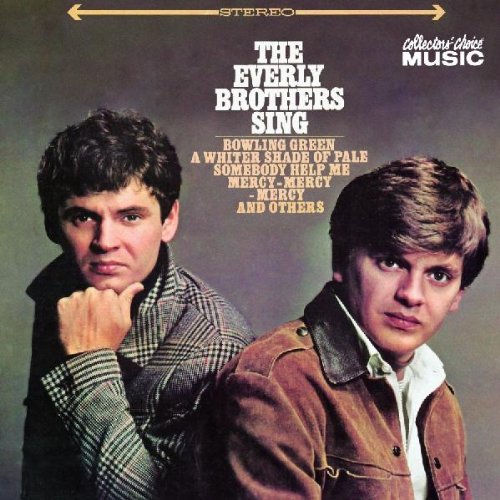
THE EVERLY BROTHERS – Sing – (Warner Brothers) – 1967

Oh no … am I caught in a rut?

This is another late 60s album from a rock act who were "past their prime". Regular readers know I love albums put out when acts were no longer selling records if for no other reason than it gives them a chance to experiment or try different things.

Back in "what Frank is listening to #105" I said this in relation to these types of recordings: It is also from a "genre" of music I like …. the genre being: former rock and pop stars from the 50s recording more "meaningful", introspective and experimental music in the late 60s. Link Wray, Del Shannon, Dion, Elvis, Jerry Lee, Bobby Darin, Johnny Cash, Bobby Vee, Lou Christie, The Everly Brothers, Pat Boone and Gene Vincent all put out fine records in the late 60s which were largely ignored by the record buying public.

It was  a hard slog for most of them – they had to ditch their pop star status, contemporize their sound, make good music, and win over a new more cynical audience in a pretty packed field. Most of them could do the first three but very few could do the last. The exceptions were Elvis, Johnny Cash and Dion.
It's a pity.

The Everly Brothers are not interested in going "introspective" … after all it could be argued they already had as their big 50s hits were up-tempo mediations and observations on teen dilemmas and heartbreak as potent as anything by done by Chuck Berry. Instead on this rather conservative looking album they discover (or try their hand at) psych pop.

But first by way of bio: from what Frank is listening to #65

The influence of the Everly's cant be underestimated – their twin harmonies influenced the Beatles, Beach Boys, Hollies, Simon and Garfunkel etc. They also were not afraid to mix it up a bit and put some straight country on rock albums and vice versa and really pioneered ( in the mid to late 60s) what became known as "country rock" … about the same time if not before Gram added his magic touch to the same..

As biographies go … they had the usual problems of good ol southern boys (Kentuckians) … pills, broads etc. http://en.wikipedia.org/wiki/Everly_Brothers

So what we have here is a psychedelic pop album by the Everly Brothers. There are baroque touches with the strings and a little country sometimes recalling "The Association" but mainly it's MOR pop psych (not that there is anything wrong with that) with one ear turned to London. The London thing is not unusual as the Everly Brothers had been very popular in England throughout the Beatles ascendancy. Their vocal harmonies would be perfectly suited to psychedelic pop and this album does in fact sound a little like The Hollies who were experimenting with their own psychedelic pop … which of course is funny as The Hollies were trying, at one time, to sound like a beat version of The Everly Brothers.

The production is slick though a little offbeat. Producer Dick Glasser worked with Jackie DeShannon, Andy Williams, The Ventures, Gary Puckett & the Union Gap, James Darren and others. Gene Page would orchestrate for Barry White, Johnny Mathis, Elton John and others . Billy Strange was a session guitarist who had worked closely with Nancy Sinatra and  would work with Frank Sinatra, Brian Hyland, Bobby Vee, and Elvis. All were veterans of the Hollywood musical scene.

The brothers can sing, the band can play (Al Capps on guitar mainly, Terry Slater on bass) and with Billy Strange doing some of the arranging something's going to come up roses.

Tracks (best in italics)

  • Bowling Green – Slater – 2:50 – a great piece of Kentucky rural pop via London written by the Everly's bass player, an Englishman. The song has also been recorded by The Gosdin Brothers, Glen Campbell, Neko Case and We Four. Very catchy and a minor hit for the Brothers … their last in the US Hot100.
  • A Voice Within – Slater – 2:23 – Another contemporary (1967) sounding song.
  • I Don't Want to Love You – Everly, Everly – 2:48 – a big ballad that has a lot going on with tempo shifts and harmonies … this could be The Hollies doing cabaret and there is nothing wrong with that. A great song.
  • It's All Over – Everly – 2:23 – this is a dreamy return to their songs of teen heartache of the early 60s. A bit slick and overproduced but not offensive … a different version of this song had appeared on an earlier album.
  • Deliver Me – Moore – 2:35 – a familiar sounding song with a touch of blue eyed soul a la Mitch Ryder with the hand claps and pulsating beat or something like 60s era Neil Diamond. Think "Cherry Cherry".
  • Talking to the Flowers – Slater – 2:57 – if you are "talking to the flowers" you are probably in 1967 or schizophrenic. This song is very much of the times … I'm not sure what their traditional audience made of this (then again they didn't buy the album – no one did). The young hip audience also would also have bypassed this. A pity it's a good piece of flower power inspired psych pop much like The Association. It probably could be amped up a little emotionally … if Brian Wilson had produced it we would really have something.,
  • Mary Jane – Slater – 3:01 – wtf – fuzz guitar (courtesy or Glen Campbell and James Burton apparently), crazy congas, fairground music, and a suspect lyric. If I didn't know it was the Everly Brothers I could guess but I would still have to do a double take. Incredibly, this was released as a single …
  • I'm Finding It Rough – Lyons, Thomas – 2:47 – a cover of a song by obscure English freakbeat band "Hat & Tie". How the Everly's found out about it I have no idea but I suspect it had something to do with bass player Slater as he was English and had joined the Everlys in 1963. A good cover. The original: http://www.youtube.com/watch?v=255UvDvigso
  • Do You – Slater – 2:47 – mid tempo MOR pop with modish overtones … very much in The Association mode (again).
  • Somebody Help Me – Edwards – 2:01 – more fuzz guitar but to less effect … not nasty enough. A cover of a Spencer Davis group song that had been on an earlier Everly's album also (why – I don know).
  • A Whiter Shade of Pale – Brooker, Reed – 4:55 – yep the Procol Harum song … and a very credible version … all 5 minutes of it!
  • Mercy, Mercy, Mercy – Zawinul – 2:28 – written by jazz keyboardist Joe Zawinul in 1966 for his band leader, jazz saxophonist Julian "Cannonball" Adderley. A great song but this kind of deep soul sounds odd coming from the Everly Brothers.
And…

This is a very ambitious album, if for no other reason than it, was aimed squarely at the charts with the "now" sound. It  doesn't always succeed but it has its fair share of good moments … and I have the other Everly Brothers albums … so … it's a keeper.

Chart Action
 
US
Singles

Bowling Green #40
Album

––
 
England
Singles
—
Album
––
 
Sounds
 
Bowling Green

http://www.youtube.com/watch?v=7lGI8CFN_9I&feature=related

http://www.youtube.com/watch?v=qcTCobPJHeY

and attached


covers:

I Don't Want to Love You
attached
 
Mary Jane
attached
 
Others
—
 
Review
 
 
Bio
 
 
Website
 
 
Trivia
  • They (the Everly's) are the cousins of actor James Best ... Sheriff Rosco P. Coltrane in The Dukes of Hazzard.
Other Comments
 
what is Frank Listening to # 65
what is Frank Listening to # 83
 
(originally posted: 28/11/2010)

what Frank is listening to #185 – THE EVERLY BROTHERS – Sing – (Warner Brothers) – 1967

Posted in Pop Rock, Rockabilly and Rock n Roll | Tagged | Leave a comment

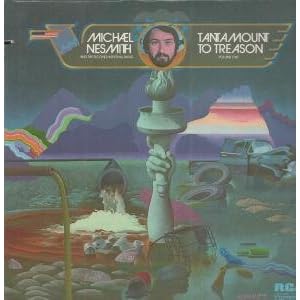
MICHAEL NESMITH – Tantamount to Treason – (RCA) – 1972

Nesmith is a genius.
 
We all love The Monkees but Nesmith is the only one to have a career outside the Monkees and in a lot of ways (apart from chart wise) he matched his creative period in the Monkees and occasionally he surpassed his work with them.
 
His Monkees persona really is "Nesmith" and this comes across in his solo work – cerebral, quirky, humorous and so far away from the mainstream he could get lost.
 
Bio: Wikipedia: "Nesmith was born at St. Joseph's Hospital in Houston, Harris County, Texas in 1942. He was an only child; his parents, Warren Audrey Nesmith and Bette Nesmith Graham, divorced when their son was four. He and his mother moved to Dallas, Texas to be closer to her parents, sister, aunts and grandmother. Bette took temporary jobs ranging from clerical work to graphics design, and developed very good secretarial skills, including shorthand, and, auspiciously, touch typing. When Nesmith was 13 his mother invented a typewriter correction fluid later known commercially as Liquid Paper. Over the next 25 years she and a select group of executives would build the Liquid Paper Corporation into a multimillion dollar international company which she finally sold to Gillette in 1980 for 48 million USD. She died a few months later at age 56"A
 
Allmusic: "Nesmith's first act independent of the Monkees was the formation of the First National Band, with old friend John London on bass, John Ware on drums, and one of country music's best steel guitarists, Red Rhodes.
 
The First National Band signed to RCA Victor and released two albums in 1970, Magnetic South and Loose Salute. The single "Joanne" hit the pop Top 25, and "Silver Moon" also charted later in the year. Nesmith added several members for 1971's Nevada Fighter, and credited it to the Second National Band. The title track skirted the bottom of the charts for several weeks, but Nesmith proved his pop savvy yet again by providing the Nitty Gritty Dirt Band with their hit, "Some of Shelly's Blues." The following year, the National Band released Tantamount to Treason".
 
Clearly Nesmith likes country and has always leant that way. He was born in Texas after all. You can hear country coming through in the Monkees recordings and when left to his own devices he really took it to the next level. A cynic would say that maybe he could afford to: between Monkees money and liquid paper money. But he had enough talent also. Either way he was not content to make straight country or roots country music.
 
Many labels have been thrown at his music: singer/songwriter, pop, folk rock but he was very much one of the first country rock, alt country or progressive country artists. He could sit quite easily next to Buffalo Springfield, The Flying Burrito Brothers, Gram Parsons, The Nitty Gritty Dirt Band or The Dillards. He was certainly though more quirky and "weird" than any of them.
 
This "weird" or  "weird country" is a term I use where strict country music is joined to other forms of music and filtered through a good dose of humour making for quirky, left of centre listening and is not so much a music genre as it is an outlook wedded to a music genre. Nesmith is not dissimilar to Jerry Jeff Walker or John Hartford, if Walker and Hartford were cowboy astronauts playing beat inspired electronica. He is probably closest to "Cosmic Cowboy" Michael Martin Murphy (solo and formerly of the Lewis & Clark Expedition"). Nesmith had actually played with Murphy in his pre-Monkees career, and they are both Texans, and he is pretty "spacey" himself.
 
The beauty of course is Nesmith is relatively normal looking – always was and is. That makes his music that much more subversive like a wolf in sheep's clothing … 
 
Despite the fact this album is quite challenging it actually is quite accessible by Nesmith standards. None of his albums I have heard thus far are straight forward. This is country music but it certainly is trippy … hence the "alt country" tag. The first side is originals and the second side is covers, obscure and well known, but all done in Nesmith's style. The music is exceptionally well played by his band (the Second National Band), which like its predecessor, is a loose aggregate of studio musicians though with former First National Bandmates O.J. "Red" Rhodes (pedal steel) and Michael Cohen (keyboards)). Congas are supplied by the legendary Jose Feliciano (apparently). And why cant you have congas by Puerto Rican on a alt country album?
 
Tracks (best in italics)
  • Mama Rocker – Nesmith – 2:58 – not what I'd expect from Nesmith … a chuck a lunk rocker with a 50s Chuck Berry-esque "Johnny B Goode" feel … which actually isn't dissimilar from the Nilsson or Lennon stabs at 50s rock in the mid 70s. After you get over the jarring aspect the rocker is quite palatable.
  • Lazy Lady – Nesmith – 2:53  – more the Nesmith I know … and very much in the mood of dreamy tranquil ruminations … excellent.
            There were so many things that I should have said
            When I finally said good-bye,
            But the gist of things to come
            Showed me nothing could be done
            To save a love that already died
 
            And, yet, still it breaks my heart to have to walk away
            In the middle of such staggering pain,
            I would like to press you close
            And offer you my coat
            As shelter from the gathering rain
 
            But that would just compound the hurt
            That comes with such moments
            And make it all more difficult to bear
 
            And so I'll walk away and leave you alone
            To seek comfort from the things you know are real,
            But don't let my silence hide
            The tenderness inside
            That memories of you will make me feel
 
            And so I'll walk away and leave you alone
            To seek comfort from the things you know are real,
            But don't let my silence hide
            The tenderness inside
            That memories of you will make me feel
 
            Please don't let my silence hide
            The tenderness inside
            That memories of you will make me feel
  • You Are My One – Nesmith – 4:09 – this is one long aural trip … very spacey … not all that successful but it serves as a fine bridge between the last song and the next …
  • In the Afternoon – Nesmith – 5:54 – gently spacey …
  • Highway 99 With Melange – Cohen – 5:01  – wtf … more obscure than Dylan at his most obscure … but strangely listenable.
  • Wax Minute – Stekol – 4:34 – beautiful … written by the vastly underrated Richard Stekol …
            As you complicate things greatly
            Since you came into my life
            Old veneers and stately postures
            Wax minute within your sigh
 
            And the taxing way of adjusting
            To all the thoughts which you reveal
            Only incites me to motion
            While that's the crux of your appeal
 
            Just the thought of how
            It's always been concealed,
            Where's my heart, love?
            As only you can heal
 
            And his humble plans just don't seem
            To inspire me to heights
            As they did or as seeing you,
            Or as touching you might
 
            And the card that I should have sent days ago
            Falls short of reaching you
            Memories speak kindly now
            But what can I do?
 
            Just be thankful
            For an insight granted to few,
            And don't linger
            On what it might have meant to you
            The distance which I keep
            Has entered into play,
            Miles which make me say
            I won't be seeing you
  • Bonaparte's Retreat – King, Stewart – 4:35  – a cover. Famously done by  Glen Campbell. It sure isn't a straight here.
  • Talking to the Wall – Chadwick – 2:54  – a slow ballad type number, beautifully played.
  • She Thinks I Still Care – Duffy, Lipscomb – 4:04 – the George Jones classic done by everyone including Elvis . This version is very Nesmith.
And…

 A great album … like one long tone poem … put it on late one night whilst drinking a cocktail.

Yup, I'm keeping this. 

Chart Action
 
you kidding … nothing no where
Sounds
 
Lazy Lady
attached
 
Wax Minute
live
Bonaparte's Retreat
 
Talking to the Wall
attached
She Thinks I Still Care 
attached
 
Others
Nesmith's great hit, "Rio" (#1 in Australia, #28 England, no chart in the USA)
Reno? No silly, Rio de Genero
 
Review
 
 
Bio
 
 
Website
 
 
Trivia
  • The albums full title is Tantamount To Treason Volume One. I do not know if there ever was a Volume 2 in the works?
  • Allmusic: "In 1977, Nesmith furthered his efforts in the field of music video by creating a TV chart show called Popclips. When Warner bought the idea from him several years later, the company then developed it into MTV. A stop-gap live album (Live at the Palais) appeared in 1978, while Infinite Rider on the Big Dogma, Nesmith's last solo album for 13 years, was released the following year. During the '80s, Pacific Arts became the most important video publishing company in America, and Nesmith moved into film and TV production as well, winning the first video Grammy award in 1981 for Elephant Parts".
Other Comments
–
 
Picture
 
A picture of Michael Nesmith and he still puts out music, though infrequently: you don't have to have dreadlocks and act all crazy to be off kilter …

(originally posted: 21/11/2010)

what Frank is listening to #184 – MICHAEL NESMITH – Tantamount to Treason – (RCA) – 1972

Posted in Alt Country | Tagged | Leave a comment

PAUL REVERE & THE RAIDERS – Midnight Ride – (Columbia) – 1966

Back in “what Frank is listening to #119″ I said this in relation to The Raiders album “Spirit of ’67”: “It’s only in the last few years I have been really getting into Paul Revere and the Raiders. Back in the 80s I got their two greatest hits compilations ( yes, two – they had a truck load of hits) after foolishly selling some of their earlier albums off at a record fair. Cest la vie … What I like most about PRR is the fact that though they have been influenced and inspired – sometimes clearly with an eye on sales – by other bands they managed to incorporate other styles and trends into their own sound without affecting that sound greatly. Though not always great their work sounds individual and when they get it right they are magnificent.

From allmusic: “One of the most popular and entertaining groups of the 1960s, Paul Revere & the Raiders enjoyed seven years of serious chart action, and during their three biggest years (1966-1969), sold records in numbers second only to the Beatles and the Rolling Stones. And their hits “Steppin’ Out,” “Just Like Me,” “Hungry,” “Him or Me-What’s It Gonna Be,” and “Kicks,” in particular, are now seen by compilers as bold, unpretentious pieces of ’60s rock & roll with a defiant, punk edge. Paul Revere was born on January 7, 1938 in Harvard, NE. He learned to play the piano as a boy, and developed a keen appreciation for the work of Spike Jones & His City Slickers. He joined his first real band while in his teens, and was later joined by 16-year-old Mark Lindsay (b. March 9, 1942), a singer/saxman who ended up replacing the group’s vocalist. Called the Downbeats, they were popular at local dances, and cut a demo for Gardena Records in Los Angeles, where the company’s owner was interested in issuing a record, but only if they changed their name. Revere’s given name was such a natural as a gimmick that they became Paul Revere & the Raiders”.

I went on to say: The key to their success was their commitment to upbeat rock and roll whilst acknowledging change, and they weren’t precious about it as sometimes they were “influenced” by bands that post dated them. Though, as I have said, they kept their original sound, unlike a slavish imitator or someone just jumping the bandwagon. Also they did this even through line-up changes. Despite line-up changes Paul Revere ( the keyboardist) and Mark Lindsay ( the vocalist) were the nucleus of the group and Revere knew where to take the group and Lindsay could sing anything … This album comes from their big hit making period and is very 1966 – lots of twangy guitars punctuated with a bit of 60s punk, more than a nod or two to the Beatles, and some introspection creeping in. This album  is their garage version of “Revolver” though with some thought to future musical innovations. “The Beach Boys” and “The Beatles” may have been  the high water mark on innovation but PPR were only just behind and they were more forward thinking than say The Rolling Stones ( if not as consistent). Produced by the legendary Terry Melcher ( Doris Day’s son, band member  in the Rip Chords, and friend and /or producer to The Byrds, The Beach Boys etc), who knows ( and got) what he wants which is rock, hard edged ballads, and frantic garagy punk but with a clean sound. Melcher also produced a number of other PPR albums”.


All this remains the case for this album which immediately preceded “Spirit of 67”. 

This album has most of the band contributing songs as well as a couple of classic songs not written by them but first recorded by them, like “Kicks” and “Stepping Stone”. On top of that they can all play; Revere’s organ, Smitty’s drums, Lindsay’s vocals, Volk’s bass and Levin’s guitar are faultless …
Allmusic: As a member of Paul Revere & the Raiders from 1965 through 1967 — the group’s prime hitmaking years and their time of biggest exposure on television — Phil “Fang” Volk was probably the second-best-known bassist in rock, at least in America, after the Beatles’ Paul McCartney … With the rise of the band’s fortunes over the next five years, Levin became one of the most well-known guitarists in rock & roll — the group’s appearances on Where the Action Is, an after-school music program hosted and produced by Dick Clark, and various other television venues ensured that the members were all well-known to their fans, so that Levin may well have been the second best-known rock guitarist in America after the Beatles’ George Harrison, and there’s also no telling how many Epiphone guitars may have been sold because of his use of them on camera during this period.


The sound is crisp and clear as you would expect from producer Terry Melcher who had a gift for bringing out the melody and “pop” in a song but retaining the grit.

The band kicks all the right goals, and had many hits. Oddly though they didn’t fare well outside the US so they are almost seen as an underground act by us. However, in the States they were mainstream and rivalled The Rolling Stones in terms of popularity. It may have been short lived but it was glorious.

Tracks (best in italics)
  • Kicks – Mann, Weil – 2:28 – A magnificent song … regardless of what it’s about. Said generally to be a statement on drugs it seems to me to be a statement on anyone looking for hedonistic opportunities … a highlight and one of the key songs of the sixties. Many times revived the only version that comes close is the Flamin Groovies version from the 1980s.
  • There’s Always Tomorrow – Levin, Smith – 2:39 – A nice piece of pulsating garage rock with some Dylanesque phrasing  … one of the album high lights. Sung by drummer Mark Smith.
  • Little Girl in the 4th Row – Lindsay, Revere –  2:58 – a piece that looks forward to Lindsay’s solo balladry … not bad but not especially memorable on first listen but it grows on you.
  • Ballad of a Useless Man – Levin – 2:08 – a nod to the vocal delivery of Mick Jagger though it’s arguable that Mick was doing Mark Lindsay. This social comment song about a homeless man (or a down and out drunkard) is surprisingly free of sticky emotion.
  • I’m Not Your Stepping Stone– Boyce, Hart- 2:31 – the classic most identified as a Monkees song … this version rocks harder and is more angrier. And if there ever was a statement of defiance in the refusal to be put “under the thumb”, be “pussy whipped” or be made into a “manbag” this is it. A no compromise song. 
  • There She Goes – Lindsay, Revere -1:47 – an interesting song – an upbeat melody but about a broken heart. Producer Melcher is on backing vocals.
  • All I Really Need Is You – Lindsay, Revere – 3:27 – a slight Eastern feel melts into a impassioned song about a singular love.
  • Get It On – Levin, Volk – 3:12 – sung by bass player Phil “Fang” Volk with some more Stones stylings. The electric guitar solo by Levin is very tasty.
  • Louie, Go Home – Lindsay, Revere – 2:41 – A self written follow up to Richard Berry’s “Louie Louie” which the Raiders had had a hit with. Again some eastern stylings and Lindsay’s screams make this a winner, though it’s no “Louie Louie”.
  • Take a Look at Yourself – Lindsay, Revere – 1:48 – a “clean up your own backyard” type of song … the message is the raison d’etre of the song.
  • Melody for an Unknown Girl – Lindsay, Revere – 1:59 – wtf … this could have come from a Rod McKuen album. A romantic song with narration which is decidedly un-rock. A lot of people bag this song, but does it work ?… yes … I like this type of crap and I like albums which throw unexpected things at you. And this is totally unexpected. I don’t know what the story behind this song is but the band were thinking outside the box.
And…

Someone on Amazon wrote: “1966 was possibly the greatest year in rock & roll history. The Beach Boys’ “Pet Sounds”, Bob Dylan’s “Blonde on Blonde”, “Revolver” by the Beatles, and “Face to Face” by the Kinks were all released in 1966. I add to that list”Midnight Ride” by Paul Revere & the Raiders”. 

I would have to agree.

A great album and a keeper.

Chart Action

US
Singles
Kicks #4 1966
Album
#9 1966
England
Singles
Album
nothing
Sounds
Kicks
attached
There’s Always Tomorrow
attached
Ballad of a Useless Man
I’m Not Your Stepping Stone
attached
There She Goes
Louie, Go Home
Take a Look at Yourself
Others
Review
Bio
Other Comments
what is Frank Listening to #119
what is Frank Listening to #71
(originally posted: 14/11/2010)

what Frank is listening to #183 – PAUL REVERE & THE RAIDERS – Midnight Ride – (Columbia) – 1966

Posted in Garage, Surf and Frat | Tagged | Leave a comment

BOBBY VEE – Come Back When You grow Up – (Liberty) – 1967

Those regular readers of these "comments" know my affection for the AE/BB artists (after the rise of Elvis before the rise of the Beatles). That affection extends to, and is entranced by their work after their stars have ceased to shine, and for most of them that was the late 60s and early 70s.
 
During this period many former pop stars like Dion, Bobby Darin, Del Shannon, Ricky Nelson and Bobby Vee, put out a series of catchy, tasteful, well played and criminally overlooked introspective albums.
 
Back in "what Frank is listening to #105" I said this: It is also from a "genre" of music I like …. the genre being: former rock and pop stars from the 50s recording more "meaningful", introspective and experimental music in the late 60s. Link Wray, Del Shannon, Dion, Elvis, Jerry Lee, Bobby Darin, Johnny Cash, Bobby Vee, Lou Christie, The Everly Brothers, Pat Boone and Gene Vincent all put out fine records in the late 60s which were largely ignored by the record buying public.
 
It was  a hard slog for most of them – they had to ditch their pop star status, contemporize their sound, make good music, and win over a new more cynical audience in a pretty packed field. Most of them could do the first three but very few could do the last. The exceptions were Elvis, Johnny Cash and Dion.
 
It's a pity.
 
If nothing else I'm consistent (or predictable, if you wish)
 
Maybe the aforementioned acts could afford to be inventive because the demands of churning out hits were no longer there,
 
            maybe they were just trying to keep up with the times,
 
                    maybe they were fulfilling contracts.
 
I don't know what the answer is but as a body of work the albums are never short of professional (don't forget most of them had been playing for ten years) and inventive (within their genre limitations).
 
It would be easy for them to have just put out an album of watered down hits of the day for the "grownups" before taking the money and "splitting man" (60s parlance apparently, man). Some did in fact put out albums like that which usually ended in failure though to their credit they also followed up with albums that are surprising, given the music "factory" most of them came from.
 
I will concede, though, the tunes are generally watered down (I prefer to say "popified") and there is usually at least one hit of the day on each of the albums.
 
Maybe the talent was always there and the lack of expectation to have a big hit gave them wiggle room to express themselves. And most did express themselves from the vantage point of the wise old (pop star) sage who has "been there, done that".
 
Bobby Vee, with five Top 10s and one #1 in the early 60s was no different and "had been there and done that". Now he was 24 and it was 1967 …
 
Background, wikipedia: Born in Fargo, North Dakota, he had his first single with "Suzie Baby," an original song penned by Vee that nodded towards Buddy Holly's "Peggy Sue" for the Minneapolis-based Soma Records in 1959; it drew enough attention and chart action to be purchased by Liberty Records, which signed him to their label later that year. His follow-up single, a cover of Adam Faith's UK number 1 "What Do You Want?" charted in the lower reaches of Billboard in early 1960; however, it was his fourth release, a revival of The Clovers' doo-wop ballad "Devil or Angel", that brought him into the big time with U.S. buyers. His next single, "Rubber Ball", was the record that made him an international star.
 
As is fitting of former early-60s pop stars Bobby seems to have been Italian-American – aka  Robert Thomas Velline. (post comment note – I'm wrong, he is actally of Finnish background)
 
OK  … This album is introspective but it is not solemn. Most of the music is bouncy MOR "sunshine pop" music similar to what Gary Lewis was doing at the same time and no different from The Association, The Grass Roots, The Vogues or even The Monkees.
 
In fact it is superior to most in the genre and fits in well in 1967 (in both lyric and sound) … the trouble is that Bobby Vee got caught in a mind shift in popular culture which had an unwritten criteria for "significance". Few of the old stars or straight pop acts could compete … even the Beach Boys were marginalised. Pity as this music holds up as well as anything from the same era. And it also does not cloud our perceptions of the 60s – the 60s wern't all pot smoking, marches, beads and tripping out, though that has become the common public mythology.
 
Having said that he did have a #3 single from the album … the album was probably built around the single rather than the single lifted from it but I do not know for sure.
 
Tracks (best in italics)
  • Come Back When You Grow Up – Sharp – 2:15 – excellent, gentle pop song … and the aforementioned #3 hit from 1967 … bet you will never find it on greatest hits compilations despite the fact it did better than "California Dreaming", "White Rabbit" or "I Can See for Miles".
  • A Rose Grew in the Ashes – Allan, Dante – 2:39 – perfect 60s pop … hand claps and up front backing vocals. This was, not surprisingly, co-written by Ron Dante (an obscure genius and the voice of The Archies amongst others). Great fun but you are not going to look "tough" listening to it.
  • You're a Big Girl Now – Vee- 2:16 – not surprisingly this sounds a little like "You're a Big Boy Now" by the Lovin Spoonful.
  • You Can Count on Me – Briley – 2:46 – horns and a hip lyric … sounds a little like what The Young Rascals would move into after their hit "Groovin".
  • Get the Message – Gordon, Griffin – 2:34 – James Griffin was later in "Bread" … and Michael Gordon was in a number of bands – together they wrote many songs in the 60s. A slight baroque pop feel to this song which is very much of its time but I'd be happy to go into a venue now and hear a band doing this right now … recorded by others including Brian Hyland, Bobby Vee, Sagittarius, Michael J. James, and The Young Men. I don't know who did it first.
  • Hold on to Him – Cordell, Trimachi – 2:05 – MOR with trite lyrics, horns and strings. Moving into Bobby Goldsboro territory here. Richie Cordell and Sal Trimachi wrote a lot of this type of stuff.
  • World Down on Your Knees- Cordell, Trimachi – 2:22 – more MOR.
  • Objects of Gold – Allan, Dante – 2:29 – this is more like it … bubblegum …
  • Before You Go – Garratt, Russell, Tillson- 2:14 – bubblegum with a nod to British beat – like a cross between the Archies and the Hollies …
  • Mission Accomplished – Russell, Whitson-  2:44 – very slight and not put over with much vigour …
  • I May Be Back – Vee – 2:10 – a trippy MOR type song not dissimilar to PF Sloan. The mix doesn't help it either. Not bad though.
  • Double Good Feeling – Bonner, Gordon – 2:15 – Prolific 60s song writers (formerly of The Magicians) who wrote "Happy Together" and "She'd Rather Be With Me" for The Turtles as well as many other songs. See link at bottom. The song is very much in the vein of the Turtles hits though with horns but without the celestial majesty of a "Happy Together". Still it's pretty good.
And…

A potentially great album only let down by a weaker side 2 … a keeper though.

Chart Action
 
US
Singles

Come Back When You Grow Up #3 1967
Album

#66 1967
 
England
no chart action
 
Sounds
 
Come Back When You Grow Up
a cover
and attached
 
A Rose Grew in the Ashes
attached
 
You're a Big Girl Now
 
Get the Message
attached
 
Objects of Gold
Mission Accomplished
I May Be Back
 
Double Good Feeling
 
Others
 
Bobby does his #1 1961 hit live in 1980
influential ….?
 
Review
 
 
Bio
 
 
writers:
 
Website
 
 
Trivia
  • wikipedia: Early in Vee's career, a musician named Elston Gunnn briefly toured with the Bobby Vee band. "Gunnn", whose birth name was Robert Allen Zimmerman, later went on to fame as Bob Dylan.
  • In Dylan's autobiography, Chronicles, Volume One, he makes special mention of Bobby Vee and shares significant and complimentary details about their friendship, both professional and personal.
(originally posted: 07/11/2010)
what Frank is listening to #182 – BOBBY VEE – Come Back When You grow Up – (Liberty) – 1967
Posted in Pop Rock, Sunshine Pop and Baroque | Tagged | Leave a comment

DAVID ACKLES – Self Titled – (Elektra) – 1968

There will be a lot of referring to earlier comments here as I have waxed lyrical about Ackles before. 
 
Ackles made four albums over a five year period and his vision is clear and runs through all his albums. He is, pretty clearly, a musical auteur. Similar themes and stories crop up from album to album and the mood is sustained over the five year period. You might say this was just his style and that may be the case but a more consistent style would be hard to find. You could almost throw all the albums together and have one long song cycle.
 
This small body of work is so undervalued that it is criminal.
 
Back in what is Frank Listening to #128 I said:  If I didn't already know who Ackles was ( I have "American Gothic" (1972) and I commented on "Five & Dime"(1973) back in what Frank is listening to #91) I would still have picked this album up  as it's on the Elektra label – home of The Doors, Tim Buckley, Love, Stooges, MC5, Phil Ochs etc. Just about everything they released in the late 60s /early 70s was interesting.
 
a brief bio from Allmusic: Born on February 20, 1937 (in Illinois) , he was working in vaudeville by age four and in the mid-'40s played a character named Tucky Worden in Columbia's Rusty the Dog film series. His co-star was Dwayne Hickman, who would later go on to play Dobie Gillis on television. He attended the University of Southern California and took a year to go to school in Edinburgh, where he studied literature. He eventually got a degree in film studies, though he was proficient in the theatre, ballet, and choreography. He held several odd jobs after school and was eventually hired as a songwriter by Elektra. He managed to parlay that assignment into a multi-record deal …

Back in what is Frank Listening to #91 I said: I have Ackles' "American Gothic" (1972) which is generally regarded as his best album … and it certainly is a good 'un. Ackles is, simply put, magnificent. His small body of work contains some of the highlights of the "singer songwriter" genre. Though these grandiose statements of mine are not without qualifications.  If you like your music straight ahead, not to complicated, and more tune based rather than character or story based then give him a wide birth ( but, don't get me wrong,  there is nothing wrong with "straight ahead" and "uncomplicated"). Likewise if you think John Lennon or Harry Chapin are the heights of 70s singer songwriters then steer clear. And, finally, if you don't like musical theatre you wont make it past the first song.

He recorded 4 albums over a 5 year period between 1968  and 1973 …they sold nothing ("American Gothic" is the only record he had that charted – #167) . Ackles died of lung cancer on March 2, 1999, at the age of 62. He is however ( and had been) extremely influential on many ( and many minor) artists like Elvis Costello, Phil Collins, Bernie Taupin and Elton John. Don't let those names put you off …..I can see only the obvious story song aspects of Ackles in them – with the exception of Costello who seems hell bent on re-reading the "American Songbook" and maybe Bernie Taupin.
 
Ackles is of the singer-songwriter genre from the late 60s and early 70s. The genre is much heralded, though it should also be much maligned as anyone who puts pen to paper and plays a guitar or piano is considered a "singer songwriter"… but most of them do not rise above a catchy hook and some lines  that rhyme. Ackles however (especially on this LP) encroaches on musical theatre territory  though I hasten to add that he is from the "rock" paddock as opposed to the "popular" music field (Sinatra, Crosby, Mitchell et al), though he does blur the lines.
 
In what is Frank Listening to #128 I said: This album, his 2nd, is a hyper emotional, brutally honest (which is unusual as the older I get the more I realise that not everyone has insight though I thought everyone did) and quite eccentric. I'm not sure who Ackles thought his audience was in1970 but if there ever was a time for experimentation it was the late 60s /early 70s. Despite the fact he does not draw on the "great American songbook" as much as he does on "Five & Dime" what he does draw on is American art, tin pan alley, and the avant guard which really culminated in his 3rd album,  "American Gothic" . This is glorious music and quite visual in it's structure… in mood he comes across as a more frantic aural version of a Edward Hopper painting from the 40s.
 
I stick by that.
 
This first album from 1968 has touches of musical theatre and Brecht / Weill. It also has touches of Tim Buckley and Leonard Cohen. It is his most "rock" album though. The men backing him were various Elektra records session musicians most of whom would form the band Rhinoceros though there are past or future members of Daily Flash, Buffalo Springfield and Iron Butterfly.
 
After this Ackles never made the same concessions to popular music and withdrew further and further into the fringe. Arguably this set would have benefited from a sparse sound like his future albums but as it stands it still is very left of centre and quirky, and the songwriting cuts like the well used proverbial knife.
 
The music is intense and thoughtful without being pretentious. The lyrical  imagery is as vivid as anything Dylan ever wrote without the obscurity. The songs are heartfelt and visceral and often the songs sound very like the French chansonniers or a younger Rod McKuen. The lyrical meanings are often dark but never affected, gloomy or self indulgent. The mood is evocative and plays out like a film in your brain. In many ways he could be the Townes Van Zandt of rock pop musical theatre … especially if Townes lived in Europe. (I only use Townes as a reference as people are more likely to have heard of him than Ackles). Jimmy Webb could also serve as a point of favourable comparison.
 
God pops up in a number of his songs also. Ackles himself was a spiritual, conventionally religious man but his music would suggest that he wasn't fire and brimstone and wasn't a happy clapper. In many ways it seems that he is saying God exists, but life is pain, and God well not intervene on physical or human concerns so you have to find your own path with your wounds and scars. I'm surprised he never lived in Croatia.
 
Tracks (best in italics)

  • The The Road Cairo – amazing … intense and musically, probably, the least of the songs here to indicate where Ackles was going … covered by the Julie Driscoll led Brian Auger & Trinity in England.
  • When Love Is Gone – this is more the Ackles we know …. eaning towards musical theatre.
  • Sonny Come Home – fully fledged musical theatre with harrowing lyrics and also very much a part of the American avant garde. It's also very dramatic and is the type of song Jacques Brel did and Serge Gainsbourg wishes he could do.
            These woods I've been here before
            but someone's changed the colour of the leaves
            Not leaves not green anymore
            What is that hanging in the trees?
            Bits of glass broken
            bicycle wheels broken
            old toys old wounds
            broken broken
  • Blue Ribbons – a smacking of Stephen Sondheim on downers here … mind you that could apply to a number of songs.
  • What a Happy Day – this is a happy day? Well the lyrics are upbeat but Ackles vocals almost negate the message. His happiness is one always tempered by a concern that there is something bad around the corner. He isn't being morbid just thoughtful and possibly middle aged.
  • Down River – I don't like the mix on this one – Ackles vocals are too far back.
  • Laissez Faire – a show tune if there ever was one.
  • Lotus Man – a existential love song … the lovers either transcend reality or refuse to accept it …
            In the night
            listening to the city sound
            of the people who ignore us
            we'll take flight
            with the stars ether bound
            only galaxies to bore us.
  • His Name Is Andrew – a non-religious religious epic about a guy called Andrew who works in a canning factory. Through three verses God (or God's existence) is questioned by Andrew. What it all means I let you to decipher with the lyrics as a guide but the focus is "Andrew" not "God'.  I think there is enough equivocal detail in the song to keep the sceptics, atheists or those dismayed with organised religion entertained.

            His name is Andrew
            He works at the canning factory
            He doesn't have a friend
            He chooses to wait alone for his life to end            

            When Andrew was just a little boy
            He learned all the words to all the hymns of joy
            And he sang them on Sunday
            And he sang them on Monday
            And through April and through May
            And he caught them say
            God is love, God is love
            And he believed them

            This child was Andrew
            He lived in a world of nonsense
            On him the lion grinned
            He sang in the arms of God as he strung along
            When Andrew was tall and twenty-one
            He wandered far from God and wondered what he'd done
            For he still sang on Sunday
            Though he muddled through Monday
            With a silence in his head
            Till in jest it said
            God redeems, God redeems
            And he believed it

            This man was Andrew
            On hearing a voice his thought was stilled,
            Returned to the arms of grace
            He stumbled from the arms of night into a lighted place
            When Andrew returned into the light
            He lifted his voice and sang away the night
            And the preacher from Sunday
            Heard him singing on Monday
            And he stopped him with a word
            From the dark he heard
            God is dead, God is dead
            And he believed it

            My name is Andrew
            I work at the canning factory
            I do not have a friend
            I choose to wait alone for this life to end

  • Be My Friend – God exists in this song also but this is Ackles the humanist.
            This life may not bring much comfort to you
            This world may lose its touch of kindness too
            and who's to blame?
            Why can't you see?
            Only you and Me
            so if I may
            I'd like to say
            be my friend.
 
And … 

As I have said before …. Ackles apparently regarded the message from Ecclesiastes as gospel (half pun intended) : "Who gathers knowledge gathers pain." …  pretty much sums up his music. 

I'm keeping this … brilliant. 

I already have Ackles most well known album, "American Gothic" … and I have commented on the other two so this is the last "comment" on Ackles you will be seeing …

Chart Action
 
As if … anywhere.

Sounds

The The Road Cairo  
 
 
Sonny Come Home   
and attached

Blue Ribbons  

 
What a Happy Day  
Down River   
Laissez-Faire   
 
His Name Is Andrew 
and attached
 
Review
 
 
Bio
 
 
Website
 
 
Trivia
  • This album is also known as "Road to Cairo"
Other Comments
 
what is Frank Listening to #91
what is Frank Listening to #128
 
(originally posted: 31/10/2010)

what Frank is listening to #181 – DAVID ACKLES – Self Titled – (Elektra) – 1968

Posted in Singer Songwriter | Tagged | Leave a comment

DWIGHT TWILLEY BAND – Sincerely – (Shelter) – 1976

 
OK … I'm a dilettante* but I had never really heard much of Twilley's music before, even though I was aware of him. I found someone on eBay who was selling a batch of his albums cheap so …
 
I have always had a soft spot for powerpop (though with reservations) mainly because any music that is short, sharp and jagged is worth a listen. And in the 70s awash with disco funk excess, prog rock excess, saccharine Eagles pseudo country rock excess, bloated glam rock excess and nauseating world music excess, powerpop filled the rock void until the rise of punk.
 
Punk it isn't but rock in a youthful, jubilant way it is, and that's enough. It's easy to see how it was incorporated into punk and the New Wave.
 
For discussions on powerpop see my previous comments:
 
what Frank is listening to #29 – D.L. BYRON – This day and Age – (Arista) – 1980
what Frank is listening to #133 -THE SIDEWINDERS – The Sidewinders – (RCA) – 1972
 
In #133 I said ( and I am repeating what I have said above): "It is clear that the music was influential on subsequent punk acts. Though punk can be traced back to The Saints, Rocket from the Tombs, New York Dolls, and The Ramones and then even further back to the MC5 and The Stooges. (Any further back and there may be the punk energy in individual acts though not the direct stylistic influence IMHO). What is unacknowledged on punk is the less aggressive and more straight forward rock (powerpop) acts that influenced it like Grin ( with Nils Lofgren), Earth Quake, Big Star, The Nerves, Cheap Trick, The Sneakers, The Flamin Groovies and even Bruce Springsteen. What they shared were songs that were short, sharp, in your face, and punchy. Which, in the early to mid 70s … a decade of glam excess, bloated jazz rock fusion, ponderous prog rock pretentious, middle of the road country rock and all forms of disco, sounded quite revolutionary and progressive, despite the fact that lyrically the music rarely rises above boy + girl songs". 

Allmusic defines power pop as: "Power Pop is a cross between the crunching hard rock of the Who and the sweet melodicism of the Beatles and Beach Boys, with the ringing guitars of the Byrds thrown in for good measure. Although several bands of the early '70s — most notably the Raspberries, Big Star, and Badfinger — established the sound of power pop, it wasn't until the late '70s that a whole group of like-minded bands emerged". 

Despite my general antipathy to the generally overrated The Who ( their best album is Daltry's first solo album) I would still say I disagree with that statement anyway. Yes, the Beach Boys, Beatles and Byrds are all here to be heard but they have all been sped up as a sign of the times rather than crossbred with any The Who crunching hard rock. The Who's crunch is coming from a different place."
 
The reservations I have with powerpop lie around the fact that powerpop rarely broke new ground.
 
If you have a powerpop compilation put one on and you will see what I mean.
 
What intrigued me about Twilley though is the reference to him being some sort of a bastard offspring of a union between The Beatles and Elvis.
 
He and band mate (the equally talented) Phil Seymour were kids from the Midwest (Tulsa,Oklahoma – legend has it they met at a revival screening of "A Hard Day's Night" in 1967) which meant they grew up in relative isolation from the music centres on the East and West coasts. They had been enamoured with the punchier side (pre-"Sgt Pepper) of the Beatles since the late 60s and also, apparently, they had a love of Sun records, so much so that they actually travelled to Memphis and met with Sam Phillips who listened to their tape, gave them advice, and hooked them up with Sun rockabilly legend Ray Harris from where they developed a love of Elvis and developed a sound that was equal parts Beatles and Elvis (or so the story goes).
 
Dwight himself gives a variation on the story: http://www.spinner.com/2010/03/12/dwight-twilley-interview-sxsw-2010/
 
"I grew up with the Beatles and was really influenced by that. Started out, had a little band and had all those expectations of that sort of sound. By chance, when we first got started, we couldn't afford to go out to L.A. or New York, so we decided to take a cassette and go to Memphis, because that was close to Tulsa. We were just kids and we had a cassette and we wanted to play it for a real record company. Turned out that we just walked into a record company, not paying any attention to what it was and it turned out to be a place called Sun Records. We played our tape and this guy named [Sam] Phillips liked the sound of it. He organized us going down to record with a producer that was an early Sun artist, Ray Harris, in Tupelo, Mississippi, of all places. So, I think that describes where my sound came from. It’s being influenced by the Beatles and later on, having this whole rockabilly-rock ‘n’ roll-Elvis-Sun Records influence, kind of mingling the two. I think that’s the main thing that [set] my sound and the original Dwight Twilley Band sound aside from a lot of the bands at that time. …. [The Beatles and Sun Records influence is] the main thing that’s set us aside from other groups — kind of an English rockabilly [sound]".
 
A pretty good definition and incidentally a lot of this can easily fit into the musical book of legendary English rock 'n' roller Dave Edmunds.
 
Certainly the Beatles can be heard all over this album whilst the Elvis influence is a little more obscure but clearly there is a lot of Sun era echo. In any event Twilley later went on to cover many Beatles and Elvis songs as well as write many songs that sound like the Beatles or Elvis.
 
And when you think of it, Elvis as powerpop isn't that far fetched … a number of his movies songs could fit the bill and surely "Burning Love"  from 1972 could be a powerpopper …
 
This album is produced by Oister (which is Twilley and Seymour and was the name of their  original band) and the band are in fine form with Leon Russell adding some piano. All songs are written by Twilley. Apparently a young Tom Petty did some backing vocals also (and the music is not dissimilar to his). The brains though are clearly Twilley and Seymour (only they are pictured on the back and the inner art work). Seymour was central to the sound but I suppose Twilley got the headline because he wrote the songs.
 
Mood wise the album is both nostalgia and retro on one hand and contemporary on the other. The music is exuberant but there are some nice melancholy touches. This may be a little too pop for some ears but if there ever was an album that captures the dreams of a couple of kids to leave their surrounds and see the world as they believe it was then this is it.

Tracks (best in italics)

  • I'm On Fire – 3:15 – The single came out in 1975 and was a hit (retro rock was big … think "Happy Days" etc). After it did well they had to build an album around it … this one. Very much an updated rockabilly sound and a great song.
  • Could Be Love – 2:38 – Twilley is channelling Lennon singing southern soul here … and a great tune it is.
  • Feeling in the Dark – 2:54 – the backing voices and the guitar remind me of a more subdued Led Zeppelin which is not that strange though as Led Zeppelin could be a heavy rock rockabilly band at times.  This song is a grower.
  • You Were So Warm – 2:25 – hello Beatles, hello The Searchers …
  • I'm Losing You – 2:11 – a gentle ballad of love lost – has to be one on every powerpop album.
  • Sincerely – 2:38 – wow … as experimental as powerpop gets … again Beatles vocal and melody over some Sun era echo.
  • TV – 2:13 – apparently Elvis was keen to cover this track. I don't know if that is true but this song is certainly in the Elvis mould … and really leads into what Robert Gordon would take up later.
  • Release Me – 2:28 – another song that harkens back to the late 50s and teen heartbreak songs …
  • Three Persons – 2:05 – a beautiful pop song in the vein of the 60s US pop response to the British Invasion … think "When You walk in the Room" or Gary Lewis …
  • Baby Let's Cruise – 3:00 – another late 50s weepie, as if it was sung by Paul McCartney.
  • England – 2:33 – despite the title I'm not sure what this one is about … seriously.
  • Just Like the Sun – 2:46 – not dissimilar to a McCartney solo song …
And…

 This could be one of the best powerpop records I have heard thus far as it has it's fair share of great songs whilst the rest are all good or better. Also, importantly it is more inventive than others in the genre … I'm keeping this. 

Chart Action
 
US
Singles

I'm On Fire – #16
Album
#138
 
England
 zip (like most powerpop nothing charted in the UK)
Sounds
 
I'm on Fire

live


Website
 
 
Trivia
  • *STEVE ALBINI in Magnet : "The bands you mention (Big Star, Raspberries, Flamin’ Groovies, Cheap Trick, Dwight Twilley, Shoes, dB’s, Matthew Sweet, Posies) are utterly unrelated. I can tolerate some of them, love the Flamin’ Groovies and Cheap Trick and have a profound hatred of the rest. I cannot bring myself to use the term “power pop.” Catchy, mock-descriptive terms are for dilettantes and journalists. I guess you could say I think this music is for pussies and should be stopped". (Thanks Ivan … I certainly agree with Albini on the Groovies and Cheap Trick but do think all the others mentioned have some great tunes)
  • mining the same Elvis / Beatles hybrid mountain though infinitely more quirky and thinking well outside the box is the legendary R Stevie Moore http://www.youtube.com/watch?v=v1MfeLx6Uds&a=GxdCwVVULXemrcolG-Qy5IU8OQu1xJ-e&list=ML&playnext=1
Other Comments
—
 
Picture
 
The Dwight Twilley Band : Manager Ron Henry, Dwight, the late Phil Seymour & Bruce Wheeler
 

(originally posted: 24/10/2010)

what Frank is listening to #180 – DWIGHT TWILLEY BAND – Sincerely – (Shelter) – 1976

Posted in Power Pop | Tagged | Leave a comment

JAY AND THE AMERICANS – At The Cafe Wha? – (United Artists) – 1962

OK … by now you all should know I'm partial to the vocal group Jay and The Americans. At their best they were one of the best vocal harmony groups, black or white. At worst they were strictly saccharine MOR.
 
Where does this album fit in?
 
For those not au fait with Jay and The Americans, or those who have forgotten my earlier words of wisdom I refer you to my previous comments … see the end of this "comment". Suffice it to say they were from 1960s NYC, sang vocal pop and and were  groomed by R&B, rock writing legends, Leiber & Stoller … is this enough?
 
Yes.
 
This album is their second, released in 1963, and features Jay Black on vocals. The original vocalist Jay Traynor had just left the group so I suppose this is a bit of a try out for the new guy. (There is a third Jay – who does the recent revival concerts).
 
It's also a live album which was something quite rare in pop rock at the time though quite common in jazz and folk.
 
As to the question above – where does this album fit in the discography of Jay and the Americans ("JATA")  – I would think it fits in at either end of their spectrum as it hints at the directions they would explore later, both good and bad. Mostly, though, it's a good indicator of US pop rock in 1962 prior to the rise of the Beatles when pop rock was suffering some growing pains. Mainstream rock was only six years old but already suffering a crisis as it's initial fans grew up. It seems record labels must have thought of rock 'n' roll as a music for youth and that as the youth grew they would gravitate to other forms of music rather than let rock grow up with them. The thinking of course is faulty and shows little knowledge of the origins and ancestry of rock but at the time it must have seemed the way … if proof of this logic was needed look at Bobby Darin who had successfully crossed over to Sinatra's territory and Dion and Ricky Nelson who had gone for smoother sounds. Hell, even Elvis had come back from the army and despite some convincing, landmark R&B and rock he was having big hits with glorified up-tempo Neapolitan songs like "It's Now or Never" and "Surrender" and old ballads like "Are You Lonesome Tonight" (and glorious they all are also).
 
With that in mind this album tried to accommodate JATAs previous doo wop leanings and R&B as well as incorporate cool lounge jazz, show type songs, and folk (which was going through a boom).
 
Produced by Lew Futterman for Leiber & Stoller the music is a little tinny – but this is a vocal group and these boys can sing.
 
What pervades the whole album is a sense of mischievous fun … there are quite a few asides both musical and between songs and there is a tongue in cheek attitude to most of the numbers. And some of the distinctively NYC Damon Runyonesque accents in the spoken bits are a hoot as well as quite urbane and astute as you would expect from a bunch of largely Jewish (?) kids from middle class (?) Belle Harbor, Queens.
 
Does it work ………………..yes (just) 
 
Why.
 
Well, because these guys can …err, sing (despite the scattergun material)
 
Tracks (best in italics)
  • Gypsy In My Soul – an old standard done by everyone … Bing Crosby, Sammy Davis Jr.
  • I Hear Music – a jazzy standard done by Ella Fitzgerald in1962.
  • The Song Is You – a Jerome Kern and Oscar Hammerstein standard, again done by everyone, but associated with Sinatra.
  • A Certain Smile – a Sammy Fain – Paul Francis Webster song was published in 1958 for a film and is associated with Johnny Mathis.
  • This Land Is Your Land – energetic, much in the vein of the folkies … a great song …
  • The Percolator Song – the old standard nonsense song.
  • The Riddle – "The Riddle Song" or "I Gave My Love a Cherry"… an old English folk song … look, something the English invented … a great old song revived by the folk movement but forever (in my mind) associated with Homer Simpson … mmmmmmm chicken.  http://en.wikipedia.org/wiki/The_Riddle_Song
  • Girls, Girls, Girls – a Leiber – Stoller original done first by the Coasters and then covered by Elvis. This version is probably "inspired" by the Elvis version given the tempo and the fact that the film of the same name was released in 1962 however the comedic aspects are from the Coasters version … there is also a touch of Jerry Lewis in there. The English group The Fourmost did a similar comedic version in 1965.
  • A Lot Of Living To Do – a song from the Broadway "rock" musical "Bye Bye Birdie"(1960) … it was made into a film in 1963.
  • Gonna Build A Mountain – a faux folk song from the stage musical "Stop the World I Want to Get Off" by Anthony Newley and Leslie Bricusse … which hit Broadway in 1962.
  • Lawrence – a pisstake of the Lawrence of Arabia theme (?) with a vocal based on "Hey Baby" by Bruce Channel (I think)
  • The Golden Vanity – another old folk song … http://en.wikipedia.org/wiki/The_Golden_Vanity
  • Kansas City – another Leiber – Stoller song from the early 50s – the best known version being by Wilbert Harrison in 1959 (#1). The Beatles did it in 1964.
  • Baby, That Is Rock & Roll  – another Leiber – Stoller done first by The Coasters (?) but popularised later in the "rock" musical Smokey Joe's Cafe.
  • For All We Know – A version by Dinah Washington reached #88 on the chart in 1962 and a version by Nat King Cole is also well known.
And…

Patchy but I'm keeping this.

Chart Action
 
no action
Sounds

I Hear Music  
attached 
 
The Riddle  
 
Girls, Girls, Girls  

Kansas City  

Baby, That Is Rock & Roll   
attached 
 
Others
 
Review
—
 
Bio
 
 
Website
 
 
Trivia
  • The original lead singer of this quintet was John "Jay" Traynor. After he left the group in late 1962, David Blatt assumed the name Jay Black and became the new lead singer. The original band split in 1970. Later on, Jay Black as well as Jay Traynor have travelled with a band of "Americans" due to a court settlement that allows them both to make a living off the name.
Other Comments
 
what Frank is listening to #157
what Frank is listening to #127
what Frank is listening to #123
what Frank is listening to #77
 
(originally posted: 17/10/2010)

what Frank is listening to #179 – JAY AND THE AMERICANS – At The Cafe Wha? – (United Artists) – 1962

Posted in Pop Rock | Tagged | Leave a comment

EXILE – Self Titled – (RCA) – 1973

I had no idea who this band was when I picked up this LP, though I had seen their vinyl around in the past. After reading about them on allmusic (right now) it becomes abundantly clear that you gotta pay the bills and if you try hard enough you can make a living out of the music business.
 
Allmusic: "Among rock listeners, Exile is remembered as the one-hit wonder responsible for 1978's number one smash "Kiss You All Over." However, in the early '80s, the Kentucky-bred band reinvented itself as a country outfit — and a hugely successful one at that. Exile was actually formed all the way back in 1963 in Berea, KY".
 
Exile lasted as a working unit from 1963 -1993 which is pretty good for a career … idn't it? The band was then revived around 1996 for the oldies circuit and released some more albums … and … they are still around.
 
There are some local bands from Brisbane who could match those lengthy years but in defence of Exile they had a # 1 US single in 1978 ( Kiss You All Over), ten (!) #1 country singles between 1983-87 and four Top 10 (including 2 #1s) country albums.
 
They must be doing something right.
 
But then again middle America is big.
 
Exile over their career tried rock 'n' roll, blues boogie, pop, country rock, country, southern rock, neo disco, MOR, soft rock and a couple of other hybrid styles no doubt. I am usually suspicious about musical changes in a band, especially when it's mid-stream and at a whim – though here I have to admit that the styles this band have tackled are out of the same stable (only just though) and that they have just adapted, apparently, their sound to what was the dominant sound around at the time. Is this good ? It is when Paul Revere and the Raiders do it but here I don't know because I haven't heard enough of their work.
 
This was Exile's first album from 1973 and it is a mix of east-coast country rock, laid back southern blues boogie, southern rock, and MOR soft rock. There are a handful of odd covers amongst the originals. The band is tight, but not surprisingly given the musical chairs being played, there is no feeing of a cohesive whole and the music is strangely unmemorable.
 
Does this mean it's bad? No … just unmemorable.
 
Rewind: I've just listened to the album a second time … some may call this album eclectic .I call it crap. I'd like to change the earlier question regarding whether this was bad from "no" to "yes" – there is too much of an eye on the $ resulting in a musical schizophrenia.
 
The best I can say, based on just this album, is that Exile are a working band and they may not be artisans but they are competent tradesmen albeit ones who you have to keep an eye on to make sure they don't rip you off.
 
Tracks (best in italics)
  • Devil's Bite – he doesn't bite so much as yawn. Written by Todd Rundgren!
  • Ridin' Thumb – a Seals and Crofts song.
  • You're My Woman – pure MOR though admittedly well sung in a rustic sort of way. Like Tom Jones with a corncob up his date hole.
  • Mabel – white country funk with a bit of boogie.
  • Just One Victory – soft rock drek. Another track written by Todd Rundgren! Bill Traut produced this album – he also produced the Nazz which probably explains the Rundgren songs which are from his solo albums.
  • Jesus Is Just Alright – what the fark ? Prog rock meets Christian music.
  • Please Be There – The Partridge Family gone country funk?
  • Believe – a up-tempo soft rock ballad with Christian rock overtones with the schmaltziest lyrics this side of The Carpenters. Shoot me.
  • Do What You Think You Should – a horn driven funky country soul … lame.
  • Hold Tight, Woman – Lyric: "Baby I'm a playing rock n roll" – b,b,b,b,bad rock 'n' roll boogie with a lot of in,n,n,n,n uendo. Dumb enough to be bearable.
And …

I wasn't sure if I would like this album …and I don't …. sell.

Chart Action
 
Nuttin no where
 
Sounds
 
You're My Woman
attached
 
 
Hold Tight, Woman
attached
 
Others
the hit:
 
Bio
 
 
Website
 
 
Picture
 
aaahhh fashion … just goes to show that everyone in the 60s looked cool even if they were really nerds …
 
Exile in the 60s
 
[exile-exiles67.jpg] 
 
and in the early 80s
 
 
(originally posted: 10/10/2010)
what Frank is listening to #178 – EXILE – Self Titled – (RCA) – 1973
Posted in Rock & Pop, Soft Rock | Tagged | Leave a comment