DAVID LONDON – David London – (RCA) – 1981

what Frank is listening to #197 – DAVID LONDON – David London – (RCA) – 1981
 
I'd never heard of this guy before and didn't hold out much hope given the sleeve art.
 
The sleeve art is fairly generic late 70s early 80s art, especially with RCA. It's almost as if they didn't want to spend to much as they had no faith in the product. Either that or they were going for a slightly new wave look album design, though clearly London himself doesn't look remotely "new wave"
 
As it turns out London isn't new wave or even a old school power popper. And I wasn't wrong in not knowing him though he did find fame after this as singer for ….


wait …


wait …


wait …


wait …


wait …


I bet you wont guess…


lead singer for …


TOTO!
 
 
OK, I qualify that "fame" word as the "fame" was under his real name of Fergie Fredericksen and it only lasted for one Toto album, "Isolation" from 1985. That album hit a respectable #42 in the US and was top 10 in the far east and Scandinavia. It however didn't do as well at Toto IV, with original vocalist, Eric Martin. That's the big seller with all the Toto hits we remember (or want to forget Ivan would suggest). Apparently there were tensions between London, err Fredericksen, and the band especially guitarist Lukather. Fredericksen shouldn't feel miffed there were at least another three vocalists after him …. (bet you didn't know that about Toto)
 
I should say here lest some think I'm a Toto fan that the above was found on the internet with the intent of increasing our collective Toto knowledge.
 
I should also say there are no doubt some fans of Toto out there especially those of the "it's so bad, it's good" group.  I've never really understood that logic though it's probably subliminally practiced by me somewhere in my music tastes. That's not to say Toto didn't have some catchy singles but they inflicted a lot of crap and a lot of dubious fans on us also.
 
London was however no newcomer to music. He had been floating around music for 15 years and had been on the fringes of success for almost as long.  During that time he had accumulated a group of musician friends who would provide him with work. Allmusic refer to him quite aptly as the music equivalent of Kevin Bacon and the  "Six degrees of Kevin Bacon". That is substantially true though most of those friends are all within the genre of "adult oriented rock" or "arena" rock.
 
Fans of the genre sometimes call it "melodic rock"  or even more regally "classic rock" though in reality it's just MOR, 70s "pomp rock" with occasional synths. "Mainstream Rock" is a good enough pigeonhole for the music.  The style hit its stride in the late 70s and peaked through most of the 80s with groups who had their roots back in the late 60s and early 70s. That is to say these bands were not on the cutting edge of the youth movement but because of their musicianship could provide slick product very quickly and efficiently. "REO Speedwagon", "Toto", "Foreigner", "Survivor", "Boston", "Journey", "Asia" etc are all examples.
 
London produced this album himself … for RCA to hand over production rights to a unestablished artist on an album would indicate that that artist must know his way around.
 
Regardless, by and large the music is dire.
 
And don't give me any of that it's so bad it's good crap.
 
wikipedia: Dennis Hardy "Fergie" Frederiksen (born May 15, 1951, Grand Rapids, Michigan) is an American singer who was the lead vocalist for AOR bands Angel, Le Roux, and Toto in the 1980s. He got his start in the mid to late '70s fronting Chicago pomp-rock bands MSFunk and Trillion and was also the background vocalist for Survivor. He scored hit singles in three consecutive years all with different bands: Survivor's "American Heartbeat" in 1982, Le Roux's "Carrie's Gone" in 1983, and Toto's "Stranger in Town" in 1984.
 
He also had a couple of tracks on the Village People soundtrack album "Can't Stop The Music" (1980) (and co wrote all the tracks on the ill-fated new image Village People album "Renaissance" (1981).
 
Hmmmmmm
 
I've never been a great one to "listen without prejudice" but at least I will listen ……..
 
Tracks (best in italics)
  • Somebody's Got My Someone – probably the best song on the album. Reminiscent of a lot of US skinny tie powerpop bands though the inspiration probably is, as it was for those bands, from somewhere in the early 70s. It's hampered by a little guitar wankery half way through but otherwise a interesting song.
  • Destination Zero – this is more like it. Complete crap.
  • She's Hot – who's says I don't suffer for my obsessions?
  • Idol Maker – classic 80s crap – guitars and chintzy keyboards. This is total crap but so indicative of mainstream aging 80s rock that it's almost a template.
  • Walk In The Room – a magnificent song written by the magnicent and gorgeous Jackie De Shannon …..not the best version I have heard but clearly this is something from London's youth before the time and taste distorted everything.
  • Keep Playing Around – playing with a colour by numbers set ….
  • Live Your Own Life – groan
  • Suicide Dance –  a touch of the "rock" Billy Joel here (yes it was pretty lame)
            I'm Out of Control, tonight
            Or possibly crucified,    
            I'm doing the suicide dance with you
 
         ……. so ridiculous it should be covered
  • Baby's In Love – groan
  • Weakness – painful, like being repeatedly hit with a Samoans nut bag.
 
And…
 
It seems like London was allowed to move outside of his comfort zone on this album and reach back to his musical youth but only fleetingly. Patchy and not memorable but it could have been a lot more offensive.
 
Refer to my website for sale details.
 
Chart Action
 
US
England
 
nothing no where

Sounds
 
Somebody's Got My Someone
attached
Idol Maker
Walk In The Room
attached
Others
Village People
http://www.youtube.com/watch?v=mIeTgKZvadk (who said New York was about punk? this is the New York of the 70s and 80s!)
 
LeRoux
 
Toto
 
Fergie Fredericksen
 
Review
 
from a blog …from someone who doesn't like the 60s or powerpop elements but does like "mainstream rock" …to each his own ….
 
Bio


Website
—
 
Trivia
—
 
Other Comments
—
 
(originally posted: 20/02/2011)

Posted in Rock & Pop | Tagged | 2 Comments

HELEN MERRILL – Rodgers & Hammerstein Album – (DRG) – 1982

what Frank is listening to #196 – HELEN MERRILL – Rodgers & Hammerstein Album – (DRG) – 1982
Helen Merrill,Rodgers & Hammerstein Album,USA,Deleted,LP RECORD,471626
 
The reason I like "commenting" on albums by acts I have already commented on is that I don't have to invest that much thought into the background and basics and can concentrate on the record. Yes I know I like lifting (and crediting) wikipedia or allmusic for background but even if I am familiar with the act I still have to faff around finding, editing or writing background so there is a point of reference for you who may be reading this.
 
So, with that in mind I have taken (grammatical errors and all) the below from my "what Frank is listening to #48 – HELEN MERRILL – Autumn Love – (Catalyst) – 1967"
 
I know of Helen Merrill and actually collect her records…. why I got hooked on her initially will become apparent. Over the course of buying her albums I learnt to love her music, and she is, arguably, the finest white jazz vocalist…. ever. Others may be more well known or recognizable ( Peggy Lee), others had more crossover success ( Anita O'Day, June Christy,Annie Ross, Helen O'Connell) but I would argue that Merrill out sings them all and is probably more influential. So much so that she ranks with the best of the black female vocalists.
 
I can hear people saying "well why haven't I heard of her". Well despite the fact she has put out over 40 LPs ( a lot of them scarce) she never crossed over into TV or film work (like Peggy Lee) and never had mainstream pop chart success like June Christy or Helen O'Connell. Her popularity was exclusively within the jazz scenes, and not the jazz scene of casual listeners sitting around New Farm smoking Gitannes and having a cappuccino …her fan base were the hard core jazz followers which though small in number were extremely purist, extremely loyal and feverishly culty.
 
Helen was born Jelena Ana Milcetic to Croatian immigrant parents in New York City, 1930. Now I know you are going to say well that's why you like her – cause she is part of the Croat Diaspora. True enough, that's how I first discovered her, but after I started listening to her I realised she was notch above the others.
 
Now it may be a big call to put her above Peggy Lee or rank her alongside some afro-American vocalists but the proof is in the music and in her "music mates".
 
At the age of 16 she was sitting in on jam sessions with Charlie Parker, Miles Davis, and Bud Powell.
 
By the 50s she was recording with Earl Himes and was being sought out by afro-American musicians as well as the cream of the white jazz community to vocalise on their records – Clifford Brown, Gil Evans, Dick Katz, Oscar Pettiford, Quincy Jones etc. She went on to work with Stan Getz, Chet Baker, Charlie Mingus, Thad Jones, Charlie Byrd, Bill Evans.
 
Peggy Lee may have done one or two albums with jazz notables but otherwise her career tended to be one of singing pretty "clean" white jazz with popular white bands playing in the jazz idiom rather than singing with jazz bands themselves. That's not to say she didn't have many fine recordings but when it comes to jazz vocalists Merrill was more well regarded.
 
It is also, perhaps, a result of her jazz purisms that she hasn't been commercially successful in the US and England. The music is not easily accessible and definitely not for those looking for a swinging lounge vocalist. Merrill can swing but she also pushes the envelope in bringing all sorts of external influences to her jazz. She is well known for being a "experimenter" and has been defined probably best as a "jazz vocal modernist", certainly she has a tendency to totally deconstruct a song and look for its emotional heart and then rebuild the song from there. Sure it sounds wanky but that is what she does and that is what a good vocalist does. Its as hard to sing a song well as it is to write a good song...despite rock attempts to dumb down the vocalist. Of course a good vocalist also usually knows exactly what sound they want from all the instruments around them, or who they want, and Merrill has always shown taste in her choice of collaborators. 
 
The older Merrill got the more she experimented – she even did an album of Beatles songs in 1970 ( not that that was that unusual as I think Ella Fitzgerald has already attacked the Beatles repertoire) and one of her recent albums ( she is still going and releasing records and touring) called "Jelena Ana Milcetic a.k.a. Helen Merrill" draws on jazz, pop, and folk as well as traditional Croatian music!  Merrill isn't afraid to attack pop tunes, soundtrack songs, contemporary songs as well as all the usual, Johnny Mercer, Cole Porter, Hoagy Carmichael, Gershwin, Sammy Cahn type stuff. Having said that she always takes the songs on her own terms and rarely interprets them in a familiar way.
 
 I have spent more than a normal length of words in discussing Merrill's influence as I don't want to be attacked on the basis of some sort of cultural ancestral cronyism.
 
If that isn't enough then:
 
from allaboutjazz.com
"One of the most distinctive jazz singers ever"
 
allmusic.com
"A fine singer with a warm, expressive voice, Helen Merrill's infrequent recordings tend to be quite special with plenty of surprises and chance-taking".
 
Otherwise you can do your own research.


OK, what do we have here?
 
An album of Rodgers and Hammerstein ("R&H") songs?
 
There is nothing wrong with that but as the linked review below suggests R&H in a jazz setting is not immediately appreciable. R&H are behind big Broadway successes that became bigger Hollywood musicals: Oklahoma!, Carousel, State Fair, South Pacific, The King and I, Flower Drum Song, The Sound of Music (all of which Sive likes). The music is of the big Broadway show type.
 
Sometimes it appears as if R&H are none to subtle but in fact there is a lot going on in their music. The songs themselves drive the themes of their Broadway musicals. Notice I didn't say their "plots" which are usually quite simple. R&H wrote good and great solid songs, that were laid into a simple plot, which explored (subtly) various issues and themes. For instance: "The King and I" (cultural identity, sex and gender roles), "Carousel" (domestic violence, redemption and death), "Oklahoma" (love and marriage), "South Pacific" (war, colonialism and race), "Flower Drum Song" (cultural identity and race), "The Sound of Music" ( family and war …think about it …a musical about the Nazi's annexing Austria!).
 
I think jazz musicians including vocalists like the honesty in the lyrics and the melodies which are meant to emotionally reflect the lyrics and themes. The lyric, because they were show songs, had to move the narrative along, so unsurprisingly they were quite complex but no one can deny the skill with which R&H wrote both perceptive lyrics and catchy melodies.
 
I love a Hollywood musical and the R&H adaptations are some of the best, despite the fact that on occasion Hollywood tones down the themes. Having said that, even with Hollywood's tinkering, the themes are not in your face but they are there. This is not unusual as most of the other great Broadway composers also explored various themes in their works. I say this because there is a tendency to dismiss these show type composers as creators of boy / girl musical comedy frivolities. You don't need in your face fringe or abstract musicals to get your point accross.

 
Generally, these type of songs usually work better within the whole.  Of course there are many examples of individual Broadway songs that become individual pop songs in their own right ( "You'll Never Walk Alone", "The Impossible Dream", "Maria"  for instance) but there are a lot which only work within the play. The way around that is to put that song into a group of similar similar songs in mood, regardless of who wrote them, or which show they came from. Sinatra did this on many a occasion.
 
The other thing to do and what jazz musicians do and Helen Merrill does here is to take a number of songs and change them to fit the mood she is trying to convey on the album. Here she has taken R&H songs, stripped them down, and found a common link, and then accentuated that. Here, thematically, music and singer are trying to evoke the emotions of love. Specifically, the dangers and tragedy in love, through the eyes of a woman who has seen love in all its forms. Merrill was 51 when this was recorded and this album is comparable to Sinatra's masterworks of middle aged romantic cynicism from the 1960s.
 
Co-produced by Helen Merrill with a host of 1980s NYC jazz musicians the album is certainly easy of the ear.
 
Tracks (best in italics)
  • It Might as Well Be Spring –  (State Fair) – it might as well be spring but winter is definitely not far away.
  • Hello, Young Lovers –  (The King and I) – not the version we all know …different altogether especially the solemn piano….
  • I Have Dreamed –  (The King and I) – haunting.
  • People Will Say We're in Love –  (Oklahoma) – Joyous but restrained unlike the Broadway version.
  • Getting to Know You –  (The King and I) – again, not the version we all know from the film. You cant fault Helen's technique though.
  • My Lord and Master –  (The King and I) –  a misfire perhaps …it doesn't grab me.
  • If I Loved You –  (Carousel) – so low key its almost not there.
  • My Favorite Things –  (The Sound of Music) – this is a supreme performance…it's almost other worldly.
  • The Sound of Music –  (The Sound of Music) – very low key  … and a little sad in mood. I like the bombastic Julie Andrews version but compare this to that to show how a vocalist can change the meaning in a lyric.
And…

Not a masterwork but good enough …..I'm keeping this.

Chart Action
 
US
England
 
 
Website
 
 
Trivia
  • Helen Merrill's son Alan Merrill co-wrote "I Love Rock n Roll" ( later covered by Joan Jett) whilst he was in the band "The Arrows".
  • DRG Records licensed this album for American release from Japan's Victor Musical Industries
Helen Merrill Sings Rodgers & Hammerstein
 
Other Comments
 
what Frank is listening to #48 – HELEN MERRILL – Autumn Love – (Catalyst) – 1967
 
(originally posted: 13/02/2011)

Posted in Popular & Crooners | Tagged | Leave a comment

EMITT RHODES – Emitt Rhodes – (Dunhill) – 1970

what Frank is listening to #195 –  EMITT RHODES – Emitt Rhodes – (Dunhill) – 1970
Faaark.
 
There's a crow outside.
 
I knew Rhodes as I have a couple of his albums plus the "Merry Go Round" album. Though they are all in the "pile" so remain unlistened to.
 
Today I won't buy into the John Lennon vs Paul McCartney argument given they both had strengths and weaknesses as their Beatles and patchy solo work proves.
 
Who was more influential on the music listening public? I don't want to guess. Suffice it to say that despite his ballads Lennon was probably more of a 50s Elvis type rocker at heart. McCartney, despite his rock songs, was more on a mid-tempo pop or ballad rocker in the Buddy Holly or 60s Elvis guise. There is nothing wrong with either of these positions.
 
But why this discussion.
 
Well, Emitt Rhodes could very well be Paul McCartney's musical offspring.
 
Is there anything wrong with that?
 
                                                                   No, definitely not.
 
There have been countless McCartney imitators and followers with only a fraction of his talent. Most of those followed in his 1970s wake. Interestingly, Rhodes released this album in 1970, the same year as McCartney's first solo LP "McCartney". It is clear that he was channelling McCartney of the Beatles and adding a bit of sunshine pop and his own personality in the mix. I quite like (like a lot) Paul's "McCartney" album but this Rhodes album sounds more like McCartney than McCartney (Paul didn't hit his stride till "Ram" from 1971). This indicates to me that despite the fact that Paul was his inspiration Rhodes was spring boarding him on the pop path they were on.
 
I'm not saying he is better but he certainly was taking the sounds to the next level independent of McCartney, despite the fact, as I have said, that McCartney was the main driving force of those sounds. This album, then, is late sunshine pop with an emphasis on the "pop" at the pre-dawn of the US powerpop era.
 
bio by allmusic: Hawthorne, CA, native Emitt Rhodes made his first mark in the music world in 1967 as the leader of the baroque pop band the Merry-Go-Round. The band achieved some marginal success with the Rhodes-penned "Live" and "You're a Very Lovely Woman," recording one album of Magical Mystery Tour-inspired pop. When the band broke up in 1969, Rhodes set up a home studio in his parents' garage and began his solo career, engineering and playing all instruments himself. The strength of his initial demos, now showing a strong Paul McCartney influence, helped him get signed to ABC/Dunhill… By the time of the third album, 1973's Farewell to Paradise, Rhodes was running into legal problems with ABC, since he was unable to fulfil his contract, which demanded he deliver a new album every six months. Disillusioned, he retired from the performing side of the business, working instead as an engineer and studio operator for Elektra/Asylum. Though he never released an album since Farewell to Paradise, he continued to write and demo new songs.
 
As stated above Rhodes wrote all the tracks, played all the instruments, and co-produced this album which was recorded in his parents garage when he was 20 years old. Faark. Look if this was silly singer-songwriter clap trap recorded in lo-fi with one guitar or some dickhead on his casio that "faark" earlier wouldn't be necessary. But the song writing is assured and despite the fact the recording might have been a little "glossier" if recorded in the studio this is pretty much amazing stuff. There are moments pop mastery that would have made Paul do a double take …and there are also shades of Brian Wilson (co–incidently that other Hawthorne, California native).
 
Rhodes is not as good as Paul at his best but then few are …. but Rhodes gives it a fair go.
 
Tracks (best in italics)
  • With My Face On The Floor – faark. How good is this track. Love the piano and bass.
  • Somebody Made For Me – this track also
  • She's Such A Beauty – ditto
  • Long Time No See – yup
  • Lullabye – just what the title says ….beautiful ….the chicks would have liked this
  • Fresh As A Daisy – the single ….and a corker
  • Live Till You Die – another catchy one
  • Promises I've Made – did I say this guy sounds like Paul McCartney?
  • You Take The Dark Out Of The Night – yup
  • You Should Be Ashamed – really catchy.
  • Ever Find Yourself Running – maybe a touch of Lennon on this one …. how's that for diversity.
  • You Must Have – OK this is getting a little silly
There is very little song comment above as it was almost pointless dividing the tracks up as the McCartney comparison would come up in each song. Hard core Beatles fans could draw links between the songs and any numbers of Beatles tracks. Suffice it to say the lyrics are all of the romantic / lost love / yearning love type (as you would expect from power-pop and sunshine pop) and the sound on some songs have a slight (not surprisingly and quite charmingly) demo quality to them. OK the album is a little samey and a little derivative with the second side not as solid as the first …. McCartney would have thrown something from left field in. But you have to cut this kid some slack because he does have his own voice and his own musical vision.
 
And…


If you can get over the fact that this is not McCartney then you may think this is great. I can, and I do. A lost minor gem. I'm keeping this. 

Rhodes put out four solo albums and I think I have most of them, so I may have to move them to the top (close to the top) of the pile. 
 
Chart Action
 
US
Singles
Fresh As A Daisy #54, 1971
Albums
#29, 1971
 
England
Singles
Album
nuttin

Sounds
 
With My Face On The Floor
and attached

Somebody Made For Me
 
She's Such A Beauty

Long Time No See

Lullabye
and attached


Fresh As A Daisy


Live Till You Die

Promises I've Made

You Take The Dark Out Of The Night

You Should Be Ashamed

Ever Find Yourself Running
 
Others
promo clip
 
his earlier band
 
Review
 
 
Bio


Q and A:
 
Website
 
 
Trivia
  • Rhodes' song "Lullabye" (from Emitt Rhodes) was featured in the 2001 Wes Anderson film The Royal Tenenbaums. (wikipedia)
Picture
 
 
(originally posted: 06/02/2011)

Posted in Power Pop, Sunshine Pop and Baroque | Tagged | Leave a comment

WORLD PARTY – Private Revolution – (Chrysalis) – 1986

what Frank is listening to #194 –  WORLD PARTY – Private Revolution – (Chrysalis) – 1986
I actually bought the single from this album, "Ship of Fools" when it came out.
 
For fucks sake it is an incredibly catchy single.
 
allmusic: World Party began as an outlet for the pop infatuations of vocalist and multi-instrumentalist Karl Wallinger, previously best known for his tenure with the Waterboys. Born October 19, 1957, in Prestatyn, Wales, Wallinger grew up enamored not only of the Beatles but also of the Motown and Merseybeat sounds, and made his professional debut in 1976 as a member of the group Quasimodo. (Years later, after Wallinger had exited to move to London to work as a clerk for ATV/Northern Songs, Quasimodo evolved into the Alarm)…After 1985's superb This Is the Sea (Waterboys), Wallinger amicably departed to form World Party, a one-man project heavily indebted to Revolver-era Beatlesque pop; recorded in Wallinger's home studio, the 1987 debut Private Revolution scored a Top 40 hit with the infectious lead single "Ship of Fools."
 
This is a one man band (practically) … and it sounds it. There have been other one man bands in the past and they are as good or as bad (obviously) as the talent of that one man.
 
Wallinger certainly knows what he likes though I feel the music is a little unadventurous. There is also an over reliance on synths ….maybe that is a result of being a one man band and accordingly the synths fill in the gaps or maybe it's because it is that very dangerous thing … a 1980s album. This isn't quite "mainstream" music but it is English indie pop which was a bees dick off being mainstream. And though I have nothing against the mainstream generally, the 80s were the most dire era for mainstream music.
 
wikipedia: Wallinger cited influences such as The Beatles, Bob Dylan, The Beach Boys, Junior Walker, Neil Young and Prince. Wallinger sings and plays most of the instruments himself, using multitracking to create the studio sound. Lyrically, many of the songs feature thoughtful and occasionally political sentiments.
 
I can see snatches of the Beatles in here, and there is a Dylan cover but the other thing I can hear is Prince. In fact Prince looms higher than The Beatles on this album. The album could be an English version of the fine "Around the World in a Day" (1985) album by Prince. Of course "Around the World in a Day" was Prince's Beatles inspired album, so it all works out.
 
This is not a comment about Prince, who I have nothing against (in fact I bought the  "Around the World in a Day" when it came out) but clearly Wallinger isn't Prince. He never quite lets himself go as Prince does, or as The Beatles did. And he can't sing like Prince either.
 
I've come back to add this line ….I don't want to change the above but Wallinger is a bit of a musical chameleon. The first side is Prince and the second side is Dylan and Jagger.
 
I said earlier that "World Party" is a one man band practically. That practically refers to the fact that Wallinger doubles and triples up on instruments but is assisted in dribs and drabs by Anthony Thistlethwaite (Waterboys), Steve Wickham (Waterboys, U2, Hothouse Flowers) and Sinéad O'Connor. The other musicians listed are Wallinger himself.
 
Karl Wallinger — vocals, guitars, bass, sampling keyboards
Delahaye—percussion
Rufus Dove—electric guitars
Martin Finnucane—harp ("Dance of the Hoppy Lads")
Ahmed Gottlieb—sitar & tabla
Millennium Mills—piano
Sinéad O'Connor — backing vocals ("Private Revolution", "Hawaiian Island World")
Anthony Thistlethwaite — saxophone ("Ship of Fools")
Will Towyn—sampling keyboards
Steve Wickham — violin
 
Lyrically there is quite a bit of liberal politics on the album with a specific emphasis on environmental concerns and our responses to them.
 
Tracks (best in italics)
  • Private Revolution – catchy …and not dissimilar from Prince (apart from the voice)
  • Making Love (To the World) – yup. If the voice were a bit stronger and bombastic this could be a U2 or Alarm song. Remember the Alarm?
            When will we learn
            Will we learn
            To make love to the world?
  • Ship of Fools –still an incredibly catchy shuffle groove. Lyrically it's not bad either
  • All Come True – a touch of Mick Jagger inflection in the voice here.
  • Dance of the Hoppy Lads – a very short instrumental interlude
  • It Can Be Beautiful (Sometimes) – a smouldering soul type song ….Wallinger doesn't really have the voice for this type of material though it is refreshing to hear someone who doesn't have a voice attempting this but it doesn't carry the whole song.
  • The Ballad of the Little Man – hello, calling Bob Dylan.
  • Hawaiian Island World – This could be an outtake from the Stones "Let it Bleed" updated to the 80s. A country rock ramble and again, catchy enough.
  • All I Really Want to Do– A Dylan cover – well done.
  • World Party – Wallinger's politics summed up here.
  • It's All Mine –slightly like a country U2 with southern horns.
And…

Interesting but the question remains…who is Karl Wallinger? 

Mitchell gave this album to me (thanks Mitchell and Ipswich op shops) …. Look this isn't a bad album but I can't see myself playing the entire thing over again and the wife wants it so I'm giving it to her …but I will tape a couple of tracks it. 
 
Chart Action
 
US
Singles

Ship of Fools #27
Album
#39
England
Singles
Ship of Fools #42
Album
#56
 
Australia
Single
Ship of Fools #4
 
Sounds
 
 
Ship of Fools
live
and attached
All Come True
The Ballad of the Little Man
live recent
 
All I Really Want to Do
and attached
Others
—
 
Review
 
 
Bio


Website
 
 
Trivia
—
 
Other Comments
—
(originally posted: 30/01/2011)

Posted in Indie | Tagged | Leave a comment

CHER – Gypsies, Tramps & Thieves – (Kapp) – 1971

what Frank is listening to #193 – CHER – Gypsies, Tramps & Thieves – (Kapp) – 1971
 
Back in #130 when commenting on a "Sonny & Cher" album I said the following:
 
I have a dirty little secret … I love Sonny & Cher.
 
Well that's not that much of a dirty secret but I also like Cher's solo stuff up to a point and that is more of a secret. That's where the secrets end despite the fact that I have many albums by Marlene Dietrich and Judy Garland.
 
Sonny & Cher were stamped on my young boy mind in the 70s as my mother would religiously watch the "Sonny & Cher Show" ( as well as The Benny Hill Show and Number 96) and so did I. These things, maybe unsurprisingly, had a bearing on me as an adult so the rose coloured glasses are firmly on my head when revisiting my childhood.
 
So with Sonny & Cher on TV and in the charts was there anything wrong with a young pre-pubescent boy at a private Catholic boys school getting into Cher. Notice there is no "?" …that's because that is a rhetorical question and I don't require responses. Suffice it to say that despite the fact that Cher has become a gay icon diva, to me her voice recalls the hard-ons she gave me when I was a kid … and since.
 
I stick by that….
 
In relation to background
 
wikipedia: Cher was born Cherilyn Sarkisian in El Centro, California, on May 20, 1946, at 7:25 a.m. Her father, John Paul Sarkisian, was Armenian American and worked as a truck driver. Her mother, Georgia Holt (born Jackie Jean Crouch in Sharp County, Arkansas on June 9, 1927), an aspiring actress and occasional model, is of Cherokee, English and French descent. Cher's half sister is actress Georganne LaPiere. Cher's parents divorced and she was raised primarily by her mother, who at one time was married to Gilbert LaPiere, a banker who adopted Cher. Due to financial problems, Cher's mother temporarily placed her in foster care. Later, her mother provided money for acting lessons to help further her career. Due to severe, undiagnosed dyslexia, she left Fresno High School at age 16. In those years, Cher had a brief relationship with actor Warren Beatty.
 
allmusic: Cher has had three careers that place her indelibly in the public consciousness, and two have been in association with her then-husband, composer/producer/singer Salvatore "Sonny" Bono (February 16, 1935-January 8, 1998). She charted major hit records in the 1960s and 1970s, working in idioms ranging from early-'60s girl group-style ballads to Jackie DeShannon folk-influenced pop, to adult contemporary pop in the manner of later Dusty Springfield. She also embarked on an acting career, initially in the late 1960s in association with her work as part of Sonny & Cher but later on her own, which led to a series of increasingly polished and compelling performances in Silkwood, Mask and Moonstruck, for which she won the Academy Award for Best Actress.
 
Oddly,and not typically, Sonny was not involved on this album, well not in any big way.It's a pity as Sonny had a quirky sense of humour that came through in his song writing and production though the LP was produced ably by the legendary Snuff Garrett.
 
This album is mainstream MOR and is Cher's stab at the solo artist "big time" after a number of poorly selling albums. I also saw her first solo film recently, "Chastity", whose soundtrack formed her last release. If someone could tell me what the film was about that would be good.
 
Luckily for Cher the magnificent "Gypsies, Tramps & Thieves" was a hit and pushed the album over into the top 20. The record did set the pattern, more or less,  for all of Cher's subsequent releases.
 
As much as I love Cher her deep contralto vocal range (according to the experts …as if I know what "deep contralto" is, it sounds like some sort of sensate focusing sex therapy position) doesn't necessarily allow here to be an interpretive singer. Much like Tom Jones she only has the pitch and it's full steam ahead. Like Tom Jones though she mines that magnificently and has been doing that for many years. But, if you are looking for subtleties and vocal shades to emphasise the lyric you wont get it here. But if you are looking for a couple of great tunes and a number of good ones all done with conviction then this is the album for you. And it's perfect for parties. Cher on your turntable could drown out any annoying nattering dinner guests. Haven't tried that yet though.
 
Discussions regarding her vocal abilities are probably redundant anyway as, despite some recent hits, Cher is now a personality and icon rather than a singer . And there is nothing wrong with that. Why can't musicians transcend their music and become something else?
 
Tracks (best in italics)
  • The Way of Love  – Dieval, Stillman-  OK, power ballads are naff when you think about it, But aren't we all a suckers for them? They are the vocalists equivalent of a guitar virtuosos wank. Cher nails this. Originally recorded by the largely (and unfairly) forgotten Irish English singer Kathy Kirby in 1965 (#88 US).
  • Gypsies, Tramps and Thieves – Stone-  This song is stunning. Perhaps the best MOR hit of the decade. Incredibly catchy with strange tempo changes and a faux cabaret gypsy backing. The three nouns in the title are perfectly complimentary.
  • He'll Never Know – Lloyd, Sklerov – Sentimental power ballad with spiritual transcendental love overtones as evidenced by the a angelic chorus in the background. Very popular in the early 70s ….Elvis did a truckload of these.
  • Fire and Rain – Taylor – James Taylor's folk singer–songwriter rustic shuffle given the Vegas treatment …. if you ever are going to see fire and rain it would be in Vegas.
  • When You Find Out Where You're Goin' Let Me Know – Laurie-  filler
  • He Ain't Heavy, He's My Brother-Russell, Scott – a #32 hit in 1970 for the Hollies. A credible version of this oft covered song.
  • I Hate to Sleep Alone -Clinger-  filler
  • I'm in the Middle -Gale –  filler
  • Touch and Go-Fuller – Cher is sultry sexy mood as opposed to aggressive sexy mood. I prefer aggressive sexy but this is pleasant enough.
  • One Honest Man- Greco-  filler
And…

Lot of Filler here…this was Cher's biggest selling album of the 70s. 

Still, I'm keeping it.
 
Chart Action
 
US
Singles
1971  Gypsies, Tramps and Thieves  The Billboard Hot 100 #1
Album
1971  Gypsys, Tramps & Thieves  The Billboard 200 #16

England
Singles
Album
nuttin
 
Sounds
 
The Way of Love
live
 
Gypsies, Tramps and Thieves
live
recent
and attached
He'll Never Know
Fire and Rain
and attached
He Ain't Heavy, He's My Brother
live
I Hate to Sleep Alone
Touch and Go
 
Others
 
Review
 
Bio
 
 
Website
 
Trivia
—
 
Other Comments
 
what Frank is listening to #130 – SONNY & CHER – Mama Was a Rock and Roll Singer, Papa Used to Write all Her Songs – (MCA) – 1973
 
Pictures
 
'70s 9
 
(originally posted: 23/01/2011)

Posted in Pop Rock | Tagged | Leave a comment

AL STEWART – Orange – (CBS) – 1972

"Year of the Cat", anything else? Even the reasonably involved musical listener would have problems naming another song by Al Stewart. Just like "Streets of London" is forever associated with Ralph McTell, an artist not dissimilar to Stewart, "Year of the Cat" is the song of his that is well known but it still gives Stewart an audience and a career.
 
But, like McTell, Stewart has put out a lot of product. Some twenty albums thus far.
 
wikipedia: Al Stewart (born Alastair Ian Stewart, 5 September 1945) is a Scottish singer-songwriter and folk-rock musician. Stewart came to stardom as part of the British folk revival in the '60s and '70s, and developed his own unique style of combining folk-rock songs with delicately woven tales of the great characters and events from history. He is best known for his hit 1976 single "Year of the Cat" from the platinum album Year of the Cat.
 
This is his fourth album, four years before "Year of the Cat"… and it's firmly rooted in the English singer–songwriter movement which grew out of its 60s folk movement. Stewart's career seems to be fairly typical of many English singer-songwriters. He was turned on by the English skiffle boom, swept up by the Beatles and the English beat boom and then discovered, and fell in love with, Bob Dylan whose personal lyrics influenced his writing style as he entered into the English folk movement. Dylan, of course, went electric quite early and, in turn, most of the English folkies followed suite … the difference (apart from talent) being the English folkies, in their "pop" phase, were mining totally different (more commercial) areas to Dylan. Which is admirable, but dangerous, as there was a tendency for them, especially in the 70s to lean towards lush AM pop, though admittedly more quirky than the norm. Similarly, pop for pops sake is fine but pop filtered through a prism of meaningful folk can be cloying. Dylan may had put out clunkers but AM radio friendly they rarely were. Note in advance: Simon & Garfunkel got away with it.
 
I haven't heard much Al Stewart so I'll have to assume allmusic is correct when they refer to it as a transitional album between his earlier straight folk and his more electric AM lush pop of his more successful period. This album is quite "English" as I gather most of his work is, which is odd as he had much more success in the US than in England but maybe that's not unusual as The Kinks, at their most "English" (qv: "Village Green Preservation Society", "Arthur", "Preservation Act 1"), were selling more in the US than in England.
 
This album certainly isn't offensive but it hedges its bets and doesn't go in any direction very far. The real problem though I think is that there are no standout songs, so even though it's pleasant enough there is nothing that makes me want to keep spinning the record. Also, Stewart's vocals are quite restrained with no madness, passion or insanity. There are ,however, hints on this album of Leonard Cohen, early 70s Bowie, Donovan, Cat Stevens or a quieter Marc Bolan, which are all good things.
 
Also, on a plus, there are some good musicians. Rick Wakeman is normally a name I approach with some trepidation, but here he is definitely adding to the record with organ and piano giving some of the songs a lush baroque and grandiose feel. Amongst the other musicians are Brinsley Schwartz on acoustic guitar and Bob Andrews on keyboards. Both were later in Graham Parker's Rumour. Bob Thomas is on bass – later he was one of Deckshoes McAnus' Attractions – and Tim Renwick is on guitar and he has played with everyone.
 
So, it's well played, strangely listenable but where is the killer track?
 
Tracks (best in italics)
  • You Don't Even Know Me – A strange way to open the album, with a so–so song. Very confessional …
  • Amsterdam – I was hoping for a cover of the Jacques Brel classic. No luck, but oddly this song works on me. A narrative with enough detail to come across as a bastard cross between Woody Guthrie and Ray Davies. And the Dutch people were very friendly … apparently.
  • Songs Out of Clay – lyrically this one is a little precious.
  • The News from Spain – Big … and slightly over the top. Like Bowie around "Hunky Dory" ... and that is a good thing. Again I think Stewart's voice is too restrained but this one is a winner…..though again it's a little "dramatic".
  • I Don't Believe You – (Bob Dylan) – The only cover on the album and one that, according to the liner notes, Stewart had been playing for some time and still found relevant. From Dylan's great "Another Side of Bob Dylan" (1964) album. A good cover.
  • Once an Orange, Always an Orange – a baroque instrumental with a "ye olde worlde" English feel and more than a touch of Julian Bream or John Williams … If I was a fly on the studio wall I would have to get out of the way so as not to get injured by the court jester doing his dance. All we need is Ian Anderson in tights and his flute. Still, its pleasant, though a little too long.
  • I'm Falling – blah
  • Night of the 4th of May – Stewart apparent had recently gone through a break-up with a significant other and some of the songs on this album look at that but this song dwells on the gloomier results of a love lost and specifically on the "downside of free love" (downside!). Very journalistic in style and very matter of fact. A bit to long but still quite good. 
            The setup (verse 4):
 
                You whispered in my ear and asked me 
                If I fancied her 
                You told me that he'd phoned you 
                When I was in America 
                Daring each other just to say okay 
                Swop for tonight, didn't I always say 
                That freedom seems to be everything to me
 
            The crunch (verses 7 & 8) 
 
                Her hand touched my hand 
                And her eyes were offering the rest 
                If it wasn't for you, oh I would have stayed 
                But I came back home through the morning 
                To find you lying awake 
                And I knew all at once what you'd done 
                And I heard myself say 
                "Why did you have to sleep with him 
                Anyone else 
                Wouldn't have mattered 
                Half 
                As much as him" 
 
                I don't want to touch you 
                Somehow you feel unclean 
                I just wish that you 
                Were five hundred miles away from me 
                Don't talk at all, don't start to cry 
                Just pack up your things 
                Lady of ladies

 
And…

Good, maybe very good but, I'm selling it … after I tape a couple of songs. 

I'd go see him if he was playing at the Troubadour.

Chart Action
 
US
England
 
nothing  in either
 
Sounds
 
Amsterdam 
and attached
 
The News from Spain 
I Don't Believe You
 
I'm Falling 
Night of the 4th of May  
and attached
 
Others
 
he looks like the public servant who works in the cubicle down the hall from me
 
well, I don't know what it all means because I'm a bimbo but …
 
Review
 
 
Bio
 
 
Website
 
 
Trivia
—
 
Other Comments
—
 
(originally posted: 16/01/2011)

Posted in Singer Songwriter | Tagged | Leave a comment

THE BEAT – The Beat – (CBS) – 1979

This album was always going to be approached favourably by me, after all, lead singer Collins was in the Nerves with Peter Case. I went through a big Peter Case / Plimsouls stage in the 80s. So I figured this album was going to be out of the same mould … and it is. And, anyway, the sleeve's artwork sucked me in straight away. I like people stuttin' on album sleeves.
 
The New Wave hit in the late 70s and just about every American powerpop act was signed by a major record label all who were trying to cash in quickly. Powerpop may have had its roots in the early 70s but its heyday was 1977-1980. With their jagged melodies, short, sharp songs it is easy to see why powerpop was assimilated into New Wave and Punk.
 
There were dozens of bands signed, but only The Knack, The Romantics and Cheap Trick had any major mainstream success … the so called "skinny tie" craze …
 
A  lot of this music may sound tame now and it was then but the melodies are likable and the music must have sounded like rock 'n' roll nirvana in the wake of all the prog rock, post psych ambient, AM pop and soft rock twaddle of the 70s.
 
Powerpop: For discussions on powerpop see my previous comments:
 
what Frank is listening to #29 – D.L. BYRON – This day and Age – (Arista) – 1980
what Frank is listening to #133 -THE SIDEWINDERS – The Sidewinders – (RCA) – 1972
what Frank is listening to #180 – DWIGHT TWILLEY BAND – Sincerely – (Shelter) – 1976
 
In #180 I said: I have always had a soft spot for powerpop ( though with reservations) mainly because any music that is short, sharp and jagged is worth a listen. And in the 70s awash with disco funk excess, prog rock excess , saccharine Eagles pseudo country rock excess, bloated glam rock excess and nauseating world music excess, powerpop filled the rock void until the rise of punk.
 
Punk it isn't but rock in a youthful, jubilant way it is and that's enough. It's easy to see how it was incorporated into punk and the New Wave.

It is clear that the music was influential on subsequent punk acts. Though punk can be traced back to The Saints, Rocket from the Tombs, New York Dolls, and The Ramones and then even further back to the MC5 and The Stooges. (Any further back and there may be the punk energy in individual acts though not the direct stylistic influence IMHO). What is unacknowledged on punk is the less aggressive and more straight forward rock (powerpop) acts that influenced it like Grin ( with Nils Lofgren), Earth Quake, Big Star, The Nerves, Cheap Trick, The Sneakers, The Flamin Groovies and even Bruce Springsteen. What they shared were songs that were short, sharp, in your face, and punchy. Which, in the early to mid 70s … a decade of glam excess, bloated jazz rock fusion, ponderous prog rock pretentious, middle of the road country rock and all forms of disco, sounded quite revolutionary and progressive, despite the fact that lyrically the music rarely rises above boy + girl songs. 

allmusic defines power pop as: Power Pop is a cross between the crunching hard rock of the Who and the sweet melodicism of the Beatles and Beach Boys, with the ringing guitars of the Byrds thrown in for good measure. Although several bands of the early '70s — most notably the Raspberries, Big Star, and Badfinger — established the sound of power pop, it wasn't until the late '70s that a whole group of like-minded bands emerged. 

Without dwelling on this point much I should say that the term "power pop" is attributed to Pete Townshend referring to what The Who played in 1967. I have said in the past that I cannot see The Who link mainly because they were so focused, at least in the 60s, on being a R&B band and like most London R&B bands they had little time for (and some animosity towards) the pop rock of the Beatles (especially their pre-1966 material) and The Beatles are central to this discussion, as are the Byrds and The Beach Boys.

I know a lot of 70s power pop acts name check The Who, The Kinks and the Small Faces amongst others but I think they are name checking 60s music they generally love rather than specific powerpop progenitors. Sure you can point to specific songs of theirs that sound like power pop but you can also point to songs by Elvis, Mitch Ryder, Paul Revere & The Raiders and a host of others that sound like powerpop, but it doesn't make them so.
 
allmusic say: The musical source point for nearly all power-pop is The Beatles. Virtually all stylistic appropriations begin with them: distinctive harmony singing, strong melodic lines, unforgettable guitar riffs, lyrics about boys and girls in love; they created the model that other power-poppers copied for the next couple of decades.

I do not disagree with that statement though I must say that the more powerpop I listen to the more I hear Buddy Holly, The Everly Brothers and even the Bobby Fuller Four. In fact the last quote could be applied to any of them also. At least two of those mentioned are acts the Beatles openly admired so I do not think I'm saying anything scandalous when I say the musical source point for powerpop is probably Buddy Holly and the Everly Brothers though the 'power" was added sometime later. 

In relation to The Beat, allmusic: "A Los Angeles-based power pop outfit formed by Paul Collins (ex-Nerves), the Beat recorded its self-titled debut LP after signing to Columbia Records in 1979. Despite good reviews and some regional success, the album failed to make much impact. A second attempt, 1982's The Kids Are the Same (this time credited to Paul Collins' Beat), also failed and effectively broke up the band. However, Collins returned the following year with a harder-rocking line-up including Patti Smith Group drummer Jay Dee Daugherty. Their EP, To Beat or Not to Beat, was again ignored; it proved to be the band's last recording. While it seemed that the Beat's only claim to fame would be forcing the (English) Beat to change its name in the U.S., their albums are now seen as classic examples of power pop. Paul Collins returned to a solo career into the '90s, signing to Wagon Wheel Records".

Producer Bruce Botnick (The Doors, Buffalo Springfield, Eddie Money, The Knickerbockers ) gets a nice clean sound that accentuates the melodies while losing no punch.
 
The Dils were probably cross-town singing "Class War" whilst  musical contemporaries The Dickies, X, The Germs, Fear, The Circle Jerks and Black Flag were down the road plying their trade of aggressive hardcore. In this milieu The Beat with their songs of girls and boys backed by jangly guitar may have seemed anachronistic but their quirky edge and straight ahead rock recalls all sorts of neo-punk acts like The Ramones. You would have to ask the members of those hardcore bands what they thought of The Beat and their ilk but I would be surprised if it was totally hostile as there was much worse to recoil against.
 
California in the late 70s must have been some place …
 
Tracks (best in italics)
  • Rock and Roll Girl – (P.Collins) – A great song – a perfect example of power pop. The music is immediate and unambiguous. The opening sounds suspiciously like the start to a less menacing  "Holiday in Cambodia" by the Dead Kennedy's from 1980. 
            I went down to check out the local disco show.
            I saw the people dancing on the floor.
            I wish there was an easier way
            To meet the girls of today.
            And if I had a chance, this is what I’d say:
            I want to be with a rock and roll girl.
            I want to be with a rock and roll girl.
            I want to be with a rock and roll girl.
 
            I pick up the phone and get a dial tone.
            I call up the number, but nobody is home.
            But I saw it on my TV.
            They said they have someone for me.
            I wish she would answer and give me her name.
            I want to be with a rock and roll girl.
            I want to be with a rock and roll girl.
            I want to be with a rock and roll girl.
 
            I see them walking one by one.
            I hear them talking, then they are done.
            I wish there was an easier way, hey hey!
            To meet the girls of today.
            I really want to talk, but what can I say?
            I want to be with a rock and roll girl.
            I want to be with a rock and roll girl.
            I want to be with a rock and roll girl.
  • I Don’t Fit In – (P.Collins) – a guitar crunching stomper which is not dissimilar (lyrically or musically)  to "I'm Not Like Everybody Else" by The Kinks
  • Different Kind Of Girl – (P. Collins, S. Huff) – some silly guitar but a generally satisfying mid-tempo song about girls, naturally.
  • Don’t Wait Up For Me – (P.Collins) – this is in Cheap Trick territory and that's a good thing.
  • You Won’t Be Happy – (P.Collins) – This song is in Dwight Twilley territory and reminds me of his hit "I'm on Fire".
  • Walking Out On Love – (P.Collins) – short and sharp.
  • Work-A-Day World – (P.Collins) – short and sharp and dealing with another powerpop theme – how work intrudes onto time when you should be having fun or chasing girls.
  • U.S.A. – (Paul Collins, Peter Case) – co-written with old Nerves band mate Peter Case I assume this is an old song dug up. This sounds like a more restrained version of The Ramones which may not be surprising as The Nerves toured with the Ramones.
  • Let Me Into Your Life– (P. Collins, Eddie Money) – Guitarist vocalist Eddie Money was a Nerves supporter (and also a big advocate for The Beat)  which is not odd as Money likes 60s guitar rock though his own recordings, from what I have heard, is pretty ordinary 70s guitar based wankery. Still, the man has taste.
  • Working Too Hard – (P.Collins) – originally recorded with The Nerves and quite meaty.
  • You and I – (P.Collins) – The obligatory powerpop ballad (?) about a broken romance. it is not dissimilar to something by Mick Jagger or Johnny Thunders.
  • Look But Don’t Touch – (P.Collins) – not quite powerpop but it fits in … though it is a little reminiscent of Springsteen around the same time. The last line as this last track fades out, "Is that enough for ya?", is perfectly appropriate.
And… 
 

I would like to say more but after all it is a power pop record. It works on the visceral not on the intellectual. And there's nothing wrong with that. For thirty or so minutes this record is never dull, and is totally infectious and fun. How many LPs can say that ? 

I'm keeping this.

Chart Action
 
nuttin no where
 
Sounds
 
Rock and Roll Girl
 
U.S.A. 

Let Me Into Your Life 
recent live
 
Working Too Hard
recent live
You and I
attached
Look But Don’t Touch 
attached
 
Review
 
Bio
 
 
Website
 
 
Trivia
  • The Beat from the UK (yawn a minute ska revivalists) had to change their name to the "English Beat" … and yes the LA Beat are much better than the Engrish Beat … that last line is comment not trivia.
  • according to Paul Collins' youtube site his influences are: Ray Charles, The Beatles, Hank Williams, The Ramones, Rolling Stones, Elvis Presley, The Byrds, The Who, Tom Petty, AC/DC, The Kinks, Sex Pistols, Elvis Costello, The Jam, Eddie Money, Paul Weller, The Nerves, The Plimsouls, Jack Lee, Cheap Trick, Peter Case, Paul McCartney, John Lennon, George Harrison, Argent, The Zombies, Paul Westerberg, The Replacements, Ray Davies.
  • In the ever-changing world of music, singer/songwriter, businessman and author Paul Collins has launched a new program where each homeowner becomes a virtual concert promoter. Households hire Paul Collins and agree to host his live concerts, often inviting guests and sometimes charging a fee at the door to cover expenses associated with hiring and hosting a performer….The house concert tour has found Paul Collins performing in living rooms throughout Canada, The U.S. and Europe, the same regions where Collins regularly tours with his full band The Paul Collins Beat. Audience numbers range from 2 to 200. Recently, Paul Collins performed a house concert at a mansion in Los Angeles to a private crowd of 200. The concert was held in a couple’s “media room". http://tourtv.ning.com/profiles/blogs/innovative-living-room-house?xg_source=activity
Other Comments
—
 
Picture
 
 
(originally posted: 09/01/2011)

Posted in Power Pop | Tagged | Leave a comment

THE HOMBRES – Let It Out – (Verve) – 1967

I've been hanging to play this album since I got it … which wasn't that long ago. It was one I've been looking for for some time but it was always too expensive locally. Luckily I won this copy for under $10 on eBay so "bingo" for me.
 
The only song I had heard is the single, "Let it All Hang Out", which, I still have on 45. I got that in the 80s but actually only bought it because I loved the version by The Nails on their excellent "Mood Swing" (1984) album .. as an aside I think I reviewed that album for the University of Queensland newspaper, Semper. As a Nails aside please note their roadie in the mid to late 70s when they were called "The Ravers" was Jello Biafra.
 
Anyway, as much as I liked the Nails cover, the original version which I got on a 45, once heard,  blew it away. I knew I would get the album some day but it wasn't high on my list because I had some trepidation. Wny? Because, so many of these "one hit wonder" bands, if they put out an album, only have the one song whilst the rest of the album is made of filler or material not similar to the single.
 
Background first, allmusic: The Hombres started life as the road band version of Ronny & the Daytonas of "G.T.O." fame ( a studio band whose leader John ‘Bucky’ Wilkin, did not like to tour):  guitarist Gary McEwen, organist B. B. Cunningham (brother of Box Tops bassist Bill Cunningham), and bassist John Hunter had all attended Memphis High before they became the touring version of the Daytonas. They spent years playing under that name and doing that repertory, but had greater aspirations. Cunningham and McEwen authored a song called "Let It Out (Let It All Hang Out)," which seemed like it had some possibilities as a single. It took them the better part of a year to get anyone in the business interested, during which bassist Jerry Lee Masters joined their lineup. Finally, Shelby Singleton brought producer Huey P. Meaux aboard to produce the record, which was issued by Verve Forecast in the summer of 1967. By that time, the group had briefly worked as the Bandits before settling on the name the Hombres.
 
The Hombres play garage rock …"garage" as I have said before #52, #84: The band were a product of their time. Like many other bands they started out playing garage rock or frat rock in the early to mid 60s. "Garage", as I have said somewhere before,  was an American response to the British invasion. It is fair to assume that many garage bands were inspired by the rockier side of the British invasion – The Stones, Kinks and the Who though the truth is also that many of these bands had been "frat rock" bands who incorporated elements of the new British R&B/rock to their sounds, and then – partly because of poor equipment but more so because they wanted to beat the British invasion bands at their own game – they developed a sound that was infinitely more raw and rockier.
 
The sound was particularly popular amongst white bands in the Midwest and the South ("The Gentrys", "Sam the Sham" and "The Jesters" were all based in Memphis around the same time).
 
Given The Hombres pedigree, like a lot of bands of their ilk, it was never going to be in doubt as to whether they can play or not (keep reading). Night after night working as a "working band" will make you proficient with your instruments and "tight" as a group. The big question is always going to be about whether there is anything else … namely brains, originality and passion in the mix. All three of these ingredients added to proficiency would be great but any one of those ingredients are good enough. As pretentious as that sounds all I mean to say is once a band reaches a certain level of proficiency they need something to separate them from the pack. Music history is littered with bands who are musicians extraordinaire but don't have an original idea between them. "Monkey see, monkey do" is not normally enough unless you add brains, passion or something original to the mix. The "original" I refer to does not necessarily mean "new" or "never heard before". What it can mean is that you have juxtaposed previously familiar musical styles into a new formula or at least have imparted your musical personality or intelligence in a novel manner on the existing music.* Yes, I know this is sounding even more pretentious, like an undergrad talking about music.
 
I note here, to avoid criticism, that the flipside of the above is not necessarily true – strikingly original bands don't have to be that proficient to get over the line though it helps if they are.
 
Either way, despite my limited musical ability, to my ears I like to hear a mix of the proficiency, brains, originality and passion … err, as pretentious as that sounds.
 
So I go back to where I started above … I was never in doubt that The Hombres could play (keep reading) but was there something more? Because, I have been let down ,in the past, by many similar bands.
 
The answer here is … yes, there is something more.
 
For starters, despite the fact that I think The Hombres can play well, I suspect the band are trying to be intentionally "loose". The organ is over the top cheesy, the playing is occasionally really "sloppy", the lyrics are obvious parodies, the vocals on some tracks aren't mixed up, and there are some bum notes. You cant do this intentionally, well not all of these things at once. I suspect the Hombres were  taking the piss out of the "low fidelity" garage sound which was popular at the time.
 
You can only get away with this if you can actually "play". Right?
 
If parody is what they are doing then they have also transcended that as there is a lot of other things going on in this album … it is deceptively simple on face value but it references the musical past, it takes the piss out of the musical present, it hints at the musical future by moving beyond the standard pop rock song format. It's not a freak-out like a Zappa or Beefheart LP or even a full blown concept album like a Beatles LP. But if a concept album is, at its very least,  a collection of songs which are linked by theme, philosophy and partial narrative (and I think they are) then this comes close. Interestingly the first song starts with a raspberry and the last starts with a belch. Lead vocalist Cunningham's deadpan vocals over some sharp lyrics make him come accross as some sort of of bemused musical troubadour masquerading as a working musician. Also, the last song references the first and everything in between is almost a chronology of 60s musical styles before returning to the early 60s. Beautifully though, the band have referenced those earlier musical styles without making them sound dated, (something "The Turtles", "Flo & Eddie" from the Turtles, and "The Kinks" did later). OK it's not perfect and it's not totally musically "obscure" but it is out there. 
 
The most noticeable vibe is that the band doesn't take itself, or the music, seriously. Whether that is the thematic concern of the album or whether that is because these guys are "outsiders" from Memphis where everything "hip" was coming from San Francisco or New York, I'm not sure. 
 
The whole album could be one long pisstake done by squares … I don't think it is but if it was it wouldn't lose any shine because true originality bordering on insanity doesn't come from the artificially outrageous but from the seemingly normal.
 
Producer Huey P. Meaux  had been producing hits, especially regional ones, since the late 1950s so he is in on the joke and going along for the ride.
 
This is garage music … albeit garage music that does not take itself seriously. And it works.
 
Tracks (best in italics)
  • Let It All Hang Out – Apparently inspired by (and a pisstake of) Dylan’s “Subterranean Homesick Blues”. Its got the 60s groove and blue collar, working class southern attitude to spare. Magnificent.
                (Spoken)
                A preachment, dear friend 
                You are about to receive on John Barleycorn 
                Nicotine and the temptations of Eve
 
                No parkin' by the sewer sign
                Hot dog, my razors broke
                Water drippin' up the spout
                But I dont care, let it all hang out
 
                Hangin' from a pine tree by my knees
                Sun is shinin' through the shade
                Nobody knows what its all about
                It's too much, man, let it all hang out
 
                Saw a man walkin' upside down
                My T.V.s on the blink
                Made Galileo look like a Boy Scout
                Sorry 'bout that, let it all hang out
 
                Sleep all day, drive all night
                Brain my numb, can't stop now
                For sure ain't no doubt
                Keep an open mind, let it all hang out
 
                It's rainin' inside a big brown moon
                How does that mess you baby up, leg
                Eatin' a Reuben sandwich with sauerkraut
                Don't stop now, baby, let it all hang out
 
                Let it all hang out
                Let it all hang out
                Let it all hang out
  • Little 2+2 – the band reaches back into it's beach / hotrod roots and puts over this catchy and deadpan ode to travelling.
  • So Sad – A Everly Brothers song from 1960 (#7). Interestingly, another Memphis band, "The Gentrys", had a single with it in 1965. The song, despite its obvious early 60s origins / inspiration, fits in well in 1967. It's not so much a grasp for material but a homage to earlier times. There could be an in-joke in there with reference to their contemporaries The Gentry's but I don't know.
  • Gloria – Them's #93 from 1965 sounds a little like the later "Let it All Hang Out" (same chord progression almost) which gives you an idea where that song (in part) came from. What is really interesting is about half way in they start in on an (uncredited) "Eight Miles High" (#14, 1966) by The Byrds. This is a mind fuck … think about it: the band writes a song, "Let it All Hang Out" that "rips off" "Gloria" but they cover "Gloria" on the album and draw attention to the fact … and then in the middle of the song they break into "Eight Miles High" without even crediting it. And it goes for six minutes! "Gloria" has been done many times. This version is not as frantic as other versions but it's still among the best. Interestingly garage bands The Gants (uncharted) and Shadows of Knight ( #10, ) both released the song as a single in 1965.
  • Am I High – another pisstake song but strangely subversive … a drug song with a double entendre … the narrator is sitting on top of a flagpole.
  • Mau Mau Mau – I'm sure this references "Lady Jane" by the Rolling Stones from 1966 or more likely "Femme Fatale" by the Velvet Underground from 1967 … there's also another song in there somewhere … it's catchy though.
  • This Little Girl – this sounds like something also … an acoustic version of the Rolling Stones "Get Off of My Cloud?" (1967) perhaps? "Louie Louie" by any number of bands? "Wild Thing" or "With a Girl like You" by the Troggs. Again it's catchy
  • Sorry ‘Bout That – a organ driven stomper without the stomp … a little like "Sam the Sham" with a gruff vocal that's a pinch from  ?????????
  • Ya Ya – a cover of the song by Lee Dorsey which was a #7 in 1961. But, where are the vocals? Though audible they are so far back (and laid back) in the mix  they are almost in another song. This must be intentional as producer Meaux knows what he is doing. Magnificent organ.
  • Hey Little Girl – a poppy Buddy Holly-esque rocker as filtered through the "Bobby Fuller Four".
  • Its A Gas – the last song name checks the first "Let It All Hang Out" … just like you would in a rock opera or concept album. But the song is not without its own humour, and a point … “Don’t worry about the future, forget about the past/Whether it’s good or bad, it’s a gas!”
And…

Actually all the songs are good. 

This is a great album and there are lot of things going on … and I'm sure there is a story behind the album and the parodies and in-jokes …. googling reveals nothing. There are more questions than answers in relation to this album 

Genius … I'm keeping it.
 
Chart Action
 
US
Singles

#12, 1967
Album

#180, 1967

England
nothing

Sounds
Let It All Hang Out
covers:
The Nails
Jonathan King from England doing a pop version
and attached

Am I High

Mau Mau Mau
attached
Ya Ya
Hey Little Girl
Its A Gas
attached
 
 
Website
 
 
Trivia
  • even the sleeve is a tribute to someone else I think…. the "Surfin Bird" (1964) LP by "The Trashmen" ? The Hombres are standing in a dump also.
 
Other Comments
—
 
(originally posted: 02/01/2011)

Posted in Garage, Surf and Frat | Tagged | Leave a comment

PETER AND GORDON – Somewhere – (Columbia) – 1966

Back in what Frank is listening to #141 I said this about Peter & Gordon … Peter Asher and Gordon Waller always crop up on "hits" albums of the 60s and indeed they should as they had many hits in the 60s.
 
from allmusic: In June 1964, Peter & Gordon became the very first British Invasion act after the Beatles to take the number one spot on the American charts with "A World Without Love." That hit, and their subsequent successes, were due as much or more to their important connections as to their talent. Peter Asher was the older brother of Jane Asher, Paul McCartney's girlfriend for much of the 1960s. This no doubt gave Asher and Gordon Waller access to Lennon-McCartney compositions that were unrecorded by the Beatles, such as "A World Without Love" and three of their other biggest hits, "Nobody I Know," "I Don't Want to See You Again," and "Woman" (the last of which was written by McCartney under a pseudonym)
 
They are an English, geekier version of the Everly Brothers, with folk overtones.
 
P&G tend to be forgotten a bit which is a pity as the music is listenable and quietly pleasant if not surprising. They were also quite underrated (their music was considered to be too slight) though their self composed songs are quite good and even their later "non-hits" material ( from what I have heard) have some good tunes. The only other problem is identity. I tended to get them mixed up with Chad & Jeremy another English pop/folk/rock duo that had all the strengths of Peter and Gordon and then some.
 
On this their first LP, (called "A World Without Love" in the USA) they, without casting aspersions of mimickery on them, incorporate elements of what was popular around them at the time and put it all skilfully together into a slick, teen oriented sound. There's some Everly Brothers, some Mersey Beat ( even a track written by Lennon – McCartney – Peter was Paul McCartney's girlfriend's brother), a lot of pop folk ( a la Peter Paul and Mary  and the Kingston Trio), and slick orchestral backing as was common place in the early 60s (though here with guitars up front) . There is nothing wrong with any of this and some of the tracks are memorable, but a little of this goes a long way and unfortunately it feels as if you have heard it all before, which of course you have.
 
What I like most is that, even though this album is from 1964, Peter and Gordon tap into that much forgotten ( the most forgotten) period of English music between 1958 and 1963. Before all the loud R&B bands blew everything away and before my generation became more important than anything else there were many bands, The Beatles included, covering 50s American rock n rollers or writing and recording gentle innocent pop songs.
 
Oddly enough, as English as they were, Peter and Gordon had more of a chart career in the US. Though that is not unusual …think The Kinks.
 
I maintain all that (grammatical errors included):
 
This, here, is their 8th album, or thereabouts … I believe the album was called "Somewhere …" in England whilst in the US its contents were spread by Capitol records as additional tracks across two albums ("Woman" (1966) and "Lady Godiva" (1967)). A stupid move, perhaps, as all the tracks are film theme covers and are properly contained on one album …
 
Elvis covers and John Wayne themes on one album – I'm pretty much anticipating orgiastic bliss despite my reservations regarding the music.
 
Tracks (best in italics)
  • High Noon (Do Not Forsake Me) – from "High Noon" (1952) – originally by Tex Ritter – hmmm interesting … the starkness and edgy fatalism of the original is gone but it's a good song.
  • Green Leaves of Summer – from "The Alamo" (1960) – originally by "The Brothers Four" (#65, 1960) and Frankie Avalon – one of my favourite of all movie theme songs from the vastly underrated John Wayne epic …
  • If I Fell – from "A Hard Day's Night" (1964) – originally by The Beatles (#25, 1964) – really poorly sung, at least to my ears .. like amateur night down at the local pub … I don't know what's up here.
  • Exodus Song  – from "Exodus"(1960) – originally by by Ferrante & Teicher (#2,1961) – the lyric is potentially risible …
  • As Long as I Have You – from "King Creole" (1958) – originally by Elvis Presley – a great underrated ballad from one of Elvis' best films … not as good as the original of course …
  • Love Is a Many Splendored Thing – from "Love is a Many Splendored Thing" (1955) – originally by The Four Aces (#1, 1955) – lush and romantic.
  • 3:10 to Yuma – from "3:10 to Yuma" (1957) – originally by Frankie Laine – the right mix of western drama and Hollywood schmaltz in this.
  • A Taste of Honey – not from a film though used in many films – originally by Herb Alpert (#7, 1965) though it was written for the 1960 Broadway version of the 1958 British play " Taste of Honey" which was also made into the film of the same name in 1961 and The Beatles recorded it in 1963. Another misfire.
  • Till There Was You –  from the musical "The Music Man" (1962) –  a beautiful song which still hints at it's Broadway origins … and it works for PnG.
  • Young and Beautiful  – from "King Creole" (1958) – originally by Elvis Presley – another "King Creole" ballad – again not as good as the original but a nice try.
  • Somewhere  – from the musical "West Side Story" (1960).
And…

Hmm …well not quite orgiastic but more akin to a lonely wank … so it's good enough … again, look at those tracks ! As a film lover this is more than just curio value to me. 

Very patchy but I'm keeping it.
 
Chart Action
 
US
Singles

––
Album
the "Woman" album went to #60
The "Lady Godiva" album went to #80
 
England
Singles
 
Album
nup
 
Sounds
 
High Noon (Do Not Forsake Me)

Green Leaves of Summer
other versions (there are many more) including:
the superior original vocal version by The Brothers Four:
the Dimitri Tiomkin film version:
an Ennio Morricone version:
a Chet Atkins version:
Frankie Avalon's version:
and a cover version used (quite fittingly) in (the brilliant) Tarantino's Inglorious Basterds:
you're as dead as a beaver hat (screw Lawrence I'll take Davy and his mates any day):
but sorry I got taken away there but I love this film … much underrated and maligned …
and attached.
 
If I Fell
attached (for Phil)

Exodus Song

As Long as I Have You 
attached

3:10 to Yuma 

Till There Was You

Young and Beautiful

Somewhere 

Review
—
 
—
 
Other Comments
 
what Frank is listening to #141 – PETER AND GORDON – Peter and Gordon – (Columbia) – 1964
 
(originally posted: 26/12/2010)

Posted in British Invasion | Tagged | Leave a comment

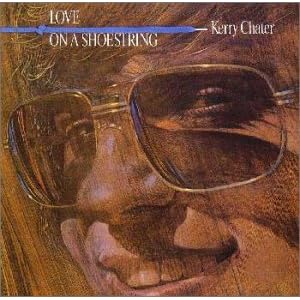
KERRY CHATER – Love on a Shoestring – (Warner Brothers) – 1978

Love on a Shoestring
I didn't know about this guy at all … with more research than was required I found:
 
He was bass player in Gary Puckett and the Union Gap … the whitest and slickest of the soft pop groups from the late 60s.
 
    He is Canadian (born 1945 in Vancouver).
 
        He released 2 solo albums, of which this is the second.
 
            He had a reasonable career as a songwriter writing for Joe Cocker, Kenny Rogers,
                         The Carpenters, Alabama, Dolly Parton and many others.
 
There are a couple of strikes against him above but the proof of the pudding is in the eating. Unfortunately you are not going to feel well fed after this. This is strictly MOR pop rock 70s style with some slight country overtones and it's easy to see why mainstream Nashville picked up on his songs for covers. There is very little I can say here, the best being that Chater sings well enough. The trouble is the material on this album isn't catchy and the smooth late 70s sounds are borderline offensive (the screechy AOR rock guitars of the time were arguably worse).
 
Chater co-wrote most of the songs but apparently the economic upheavals, terrorism, environmental degradation and general dissipation of the stable world order had little effect on him lyrically as this is all 70s style torch songs or up-tempo love songs. No questioning, even, of the rampant hedonism of the sun, sex and me lifestyle of the 70s.
 
Chater's sound isn't that far removed from the mainstream pop rock of the 80s … and that is, unfortunately, another mark against him.
 
Steve Barri who produced all sorts of good stuff in the 60s and all sorts of crap in the 70s produces this. The backing band are slick and bloodless even though they contain some well known session muso types like Michael Omartian, Ernie Watts, and Jim Horn (real name – he plays sax) …
 
Tracks (best in italics)
  • Well On My Way To Loving You – if you want mainstream 70s defined here it is … the horns give it a slight (very slight) Caribbean feel … I could see Billy Ocean doing this on one of his albums … and everything that implies.
  • Quicksilver – soft rock.
  • No Room In My Life (For Anyone Else But You) – sounds like a song that may have been covered by someone else but then again it sounds like a lot of songs.
  • Once Is Enough  – this is killing me … why, why (exclamations not questions).
            Wakin' up is such a hard thing to do
            When all you ghot is pain to see you through
            You played it safe
            Enjoyed the Game
            You had it planned to get me tame
            Oh Babe, if that's love
            Once is enough
  • Leave Well Enough Alone – covered by Leo Sayer (though before this album was released) this has a very slight funky feel and is bearable. No, wait, the synths keep repeating on (and haunting) me …
  • Ain't Nothin' For A Heartache – or a headache as a result of this record. Awful keyboards. Like bad Hall & Oates.
  • Easy Love – soft rock.
  • Say Your Mama Won't Mind – soft rock with "atmospheric" guitars … terrible.
  • Little Girls – soft rock with faux meaningful lyrics which comes out as bad Jimmy Webb.
  • Love On A Shoestring – A big soft rock "meaningful" ballad and despite the lack of anything catchy in the song it is still probably the best track on the album. Obviously someone else thought so also – hence the albums title.
And…
 
Sorry this is awful … this makes Phil Collins sound like punk … but at least it's probably more sincere than Phil Collins..
 
Chart Action
 
US
Singles

Album
nada
 
England
Singles
Album

nada

Sounds

Leave Well Enough Alone 
attached
 
Love On A Shoestring 
attached
 
Others
I think that's Chater on bass here with the Union Gap
 
Review
—
 
Bio
 
 
Website
—
 
Trivia
—
 
Other Comments
—
 
(originally posted: 19/12/2010)

Posted in Soft Rock | Tagged | Leave a comment