ARTHUR LYMAN – Bahia (Hi Fi) – 1959

what Frank is listening to #67 – ARTHUR LYMAN – Bahia (Hi Fi) – 1959


I have a lot of Arthur Lyman LPs – more than Martin Denny and Les Baxter. He was the one that really got me into exotica way back in the late 80s. So every time I get a new Lyman LP I don't have, I get quite excited. So as I sit here with my Stones Green Ginger Wine and ice (again no Bacardi in the house) I'm in bliss. Lyman has no let me down (oooh he card read good – that is meant to be "Lyman has never let me down") as his albums are varying shades of great to my ears. Though, in saying that I acknowledge that over 30 or so albums, some blend in with others …


Way back in Comment #21 I reviewed Martin Denny's "Enchanted Sea" which is appropriate to raise here as he is more or less the "Father of Exotica" and Arthur Lyman was in Denny's band. I said:


To some this is "exotica", to others it is "lounge music", "popular", "muzak", "mood music", "background music", "easy listening", "instrumentals" – these are all terms which can be applied, though those terms also define specific and distinct styles under the general banner of "lounge music". The term "Exotica" is best applied to Denny as most of his career he spent re-interpreting native ( Polynesian, African, Hawaiian, Caribbean etc sounds) ….. it's not folk music as it is distinctly western with a hint of jazz but what Denny did was take the "mood" of those "exotic" sounds and fuse them in with his western upbringing. To enhance the effect ( or mood)  he would use "strange" instruments or sound effects.


The same applies to Lyman though Lyman stuck mainly to all things Hawaiian and exotic as he was born and bred there (native, Portuguese, French etc). He left Denny's band in 1957 and set up his own combo based in Hawaii where he recorded through the 50s to the 70s.


Coinciding with Lyman's music was a general popularity of all things Hawaiian … the Polynesian and tiki thing (which though Polynesian was popularized across the Pacific from Hawaii to the Californian coast) was about to "go off" across the US in the late 50s thanks to the excitement generated by Hawaii relinquishing it's "territory" status and becoming the 50th State of the USA. Between about 1958 and 1965 the Hawaii craze went on with many tourists visiting the newest state. This was fanned by popular culture:

  • Literature: James Michener's best seller – Hawaii (1959) (made into a film in 1966)
  • Films: Elvis' Blue Hawaii (1961) (a humongous box office hit – and a #1 soundtrack album), Girls! Girls! Girls! (1963)  with Elvis, Gidget Goes Hawaiian(1961), Paradise Hawaiian Style (1966) with Elvis, John Ford's Donovan's Reef (1963) with John Wayne – not set in Hawaii per se but French Polynesia (filmed in Hawaii), South Pacific(1958) (close enough to Hawaii), She Gods of Shark Reef (1958) (again close enough).
  • Acting: James Shigeta, Poncie Ponce.
  • TV Shows: Hawaiian Eye (1959-63), Hawaii Five-0 ( 1968-80), Adventures in Paradise (1959-62), even Gilligan's Island (1964)
  • History: The Arizona Memorial for the sailors who died in the attack on Pearl Harbour was formally opened in 1961.
  • Sport: the increasing popularity of surfing
  • Music: the ukulele craze, Lyman, Alfred Apaka, Don Ho (a little later), Eddie Bush, the Hula dance and song, country hula music (Marty Robbins and Hank Snow and many others recorded in the style).
  • Food: Pineapples, papaya, poi, sweet potato, kalua pork, kona coffee
  • Fashion: Grass skirts, and the Hula Hoop (which had nothing to do with Hawaii – it was invented in Australia- but named after the Hula dance)

It was natural for lounge music to attach itself to the exotic and if all things exotic were Polynesian and Hawaiian it is not surprising that musicians in that genre were attracted to Hawaii.


That was the perfect opportunity for a local boy brought up on Benny Goodman jazz band records (with Lionel Hampton on vibes who he adored) to join the craze and adapt his jazz to the exotica and lounge music gaining popularity. Lyman is a beautiful vibes player and though he never goes totally crazy like Hampton he does have a feel and light touch for the genre (and Lyman did play with four mallets at once, often). And playing-wise his band really swings. Most impressively most of his stuff by his group was recorded live:


from wikipedia: Most of Lyman's albums were recorded in the aluminium Kaiser geodesic dome auditorium on the grounds of the Kaiser Hawaiian Village Hotel on Waikiki in Honolulu. This space provided unparalleled acoustics and a natural 3-second reverberation. His recordings also benefited from being recorded on a one-of-kind Ampex 3-track 1/2" tape recorder designed and built by engineer Richard Vaughn. All of Lyman's albums were recorded live, without overdubbing. He recorded after midnight, to avoid the sounds of traffic and tourists, and occasionally you can hear the aluminium dome creaking as it settles in the cool night air. The quality of these recordings became even more evident with the advent of CD reissues, when the digital mastering engineer found he didn't have to do anything to them but transfer the original 3-track stereo masters to digital. The recordings remain state-of-the-art nearly 50 years later.


Hawaii was the perfect launching pad for Lyman and  the cacophony of nature sounds (the birds, winds, sea etc) that make up a lot of "exotica". Those natural sounds really must have impressed Lyman's ears from his childhood on, and better than most he manages to tap into the feel of the islands. Having said that he never looses the 50s slightly cool jazz and even adds a touch of Latin which was starting its ascent to popularity in 1959 (as well as a little Caribbean – which was popular then too). The other thing I like is the sense of "drama" he brings to a tune, there is danger out there in the wilds amongst the wonder.


Where's my Stones Green Ginger wine …


Best Tracks:

so many to choose from – this is a splendid Lyman album up there with his "Taboo (1958) and Leis of Jazz (1959) … so I choose all …

  • "Bahia" – wow – penned by Brazilian composer/pianist and soccer commentator Ary Barroso.
  • "Jungle Jalopy" – a Les Baxter song – with congas going off.
  • "Legend of the Rain" – for the guitarists out there, from allmusic: "Legend of the Rain" is notable for the traditional Hawaiian slack key guitar — which is represented with what sounds like an amplified slide guitar — predating the instrument's use in pop recordings by several years. http://en.wikipedia.org/wiki/Slack_key
  • "Bamboo" – I can hear the drama and the gentleness of the bamboo rustling or is that a freaking possum outside on my eggplants.
  • "Return to Me" – the 1958 hit for Dean Martin – a beautiful Neapolitan type song.
  • "Caribbean Nights" – a happy bouncing piece of escapism – machine castanets(?) go crazy as do bongos – with crazy tempo changes.
  • "Quiet Village" – Lyman's cover of the Baxter song that was a hit for Denny also – a great song but if this is a Quiet Village I would hate to hear a noisy one …
  • "Tropical" – it certainly is … didn't I ask for a drink?
  • "Happy Voodoo" – unless you are the chicken … slightly spooky … where does the "happy" come from?
  • "Busy Port" – it sounds like Quiet Village.
  • "Beyond the Reef" – recorded by everyone – (including Elvis – at home in 1960 and in the studio in 1966) … quite a evocative and romantic song.
  • "Maui Chimes" – a weird way to end – a carnival, circus type song – like the end of a Fellini film … "life is a carnival"

Who needs "chill out" music done by some pimply poxy kid on his PC, when you can put Lyman on the turntable?


Though Lyman had some hits most notably "Yellow Bird" in 1961 which went to #2 (the only other big exotica hit after Denny's "Quiet Village" which went to #4 in 1959) this album failed to chart.


As I said in comment #21- the same applies here to Lyman: Sit back with a drink ( preferably a pina colada, or something with white rum) and you are transported to another time and another place ….. a small island in the pacific, 1960. I can feel the wahinni fanning me now and I don't have a care in the world. Was life simpler then ? I think not, though Denny (Lyman) was selling escapism then and that's what makes this so enjoyable now …. we probably need this more than ever now… Ray Davies would certainly agree.


If you didn’t guess – I'm keeping this.


Sounds:

attached:


Bahia – play this late at night …grab a drink, turn out the lights, and turn it up


Quiet Village – the exotica standard.


Arthur doing "Quiet Village” in some Hotel Bar in 2001 (listen to the background noise – didn't these people know they were in the presence of genius)


Posted in Lounge & Exotica | Tagged | Leave a comment

PAT BOONE – Sings “Guess Who?” – (London) – 1963

what Frank is listening to #66 – PAT BOONE – Sings "Guess Who?" – (London) – 1963

Pat Boone gets knocked a lot for his music and I'm not sure why. Well, I know why but I wonder why so many others are forgiven for for their flaws.
 
If you put aside:

  • his (or more likely his manager and record companies) blatant "whitening" (see below re "whitening") of rock and r&b songs in the 50s;
  • his hard core born again Christian / charismatic Christian religious beliefs;
  • his wholesome "American pie" cuteness;
  • his overweening love of middle America, and;
  • the stereotyped critical responses to him.

some of his music wasn't half bad.

At worst it could be bland. He is a lot better than someone like Guy Sebastian who can be levelled with an Australian variation of the same blandness.
 
Unfortunately for Boone he tends to be reviewed because of issues of race. In the 1950s he covered black R&B tracks, "whitened" them up, and had bigger hits. I've never liked the concept of "whiten-ing" though, there was a lot of "white" music which was as raw as R&B and pure, clean acts weren't limited to white artists … Nat King Cole, Billy Eckstein, Roy Hamilton, and any number of black vocal groups for example. What Boone (or his producers) did was "soften" the tracks by removing  any harsh tones, screeching voices, regional accents, overt emotion, twangy instruments, dodgy lyrics and sex. I don't think this was part of some conspiracy to keep black music down (Nat King Cole was one of the biggest stars of his era) but rather to sa ploy ell more records. Because then (as now) people like their pop bland. And they normally like it in the background where it doesn't offend you or make you think. There are a lot of "casual" music listeners out there … and there are a lot more who are "casual" listeners who don't think they are. But hey who's to say they are wrong? Maybe music should be listened to casually?
 
In any event Boone sold truck loads in the 50s but has taken the blame for white America (and who knows maybe even urbane Black America) buying his records. He is also the prime victim of poor, sloppy ,rock journalists (a laughable concept at best) who dish out the same old stereotypes of "black" and "white" music in the 50s.
 
Music is a morally bankrupt business and a lot worse has been done over the years, so why single out Boone?
 
In the 50s Boone was the only artist to even remotely look like a rival to Elvis. Musically speaking there was always a fair degree of pop in rock as well as in R&B and country. The young Elvis was not adverse to covering The Ink Sports, Dean Martin, Mario Lanza or Bing Crosby. Perhaps we give Boone the rough end of the stick because we cant accept a rock singer sounding so "white" or better still, so "middle of the road".
 
But what if we look at him as a young crooner singing rock songs ? If so, I would argue that the music, then, is less offensive or, at the very least, more palatable. Sinatra, Como, Tony Bennett and Harry Conick Jr (especially poorly) all eventually covered rock songs as "popular standards" but Boone was actually doing it at the start of rock more or less. And he was actually better at doing standards than doing rock or R&B tracks. So, whether he is a "rocky" crooner or a "crooning" rocker I leave to the musicologists but I will say that amongst his repertoire of songs there are a few memorable tunes.
 
And, in any event, a number of rockers – like Tommy Sands, Bobby Darin, Roy Orbison and later P.J. Proby ended up recording with orchestras just like Boone did. That's how popular that sound was.
 
That sound (Boone's sound) was really aimed at;

  • older and educated teenagers (seriously – 50s rock was considered to be a blue collar music);
  • parents (to buy for their kids), or;
  • for anyone who liked the tunes but did not want any of the (sexual or other) emotions to go with the tunes.

Anyway, I always give Pat Boone the benefit of a doubt and I can honestly say he doesn't offend me though he doesn't normally move me either. His possibly most annoying feature is that all hints of any regional accent is hidden. I've never heard a Southerner (from Nashville) sound so neutral.

Pat Boone has put out some weird albums, and this isn't the weirdest. He has done a slightly MOR psychedelic album and he even did an album of hard rock / heavy metal songs done as popular standards a few years back (1997) which I have and which I bought for the sheer bone headed funniness of it (and it was on sale). Surprisingly it actually swings. (Paul Anka did a similar thing a couple of years later). The metal album caused a controversy amongst Boone's born again Christian fan base. Having said that I think he is smart enough to have his tongue firmly in his cheek (or maybe he is being smarmy but I don't think so). That "tongue in the cheek" I have noticed through a number of his recordings going back to the 50s. Bit, is that enough to put an album over?
 
The answer is "No".
 
But, it can still be listenable.
 
At last we get to the LP in question.
 
Boone knew Elvis personally and Elvis was still the biggest act in music in 1963 so this album isn't out of the blue.
 
The most interesting feature on the LP are the arrangements. Boone has concentrated on Elvis' 50s material by and large and rather than just doing pop standard versions of Elvis' songs he really mixes things up a bit. There are many crazy things going on … crazy enough to catapult this LP into cult-dom and make it worthwhile. I don't think Boone was behind that but he had the good sense to go along with it. The real force behind the sounds on this LP is probably the arranger, conductor and pianist Paul Smith who is a legendary jazz pianist (and who was a bit of a maverick himself). Some of his early 50s "cool jazz" and "bop" stuff really goes off. Smith here arranges all the tracks as jazz tracks but even then he adds bits and pieces that make them left of centre. The band is his hand picked octet (Barney Kessel is in their somewhere as is Red Mitchell and Don Fagerquist).
 
The tracks:

  • Love Me – The soothing sexuality of Elvis' original is done here as a jazzy torch ballad.
  • Teddy Bear – weird – a bouncy Hammond(?) organ does the guitar breaks …
  • Hound Dog – really weird … the songs fist verse and last are done with a harpsichord and Boone singing as if he was a choirboy. There is also a half smart (or half condescending ) reference to the street vernacular in the song … changing "ain't" to "aren't" and emphasising it. (I suppose they could have been referencing Stan Freberg's similar parody of poor language usage in "Elderly Man River")
  • All Shook Up – done as a up-tempo Caribbean dance number.
  • One Night  – a cleaned up version of the cleaned up Elvis song – Elvis sang the original "One Night (of Sin)" and then re-recorded it as "One Night ("with you") which was released as a single. Boone here takes any of the foreplay out of the re-recorded song and makes a pleasant if dull romantic ballad.
  • Wear My Ring Around Your Neck  – done as big band swing … with the Hammond doing the lead breaks .
  • Love Me Tender  – done as a lullaby (well more of a lullaby than the Elvis version)
  • Don't Be Cruel  – done as a big band swing.
  • Blue Suede Shoes – another swing number with a in joke … at the end Boone starts to say "Stay off a my white buck shoes" … the white buck shoes were his trademark in the 50s.
  • My Baby Left Me – they have taken the pace of the earlier song and put it firmly in the jazz idiom … lots of jazz piano, flutes, clarinets etc.
  • Heartbreak Hotel – done as a slow torch song with piano replacing the guitar of the original.
  • It's Now or Never – it starts off as a lullaby before turning into a ballad. It never reaches or attempts the faux operatic moments of Elvis' original. Perhaps better than most it shows of the limitations of Boone's voice … especially when compared to Elvis'. Boone's voice really only works with ballads or crooner type pop.

Does this all work – no. But it's good enough to fit in well in anyone's "exotic lounge music" collection. A definite curio, and quite inventive.

I'll keep it because of the Elvis connection (and also because I have that metal album of Boone's)
  
Sounds:

attached

 
hmmm:
http://www.youtube.com/watch?v=a9aBeRVToGk
http://www.youtube.com/watch?v=fyqqDbCYzH0&feature=PlayList&p=972F73A520E0D40D&playnext=1&playnext_from=PL&index=69
 
from the metal album:
the James Ronnie Dio song-
http://www.youtube.com/watch?v=sfmcrXNuCwg&feature=related
 
Website::
http://www.patsgold.com/
 
Bio:
http://www.allmusic.com/cg/amg.dll?p=amg&sql=11:kifrxqw5ldde~T1

Paul Smith:
http://en.wikipedia.org/wiki/Paul_Smith_(pianist)
 
Trivia:

  • Pat Boone has claimed to be a direct descendant of the American pioneer Daniel Boone. He is also a cousin of two stars of western television series: the late Richard Boone of CBS's Have Gun, Will Travel and Randy Boone, one of the co-stars of NBC's The Virginian and CBS's Cimarron Strip.

Boone visits Elvis and Juliet Prowse on the set of GI Blues (1960)
 
( originally posted: 25/07/2009)
Posted in Jazz, Rockabilly and Rock n Roll | Tagged | Leave a comment

THE EVERLY BROTHERS – Rock ‘n Soul – (Warner Brothers) – 1965

what Frank is listening to #65 – THE EVERLY BROTHERS – Rock 'n Soul – (Warner Brothers) – 1965

I though Zager & Evans would certainly have got some response … nup … everyone must be stunned by the depth and wisdom in my comments?

I was quite excited about getting this LP even though it cost $5US in a batch of records I bought from a guy in the US (I also got the companion album "Beat 'n Soul"). Still the anal obsessive in me was happy as I have about twenty Everly Brothers albums (most of their material) so I need to complete the collection. You can get into trouble doing that though (my Lou Reed and Bob Dylan collecting are examples).

Since I was a kid growing up in the 1970s I have liked 1950s music and 1950s artists. My first record was a Elvis 45 (Steamroller Blues b/w Fool on the RCA Yugoton label I got in 1973 in Croatia, in the then Yugoslavia, whilst on holidays), as was my second and third records. The next record I got was Chuck Berry, then Jerry Lee Lewis, Suzi Quatro, AC/DC. I was hardly contemporary. Some time in the mid 80s I got into the Everly Brothers – I even saw them live.

The influence of the Everly's cant be underestimated – their twin harmonies influenced The Beatles, The Beach Boys, The Hollies, Simon and Garfunkel and others. They also were not afraid to mix it up a bit and put some straight country on rock albums and vice versa and really pioneered (in the mid to late 60s) what became known as "country rock" … about the same time if not before Gram Parsons added his magic touch to the same..

As biographies go … they had the usual problems of good ol southern boys (Kentuckians) … pills, broads etc.

http://en.wikipedia.org/wiki/Everly_Brothers

The beauty, however, is in their voices and arrangements which, by and large, they orchestrated. Their early hits are well known and their voices fully soar in epic teen mini operas. By the mid 60s their hits had dried up in the US but they were still big stars in the UK.

The beauty is that their 60s albums, though of variable quality, were unpredictable – beat, roots country, rock, ballads – they really vacillated between albums and within albums, even though everything was centered and grounded on their harmonies. You can always tell a Everly Brothers record.

This album is a covers album of mainly "oldies" (with one exception – "Dancing") made up of late 50s hits. It's probably one of the earliest "oldies" covers albums,  something The Band (Moondog Matinee), Bowie (Pin Ups), Lennon (Rock and Roll) would all do later. The songs, though, are not played as 50s songs with the arrangements being distinctly mid 60s. The album is guitar heavy and by that I don't mean "heavy guitar" just the guitar is up front and prominent with their voices. And, fuck me, I sat here thinking this sounds like James Burton's guitar (because it sounds much like the guitar on Ricky Nelson's 60s recordings which Burton played on). After much googling I found it was in fact Burton who plays guitar. For those of you who don't know who he is, he was (is) a bona fide guitar legend at 16 and eventually became Elvis' guitarist in the 70s (the pink Paisley Telecaster dude). He had quite a distinctive sound – even to my untrained non-musicians ears.

http://en.wikipedia.org/wiki/James_Burton

James Burton Discography: http://www.stuntwalletmusic.com/news/James%20Burton%20Discography.pdf

Jimmy Page on Burton: "Mind you, it took a long time before I got anywhere, I mean any sort of dexterity. I used to listen to Ricky Nelson records and pinch the James Burton licks, learn the note for note perfect.  … I met Beck through a friend of mine, who told me he knew this guitarist I had to meet who'd made his own guitar. Beck showed  up with his homemade guitar one day and he was really quite good. He started playing this Scotty Moore and James Burton stuff; I joined in  and we really hit it off well".

and for what its worth he was #20 on the "Rolling Stone 100 greatest Guitarists of all time":

"James Burton mainly plays a dark-red '53 Fender Telecaster that he bought in a Louisiana music store when he was thirteen. He's performed a lifetime's worth of hot licks and fluid solos on it, on songs such as Dale Hawkins' "Susie Q" and Ricky Nelson's "Hello Mary Lou." As an in-demand Sixties sessionman, Burton played often-uncredited guitar and Dobro on countless records by artists ranging from Buck Owens and Buffalo Springfield to Frank Sinatra. In the Seventies he anchored the touring bands of Elvis Presley and Emmylou Harris. Burton's country-rock style combines flatpicking and fingerpicking; he's also a master of a damped-string, staccato-note "chickin' pickin'." http://www.rollingstone.com/news/coverstory/5937559/page/15?commentPage=2#rate

What I like about Burton is he isn't flashy with in your face lead breaks or attention grabbing stage jumps yet in the background you can see/hear he is doing all this great work and playing rock, country, blues and jazz and mixing them all up in the same song sometimes. (As a kid I even went to see Elvis "groan" Costello at Festival Hall in 1987 because Burton was in his backing band, The Confederates, as were two other members of the real Elvis' band. I eventually saw him tour in the "Elvis Show" a few years back also).

Back to the Everlys …

All the tracks are fine and the Everly's haven't been particularly "faithful" to any of them – which is good. Which tracks are the best depend on which original tracks you prefer. Having said that a couple of non-covers would have spiced things up a bit. These "hit" tracks are so identifiable with other artists, despite the fact that the Everly's have altered them substantially, you tend to sit there and say "oh look what they have done with this track" rather than getting sucked into the music. The album isn't as great as some of their others but it is definitely a pleasant curio.

The tracks – with the original artists noted – are:

  • "That'll Be the Day" (Jerry Allison, Buddy Holly, Norman Petty) – Buddy Holly – The Everly's have slowed this right down and it is a touch jarring but it does set the tone for the album.

  • "So Fine" (Gribble, Weiss) – The Fiestas.

  • "Maybellene" (Chuck Berry, Russ Fratto, Alan Freed) – Chuck Berry – a more country version of what was a song by a Afro-American done in a country style (Chuck lifted the melody from an old country song "Ira Red").

  • "Dancing in the Street" (Marvin Gaye, Ivy Jo Hunter, William "Mickey" Stevenson) – Martha and the Vandellas.

  • "Kansas City" (Jerry Leiber, Mike Stoller, Richard Penniman) – Wilbert Harrison.

  • "I Got a Woman" (Ray Charles) – Ray Charles and Elvis – the arrangement sounds closer to Elvis' version to my ears but then again Elvis version was reasonably close to Ray's version.

  • "Love Hurts" (Boudleaux Bryant) – The Everly Brothers – an in joke as its a re-record of their own hit and they totally changed the tempo of the song.

  • "Slippin' and Slidin'" (Edwin Bocage, Albert Collins, Richard Penniman) – Little Richard, Gene Vincent, Buddy Holly etc.

  • "Susie Q" (Eleanor Broadwater, Dale Hawkins, Stan Lewis) – Dale Hawkins – still swampy – and the song that made James Burton a legend when he played with Dale Hawkins at age 16.

  • "Hound Dog" (Leiber, Stoller) – Elvis Presley – done as a laid back country r&b shuffle.

  • "I'm Gonna Move to the Outskirts of Town" (Jacobs, Razaf, Weldon) – Ray Charles and others.

  • "Lonely Weekends" (Rich) – Charlie Rich – with a lot of horns the song becomes a statement rather than the Charlie Rich plea.

The album and the singles didn't chart in the US.

"That'll be the day" went to #30 in the UK

I'm a keepin this.

Sounds:

http://www.youtube.com/watch?v=RjLQdY4bktc&feature=PlayList&p=F9AC41655D51B379&playnext=1&playnext_from=PL&index=21
http://www.youtube.com/watch?v=XDCnvhwiBFA
http://www.youtube.com/watch?v=7XS3hpeWU1A
http://www.youtube.com/watch?v=nhRjr57G8og

A couple of other good tracks:
http://www.youtube.com/watch?v=mxfljegYXk4
http://www.youtube.com/watch?v=35YKLemYPtM

Sorry I have picked quite a few tracks for Burton but if you watch em you may get something out of them:

James Burton:
http://www.youtube.com/watch?v=0cH5RGirn0k
http://www.youtube.com/watch?v=XeFZtFNELik
http://www.youtube.com/watch?v=aKBQdvLv0I0
http://www.youtube.com/watch?v=cFVNXj0c4UU

and James with Elvis:
http://www.youtube.com/watch?v=3yUG23fgdKI&feature=related
http://www.youtube.com/watch?v=HnaicbGlw8k
http://www.youtube.com/watch?v=DpEG_K9lwQM&feature=related
http://www.youtube.com/watch?v=SBmAPYkPeYU&feature=related

website:
http://www.everlybrothers.com/index.html

(originally posted: 23/07/2009)


Posted in Rockabilly and Rock n Roll | Tagged | Leave a comment

ZAGER & EVANS – Self Titled – (RCA) – 1970

what Frank is listening to #64 – ZAGER & EVANS – Self Titled – (RCA) – 1970

[zag.jpg]

Mention their names and the only thing that normally springs to mind is "In the Year 2525" the magnificent apocalyptic song that hit #1 in 1969 as man was landing on the moon ... and I think that historical event must have had some effect in propelling it to #1. And it was at the top spot for 6 weeks! That is a long time in the US given their market is so big … the hit was so big, Zager & Evans were compared to the Beatles at the time.
 
But, I assume like the track because, apparently, as a toddler I watched the moon landing with my father. So, we could have been grooving to "In the Year 2525"?  Who knows. In any event it is a incredibly catchy song.
 
After that big bang Zager & Evans never charted again … but … for that song alone they should be remembered. That song is not on this album.
 
Thud.
 
I have the "In the Year 2525" single and the album, and the album isn't great but it is interesting. This album is generally regarded as being worse than that first album.  In fact this LP is that lowly regarded it is barely reviewed … but there was a lot of other crap coming out at the same time that's lauded (though unintentionally funny nowdays) so why should this be bagged mercilessly?
 
Zager & Evans were a folk rock duo who had roots in various frat/garage bands and were vaguely Beatnik (Evans has a goatee … a pop cultural giveaway).This follow up album has them trying to capitalise on the "spacey" themes of "In the Year 2525". Evans wrote all the tracks and sings – so I assume Zager does the guitar (he is a guitarist) and backing vocals (though Mark Dalton and Dave Trupp were also part of "Zager & Evans").
 
So what do we have:
  • Pop with a lot of brass thrown in;
  • Groovy artwork;
  • Droll (read "alienated") vocals;
  • sped up bits / slowed down bits;
  • sound collages / vocal snippets;
  • indispersed spacey sounds, sound effects,  and tricked up instruments;
  • "relevant" trippy song titles: "During REM", "The Plastic Park", "Mister Turnkey", "Crutches";
  • social commentary;
  • "head" lyrics – for example: the lyrics  for "the Candy Machine" (this is dying for a cover and I know some of you may contemplate it – you guys know who I am talking to)
                    Once in a dream
                    I was a candy machine
                    and all of my friends
                    I covered with chocolate ice cream
                    and jelly beans
 
                    When I awoke
                    Nobody spoke
                    Everyone was frozen
 
                    I took them upstairs
                    and put them in my Frigidaire
                    along with the dreams
                    and things I keep in my Tupperware
                    then I went back downstairs
                    thinking of when
                    I thaw out my friends
                    I decided never
 
                    Now that I'm old
                    and covered with mould
                    I'm thinking of things
                    like frozen friends and jelly beans
                    and the candy machine
                    la da da da
                    da da da da dah dah dah
                    Aren't you glad you're not my friend
 
Fucken oath!
 
Lyrically, they where attacked at the time for being too square with a tendency to moralise and preach (the end of "In the Year 2525 " is at the hand of God). I must admit there are some totally sappy moments on this record but I assume they are just aiming for the middle ground (they were from Nebraska and in their late 20s so maybe it came naturally). So, intentionally I assume, they come across like Bing Crosby meets folk music on acid (later Bing not early jazz Bing) or "Blood Sweat and Tears" if recorded by Henry Mancini … but its all part of the fun … some people think the record is strictly MOR but I think that they were trying to be "out there" and tried so hard they actually got there … there is some weird shit going on … though not always weird "good".
 
Best Tracks:
  • "In My House" – sounds like a Blood Sweat and Tears song – white funk – lyrically I think its about eating people or something …
  • "The Candy Machine" – the best song ever about "being" a candy machine … can you think of a better one?
  • "Mister Turnkey" – which rock critic Dave Marsh once listed this as one of the creepiest singles ever. It certainly is "out there". The songs narrator is in jail after raping a woman and is addressing the jail guard (" Mr turn key" … get it?).  At the end we learn that he has crucified himself to the cell wall with a nail through his wrist and is hanging there remorseful and near death … and this is sung as an up-tempo ballad. This was the follow up single to "In the Year 2525" – it failed to chart. Thud.
The biggest problem is  nothing is particularly catchy – if there was a tune in there this would be a cult classic. No, I take that back … fuck all you disbelievers … it's growing on me … this is ripe for re-discovery.
 
Better to be twisted than safe and boring.
 
Put this on at a party and create controversy and maybe have a few beer bottles pegged at you.
 
I'm keeping it as a companion piece for the other album … and I may put it on if any of you come over …b e afraid, be very, very, afraid …
 
Sounds:
"Mr Turnkey"
attached
 
"The Candy Machine"
attached
 
The big hit "In the Year 2525"
 
The Italian release – "In the Year 2033" (I assume it works better in Italian than 2525!)
 
more info:
 
(originally posted: 19/07/2009)
Posted in Folk Rock | Tagged | Leave a comment

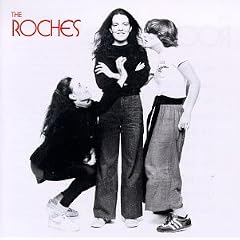
THE ROCHES – Self Titled – (Warner Brothers) – 1979

 what Frank is listening to #63 – THE ROCHES – Self Titled – (Warner Brothers) – 1979

I hadn't heard of "The Roches" before but the LP looked sufficiently interesting, though slightly arty (I didn't reach for my handgun).
 
As it turns out the Roche sisters were part of the "contemporary folk" movement from New York (specifically Greenwich Village)  … where else?
 
Contemporary folk arose in the 70s in the wake of Dylan with songs that tended to be less topical and more personal and introspective. Also the instrumentation was not limited to traditional folk instruments … any instruments, electric or otherwise could be used.
 
What makes it folk? … Well the folk traditions are still there: anti commercialism, simple basic song structures with an emphasis on the lyrical content, voices rather than instruments to the front, fewer instrumental hooks. Other contemporary folk acts include Kate & Anna McGarrigle, Suzanne Vega and Loudon Wainwright III.
 
I like / love a lot of folk … from all the various sub-genres and crossover genres: old-timey, traditional,  country folk, pop folk , folk rock, contemporary folk, new folk, folk blues, Americana, singer songwriter so this was not going to be hard to listen to … as long as the artist is good.
 
And good it is. My preferences for women in music is always in country, folk, singer songwriter, or soul. Not so much in rock – there are only a few rock chicks I find convincing – Suzi Quatro, Joan Jett, Wanda Jackson, 60s girl groups.
 
The Roches bio is attached below though the first song on the LP, "We" is a song about them.
 
allmusic describes the LP thus (and I couldn't think of a better description …and I couldn't be bothered plagiarising): The group's mischievous and highly original folk blend of barbershop, doo wop, Celtic, and bluegrass styles found its watermark with this eponymous debut, which features the pithy, tongue-in-cheek lyrics of Maggie and Terre.
 
I know someone out there is complaining "you will probably be listening to "Women in Docs" soon" … They are boringly bland and mainstream and not remotely like The Roches on this LP. I acknowledge a lot of folky girl groups are "twee" at best, nauseatingly sweet at worst and occasionally agenda laden but The Roches, at least on this album, are quite clued on, not stridently feminist, and not even remotely lesbian themed (maybe its because they are Irish-American Catholics?). Most importantly they are funny and the brunt of their of their wit is not directed at anyone specifically, but is, rather, observational. The best thing though is the harmonies, the rotating lead voices within songs, and the quirkiness of it all (there is a lot of acapella and nods to other styles of music).
 
Some of it sounds like early solo Paul Simon though that is not unusual as he was influential on the contemporary folk movement (and two of the sisters actually did backup vocals on Simons, "There Goes Rhymin' Simon" (1973)).
 
Quite surprising the electric guitarist and producer of the album is Robert Fripp from King Crimson!. Tony Levin from King Crimson plays bass.
 
Best tracks:
  • We – hilarious – a resume of the band.
  • Hammond Song – quite haunting, later covered by UK band "The Colourfield"
  • The Troubles – which manages to be both funny and sad.
  • The Married Men – later covered by Phoebe Snow.
  • Runs in the Family – the closest they get to a traditional folk song.
I like this album. I don't know if I will keep it though … though I'm leaning to yes … I think the wife would like it also.
 
Sound:
attached
 
and:
Hammond Song
The Troubles
The Train
 
Bio:
  
Website:

(originally posted: 17/07/2009) 

Posted in Folk Rock | Tagged | Leave a comment

TINA TURNER – Tina Turns the Country On – (UA) – 1974

 what Frank is listening to #62 – TINA TURNER – Tina Turns the Country On – (UA) – 1974

File:Tina Turner - Tina Turns The Country On.jpg

Everyone knows Tina Turner and her story, more or less.

But if you don't, from allmusic: The most dynamic female soul singer in the history of the music, Tina Turner oozed sexuality from every pore in a performing career that began the moment she stepped onstage as lead singer of the Ike & Tina Turner Revue in the late '50s. Her gritty and growling performances beat down doors everywhere, looking back to the double-barreled attack of gospel fervor and sexual abandon that had originally formed soul in the early '50s. Divorced from Ike in the mid-'70s, she recorded only occasionally later in the decade but resurfaced in the mid-'80s with a series of hit singles and movie appearances; her high-profile status was assured well into the '90s.
 
The specific details can be found in the bio link at the end.
 
Suffice it to say that you can't help liking Tina and she certainly can (visually and aurally) induce hard ons. She is one "foxy lady" as we used to say back in the … errrr 80s when we were watching all those blaxploitation films.
 
This was her first solo album (even though she was still with the Ike Turner Review) and it's a selection of (then) contemporary country, traditional country and country rock tracks. For a performer so rooted in up-tempo R&B a country-ish album may seem strange but in 1974, I suspect, it seemed like a good bet. Country rock was all over the pop charts and black country performers like Charley Pride and Dobie Gray, likewise, were all over the country and crossover pop charts. Also, other Afro-American artists had been experimenting with country and country soul (Booker T, Taj Mahal,  Bobby Womack, Solomon Burke) and roots music was generally well received.
 
Tina was born in Brownsville Tennessee, so she was not immune to country sounds and Ike and Tina had mined this sound earlier (the country rock "Proud Mary" and other tracks on the "Nutbush City Limits" album from 1973 for example). In fact, Ike and Tina were the most receptive of black acts – they frequently played white audiences (like Vegas), covered white rock acts, were produced by whites (Phil Spector etc) and, otherwise, had no problems mixing it up a little. 
 
Now it should be said here that black music and country music are not mutually exclusive. Many Afro-Americans were from country regions. Up until the end of the Second World War most of them were from the country heartland. It would seem silly to suggest that they weren't influenced by the music even though it is "white music" just like it would be wrong to say that whites weren't influenced by "black R&B". The big melting pot that is America gave rise to cultural cross fertilization as a norm.
 
This album, though, is, properly, "country soul". Tina belts it out whether the song requires it or not, which I suppose is her style, though some of the subtleties in some of the tracks are missed. Ultimately it all works, though a lot of it is not memorable … but it is enjoyable whilst it is on, if that makes any sense.
 
The album is effectively played by (Elvis regulars) James Burton on guitar -(see the Everly Brothers Review in this blog for the Burton references), Glen D Hardin on piano as well as other well known musos, John Hammond, Tom Scott, Merry Clayton etc.
 
The tracks and their writers give you an idea as to the content, whilst the best tracks are in italics:
  • "Bayou Song" (P.J. Morse)
  • "Help Me Make It Through the Night" (Kris Kristofferson) – It's just a great song by one of the best modern country songwriters (and Elvis had done a version of it)
  • "Tonight I'll Be Staying Here With You" (Bob Dylan) – from Bob's "Nashville Skyline" album.
  • "If You Love Me (Let Me Know)" (J. Rostill) – the big Olivia Newton-John country schmaltz hit (and Elvis had done a version of it)
  • "He Belongs To Me" (Bob Dylan) – from Bob's "Self Portrait" album though with an obvious gender change in the title.
  • "Don't Talk Now" (James Taylor)
  • "Long Long Time" (G. White)
  • "I'm Movin On" (Hank Snow) – another great song by the legendary country artist Hank Snow and Tina really belts this one out though it could have used the full on funk maelstrom of the Ike and Tina "Proud Mary" (and Elvis had done a version of it on his country soul album "From Elvis in Memphis" in 1968)
  • "There'll Always Be Music" (Dolly Parton)
  • "The Love That Lights Our Way" (From the motion picture The Autobiography of Miss Jane Pittman) (F. Karlin, M. Karlin)
Despite all of its benefits the album failed to chart.
 
I'll burn a couple and sell I suspect.
 
How legendary Ike was is not for this entry, but he was. 
 
Sounds:
there are some particularly bored youtubers out there. The whole album is available on youtube, here are the tracks in sequence:
 
Country-ish Ike and Tina:
Proud Mary – Ike and Tina
Nutbush City Limits – Ike and Tina
Honky Tonk Women – Ike and Tina
where are my tissues?
 
Bio:
 
Black Country:
 
and she likes backgammon apparently:
she can place her checker on my bar anyday  
 
 (originally posted: 15/07/2009) 
Posted in Soul, Funk & Disco | Tagged | Leave a comment

CILLA BLACK – Sings a Rainbow – (Parlophone) – 1966

what Frank is listening to #61- CILLA BLACK – Sings a Rainbow – (Parlophone) – 1966


Who doesn't know Cilla Black ?
 
But, who knows:
  • that she was the second biggest act to come out of Liverpool (yep, above Gerry and the Pacemakers, Billy J Kramer, The Searchers)
  • she was a hat check girl at the Cavern Club where The Beatles hit their initial fame and actually started singing in 1961. 
Well there you go …
 
Cilla Black was born Priscilla White and is a redhead … for more bio: http://www.cillablack.com/biog.htm
 
This is her second album and it is produced by George Martin (as was all her work up until 1973 – Brian Epstein was her manager) and the instrumentation is excellent on songs which are half popular swing and half pop rock. There is always something interesting going on in the background, thanks to Martin, I suspect.  Claims that he was the fifth Beatle are  probably well founded – who knows what The Beatles mini pop operas would have sounded like without George Martin. A lot of music and music history is just "Kismet" I guess.
 
Here, Cilla Black has good material and sings the crap out of most of the songs … and sounds downright sexy on a few tunes. And, sensibly, regardless of the instrumental fills, Martin keeps Cilla's voice up front. There is a tendency to slip into the Shirley Bassey bombastic territory, though generally, Cilla manages to stay in pop without going over the top.
 
Best Tracks:
  • Loves Just a Broken Heart – #5UK.
  • Make it Easy on Yourself – the Bacharach-David track which Jerry Butler did, and the Walker Brothers did later.
  • One Two Three – the Len Barry classic track (one of the best blue eyed soul songs ever).
  • When I Fall in Love – the old standard.
  • Yesterday – yup that track.
Oddly – all the best tracks are on Side 1 – on Side 2 Cilla attempts US soul numbers (in the Motown tradition) and none of the songs really come off. Her voice is good enough though there is very little "soul" in it. Maybe you have to be Afro-American?
 
The album went to #4 in the UK – her highest placed album.
 
This is not as good as Dusty Springfield, possibly a bit better than Petula Clark and probably on a par with Lulu and Sandie Shaw ... though I want that statement reserved because these English 60s pop divas put out a lot of albums … a lot which I havent heard.
 
Me here: Record some tracks and sell.
 
Sounds:
Loves Just a Broken Heart
One Two Three
When I Fall in Love
Yesterday
attached
 
Trivia: the album sleeve is different (Australian) to the UK release.
 
(originally posted: 13/07/2009)
Posted in British Invasion, Pop Rock | Tagged | Leave a comment

GLADYS KNIGHT & THE PIPS – Neither One of Us – (Tamla Motown) – 1973

what Frank is listening to #60- GLADYS KNIGHT & THE PIPS – Neither One of Us – (Tamla Motown) – 1973

A disclaimer. I'm not a big soul music aficionado though I do have a few greatest hits compilations and some other albums that tickle my fancy. So, cut me some slack.

1970s soul was of course, inevitably, funky or disco-y. There was a time when I was listening to a lot of the O'Jays music which was alternatively funk or disco but always very socially relevant like a lot of Philly soul. Berry Gordy of course is second only to Phil Spector in dictatorial habits (and not as talented IMHO) with his artists at Tamla Motown. As I have said to some of you in the past … the sheer volume of Tamla hits speak for themselves … but so does the volume of non-hits. His "hitmaking style" was getting his roster of artists to put out a "soul" album in every genre and seeing what hits(sic) with the public (seriously his roster of acts all, just about, put out straight soul, R&B, standards, Christmas, psychedelic, duet, live, and even country, albums). On top of that Gordy had his artists cover each other songs. Still, he did have good writers (including himself), session men and talented acts but a lot of Tamla was very "cookie cutter" like.
 
Gladys Knight and the Pips came through the Motown factory in the 1960s with a few Top 20 pop hits including "I Heard it through the Grapevine", "Every Beat of My Heart" and transitioned into the 1970s easily and where they had most of their hits. They really were on fire between 1971-75, though they had to leave Motown (after this album) to prove their worth (they went to Buddah records).
 
Marvin Gaye, and especially Stevie Wonder, really opened the Tamla doors to self expression, both lyrically and musically … and that timed very well with the 70s where very personal songs were being released in popular music forms (rock, country and soul), but taking its emotional cues from the singer-songwriter explosion of the early 70s.  In soul, the songs may be personal but the themes (generally) remain constant. As I have said somewhere else a lot of black soul is about sex, dancing, sex, making out, sex, heavy petting, sex, etc. I should qualify that by saying that that is black male soul. Female black soul is about sex, your man cheating on you, love, your man cheating on you, sex, and getting even on your man for cheating on you.  But, what I like most about about 70s soul is that it's all very "street" and reminds me of my youth …..the dark, rainy streets with pimps in fedoras, the hustlers and jive talk on every corner, the thrill of urban decay … in, errrr Brisbane?… OK … it reminds me of the "Shaft" and blaxploitation films, and the "Good Times", "Chico and the Man", "Welcome Back Kotter" TV shows I watched as a kid in the 70s.
 
Though very few of the tracks are written by Gladys or the Pips this album is very much in that mould….slightly funky, personal songs, usually about sex (or sexual politics) sung in a "street" way. The Pips harmonizing is kept in check and Gladys really belts out the songs. Its pretty good.

Best Tracks:

  • Neither One of Us (Wants to Be the First to Say Goodbye)  – a #2 hit written by Jim Weatherly – a white country singer who wrote three or four songs (and hits) for Knight.
  • For Once in My Life – a slow, deep soul version of the Stevie Wonder hit.
  • This Child Needs Its Father – great lines … "I'm trying to do the best I can, 'cause I refuse to let this bed hold another man"
  • Who Is She (And What Is She to You)  – don't argue with a angry Afro-American lady …here she confronts her man  … I'm scared (and a little aroused).
  • Daddy Could Swear, I Declare  – a #19 hit … unfortunately, this could be a fuckin' theme song around here.
  • Don't It Make You Feel Guilty – a Marvin Gaye "What's Goin On" themed type of song.

The album did well: #9 Pop, #1 R&B
 
 Will I keep this?

Maybe …. it could be one of those soul albums that tickles my fancy.
 
Sound:
Neither One of Us (Wants to Be the First to Say Goodbye) 
http://www.youtube.com/watch?v=KX8fZ-lWhFA
This Child Needs Its Father
http://www.youtube.com/watch?v=i7kwgxf2ri0
Who Is She (And What Is She to You) 
http://www.youtube.com/watch?v=qarmg8i-_V0
Daddy Could Swear, I Declare 
http://www.youtube.com/watch?v=P4uSzldTo3w&feature=related
Don't It Make You Feel Guilty
attached
 
Internet:
http://www.vocalgroup.org/inductees/gladys_knight_pips.html
http://www.gladysknight.com/home2.html
http://www.soulwalking.co.uk/Gladys%20Knight.html
 
Trivia:

  • The Pips were either siblings or cousins I think.
  • oh,  Gladys was one "foxy lady" (pronounced "foxeee lay-day" I believe).

  (originally posted: 08/07/2009)  

Posted in Soul, Funk & Disco | Tagged | Leave a comment

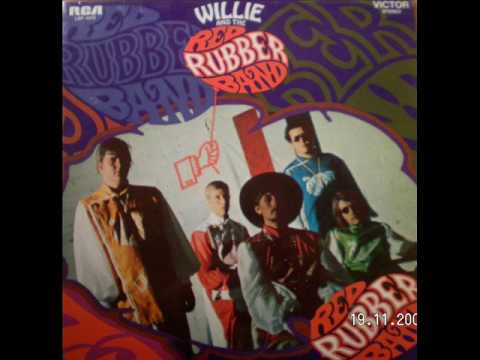
WILLIE AND THE RED RUBBER BAND – We’re Comin’ Up – (RCA) – 1969


This has been sitting around my place for many years but I haven't listened to it in quite a while. The jury was out then and it's still out now, though I must admit the band is off the wall with a melting pot of styles which is slightly endearing. Willie et al came out of west Texas and remind me of a cross between a jug band and the 13th Floor Elevators, or maybe Zappa if he went country, or, The Fugs if they went country. They have nothing in their oeuvre to compare to fellow Texan Roky and his 13th Floor Elevators but they are interesting as a time capsule of the era and they were certainly "playing" in the same "mind" park as Roky.
 
Trying to find anything on this band is near on impossible – but they must have had a career as this is their second album and they are on a major label (RCA). The music is a mix of rock, blues, country and soul with a dash of the avant-garde underground. Also, I suspect it was common for bands to do acid whilst drinking mescal, in late 60s Texas if these guys, Johnny Winter,  and the 13th Floor Elevators are anything to go by.
 
Best Tracks:
  • "Last Letter from Mary"
  • 'L.A T.H.E Man" – just plain weird but catchy.
  • "Try a New day On" – horn driven soul.
  • "We're Comin Up"
To say the album is diverse is an understatement.
 
Is it a keeper? … yes … there are enough good tracks and it keeps my collection eclectic.
 
Songs:
L.A T.H.E Man
attached
 
Chicky Chicky Boom Boom
 
I note that John Buck Wilkin plays quitar on some of the tracks. The guy is a unsung semi-legend – well, unsung,  till now (harr) … he has recorded under many guises and played with many bands – always involved and quite influential in the 60s and early 70s music industry without becoming well known to  the general public.
 
from allmusic: "John "Bucky" Wilkin, the son of Marijohn Wilkin (author of the country classic "Long Black Veil"), is most noted as a session guitarist on numerous country and rock records of the 1970s, particularly outlaw country releases by Waylon Jennings, Kris Kristofferson, Kinky Friedman, and Jessi Colter. He was also a songwriter and put out a little-known solo LP. Prior to his solo album, Wilkin had been in Ronny & the Daytonas, famous for their 1964 hot rod hit "Little GTO." Wilkin was also in the American Eagles (not to be confused with the much more famous Eagles), who also included keyboardist Chuck Leavell, and put out a single in 1969".
 
Guitarist and bass player Glen Ballard became a producer and songwriter. He wrote for Alanis Morissette and worked with Teddy Pendergrass, Michael Jackson, The Corrs, and Wilson Phillips (well … you got to eat I suppose)
 
Elvis link: the recording engineer, Al Pachucki worked with Elvis quite a bit (Elvis was on RCA also of course) … and Elvis even referred to him on record when he recorded "Merry Christmas Baby" during a jam session at RCA’s Nashville studios on May 15, 1971. During the recording, Elvis sang, “Gave me a diamond ring for Christmas, now I’m puttin’ it through Al’s mike”.
 
(originally posted: 08/07/2009)


Bart Harlan emailed me on December 19 2015 and said:

Thanks for posting one of the very few bits of information about this song (and band) available online. I found it from searching 'Charles Addington Red Rubber Band', as that was all the detail I could remember about one song I heard in second grade.
 
re "Trying to find anything on this band is near on impossible"
 
It might interest you to know that from about 1973-1975, Charles Addington was the band director at our school in a tiny town west of Lubbock TX. I remember standing by a record player with my dad as 'Charlie' played that "Chicky Chicky Boom Boom" single for us and told us a little about recording it, and (iirc) then some about how he had to give up the band to make a steady living and start a family. From that one hearing and maybe one or two more at school, that little '1-2-3n4' intro organ hook has stuck with me all these years 🙂
 
I don't remember his face terribly well, but he was probably either the guy in the lower-middle or lower-right of the album pictured on your page, or either the guy in orange or turquoise on this cover https://i.ytimg.com/vi/ukLLcO5-ev0/hqdefault.jpg

Thanks Bart for that. Hopefully this will be able to fill in some more gaps for people on a quest for background information … cheers.

Posted in Psychedelic, Roots Rock | Tagged | Leave a comment

KIM CARNES – Voyeur – (EMI) -1982

what Frank is listening to #58- KIM CARNES – Voyeur – (EMI) -1982


Every one knows the monster smash hit that was "Bette Davis Eyes" in 1981 (#1 for 9 weeks!). What I didn't know was that raspy or gravel (al la Rod Stewart) voiced Kim Carnes had already been around for some time … since the mid-60s, and even had a stint in folk combo "The New Christy Minstrels".  Through the 1970s she had been working as a singer-songwriter and had released a few albums (oddly though "Bette Davis Eyes" was not written by her – it was written by the glorious Jackie DeShannon, probably my favourite of the chick singer–songwriters – her original of Bette Davis Eyes is not "powerhouse" or over the top like the hit though), waiting for her big break.

 
"Mistaken Identity" (with the "Bette Davis Eyes" hit) was Carnes' 6th album and this LP is the follow up and whatever made "Mistaken Identity" a success (the album was #1 for 4 weeks) would, I assume, try to be replicated here. Wrong. "Mistaken Identity" was apparently a departure from Carnes' usual sound. Allmusic describes this LP as (and I quote them as their description is spot on): "sleek, stylish post-new wave pop/rock, heavy on drum machines, sequenced synths, and arena rock guitars, all married to anthemic pop tunes and ballads".
 
And that is the problem, especially so, when you don't have a real catchy song to build the album around. There is no "Bette Davies Eyes" to rely on. Moreso, I think "Mistaken Identity" might have been the one trick pony … record buyers (especially the types that would have bought the first album) are a finicky lot.
 
I will grant you that there is a certain appeal to Carnes' voice … it has that "I've just met you in a smoky pub, and we are both pissed, now lets go to your place and I will fuck you till you bleed" sound …. I suspect there wont be any polite chit chat after the sex from her just an exchange of money or a "Call me a cab". Where's the romance ? There are no nuances, its all over the top and bombastic. Still, back in the late 70s and early 80s, to my ears and and with vivid imagination, "the dominant older woman" was more than enough to sell a song regardless of the genre or quality … think Kate Bush "Babooshka", Cher "Dark Lady", Olivia Newton-John "Physical", Pat Benetar "Love is a Battlefield", Debbie Harry "Rapture", Chrissie Hynde "Brass in Pocket" , Rickie Lee Jones "Chuck Es in Love"…. aaah the fond memories , and the calluses. 
 
Best tracks:
  • Merc Man – the best of a bad batch.
The singles were:
  • "Voyeur" #29
  • "Does It Make You Remember" #36
The album went to #49.
 
Waddy Wachtel is on guitar – he is a legend :  http://en.wikipedia.org/wiki/Waddy_Wachtel
 
Sound:
Voyeur
Merc Man
attached c Man
attached 
  
For those who don't remember "Bette Davis Eyes":
 
DeShannon's orginal:
  
And, some crappy covers:
 
Probably the best of the covers:
 
Website:
 
(originally posted: 05/07/2009)
Posted in Pop Rock | Tagged | Leave a comment