INSTRUCTIONS – Instructions – (Radio records) – 1982


what Frank is listening to #227 – INSTRUCTIONS – Instructions – (Radio records) – 1982
I knew nothing about this band at all when I dropped it on the turntable. A quick google revealed nothing. Keywords like "Instructions" and "LP" are not going to narrow the field. A good example of what creates, in part, future obscurity. People naming their bands beware.
 
A further google with band member names revealed less than a handful of hits and no detailed information.
 
So, the back story will be limited here, and here it is:
  • The band is Canadian.
  • The album was originally recorded and released on a small Canadian label in 1980.
  • This release on Radio Records in the USA (distributed through Atlantic) is from 1982 and I'm not sure why it was re-released though apparently the single "Don't Say Love" received a little bit of airplay in Canada and the USA.
  • Owen Smith (vocals) and Martin Wall (keyboards) co-wrote all the music.
It's pretty clear that this is one of those pub rock,or mainstream rock bands who jumped onto the new wave music bandwagon.
 
That is not necessarily a bad thing but I always find it a little insincere. I suppose at the time you may not be conscious of your actions but there must be a difference in sound between a band who has been listening to music which influenced new wave and then play their version of that on the one hand and a band who are playing something totally different and then see what is riding high on the charts and decide to copy that sound.
 
It's all a big grey area though as not all from the former are good and not all the latter are bad as individual talent and smarts have a lot to do with how the band sounds. Also, bands or rather band members are influenced by all sorts of things (wasn't Johnny Rotten into Hawkwind and doesn't Rollins love James Brown?). Bands can "escape"their past, transcend their limitations, create an individual sound and maybe even extend the musical vocabulary of their chosen genre.
 
But…
 
more often than not, bands that jump on musical band wagons just sound insincere. I suppose any proficient musician can replicate the "sounds" of the bandwagon you have jumped on but you can't necessarily replicate the "passion" (fuck, that sounds dumb, but you know what I mean). At best, if you decide to jump on a bandwagon you should go back to the original sources of inspirations and get the musical language right.
 
I do not know anything of Instructions pedigree but they do seem to me to be a bandwagon jumper. Keyboardist Wall had put out an album in 1977 called "Metaphysical Facelift" which has been described as a progressive moog synth type of LP. He also wrote and played on an album released by a band called Vehicle with Owen Smith on vocals in the same year. The youtube clip is pure AM pop rock.(it went to #25 in Canada) 
 
There is a bandwagon and there has been a jump.
 
Again, I labour the point , that does not make it bad.
 
Listening to this I have to say that like a lot of bands who jump on a bandwagon the band hedge their bets. They aren't really committed, or are unsure about, the sound they have adopted.
 
And quite tellingly all the songs are to long, up around the 4 minute mark, too long for the new wave.
 
Instructions, at best come off like a less new wave XTC or a more new wave Cars, Australian Crawl (for those Australians out there) or Mi-Sex ( again for the Australians). There are also, certainly, elements of Devo, Gary Numan and Ultravox in the mix here as well as some synth pop.
 
The vocals are solid and occasionally jagged and fractured in the mainstream new wave way not unlike Australians Peter Garrett (Midnight Oil) or James Reyne (Australian Crawl – though he was ripping off Stephen Cummings from the mighty Sports)
 
Canadian guitarist Domenic Troiano (Guess Who)  also guests on a few tracks.

 
Tracks (best in italics)
  • Wicked Heart  – catchy.
  • So You Learn from Computers  – ahh nothing says new wave like a song about "computers" and people being reduced to numbers. Dumb ass.
  • Don't Say Love –  This was a single? A pop ballad with some new wave styling via the keyboards. The guitar belongs to a different era.
  • Suburban Dream  – An English-y type of song with some new wave and ska type sounds. Yeach.
  • Ha Ha Ha  – An English type of new wave quirky pop song. Not bad at all.
  • The Factory – slightly reminiscent of Gary Numan and maybe Devo.
  • The Extra  – lame
  • Naked Deer –  lame and with Ultravox overtones.
  • Cleek   – again Gary Numan-esque.
  • OK – I was desperate to write "no, its not". But it's not too bad. A quirky little new wave ballad.
And…
 
I fucking hate albums where the track listing on the back is in a different order to the tracks on the record.
 
There is are some half good songs here and the album is better than I thought it would be (the musicianship and vocals are of a high quality) but ultimately … it's disposable.
 
Tape a couple of tracks and sell.
 
I'm sure the band are fondly remembered in Canada.
 
Chart Action
 
US
Singles
––
Album
—
England
Singles
–
Album
—
 
  Sounds
 
Wicked Heart  
 
 
Ha Ha Ha  


a mix
 
Others
Vehicle
 
Review
—
Bio

—

 
Website
 
fark, at the point of giving up, I found websites for both of the chief protagonists.
Trivia
  • a review of co-writer Martin Wall's solo album, Metaphysical Facelift (1977, "Martin Wall is a professional piano player from Hamilton. Metaphysical Facelift is very much an album of two faces. One is some dreary vocal singer-songwriter stuff, where guests on guitars, bass and drums appear. And another are solo synthesizer / piano instrumentals from Wall, from short bridges to longer explorations like the excellent title track which is a lost classic of symphonic EM (with large piano presence)".http://www.pugachov.ru/eem/w.html
  • guest guitarist Domenic Troiano http://en.wikipedia.org/wiki/Domenic_Troiano
Other Comments
—
Posted in Punk and New Wave, Synth Pop | Tagged | 1 Comment

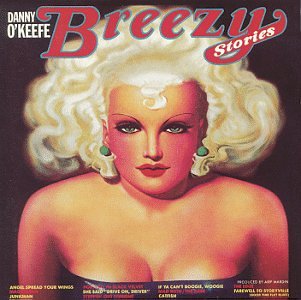
DANNY O’KEEFE – Breezy Stories – (Atlantic) – 1973

what Frank is listening to #226 – DANNY O'KEEFE – Breezy Stories – (Atlantic) – 1973
Back in WFILT #97 I said this about Dennis O'Keefe: I discovered him on one of my "who sang the original of the Elvis song" quests in the 80s. The song in question was the magnificent "Good Time Charlie's Got the Blues"….( which went to #9 for O'Keefe in 1972). Elvis did a "Elvis 70s countryish version" in 1974 … lots of emotion and very dramatic and with lyrics that meant something to him, about break-ups, and growing older. But, the lyrics were perhaps to close to the bone because it's what's left unsaid that counts … Elvis left out the verse with the telling lines in relation to Good Time Charlie …
 
"I got my pills to ease the pain
Can't find a thing to ease the rain"
 
In any event from there I moved on into O'Keefe territory. And I must say from what I have heard thus far it is more rewarding than not.
 
By way of musical biography O'Keefe has floated around the fringes of music.
 
Allmusic: "Most closely associated with his 1972 Top Ten entry "Good Time Charlie's Got the Blues," singer/songwriter Danny O'Keefe was born and raised in Spokane, WA, beginning his performing career on the Minnesota coffeehouse circuit of the mid-'60s. Through Buffalo Springfield manager Charles Greene, he landed a telephone audition with Atlantic Records honcho Ahmet Ertegun, signing with the label's Cotillion imprint to issue his self-titled 1971 debut LP. The follow-up, 1972's O'Keefe, yielded his lone hit, "Good Time Charlie," later covered by Elvis Presley and many others".
 
I went on to say …. He comes across as  a darker Jimmy Webb or Harry Nilsson or a less country Terry Allen. In fact, some of the tracks are positively MOR with confrontational lyrics if that makes any sense. What does that mean if you are not familiar with any of this? What it means is the songs are firmly in the narrative song cycle with "in your face" naked honesty. "Honesty" was central to the whole "singer songwriter" movement but like everything there were those in the genre who were just fooling themselves, or just not very bright. O'Keefe is not one of those. His songs are "from the heart" (as corny as that may sound) and over the course of the album he manages to create a mood of a time out of balance – for the narrator if not for the rest of us. And of course there is an echo of Dylan in there also.
 
Having said that there is also a hint of The Eagles on some tracks and some ham fisted instrumentation. The beauty is in the lyrics – there are many smart couplets.
 
All the above remains relevant to this album, his 4th (the third proper one – the first was a bunch of demos released by a record company), the only surprise is that O'Keefe moved away from his country-ish overtones as early as 1973. He wasn't really country ever but he was (and is) from the Pacific North West so a fair amount of rustic wisdom is expected. And that certainly does come through in his music but then there are also numbers which are just weird. Refreshing maybe, but weird definitely.
 
The album is schizophrenic in some ways. Mid-tempo radio friendly singer songwriter numbers surrounded by rockier, funkier but darker and quirkier songs. I'm not sure how this occurred but I suspect the commercial concerns of a major label (Atlantic) had some bearing on the production though I think they didn't really know what to do with O'Keefe:
 
  • head dude Arif Mardin produced this LP (as he did the Rascals, Carly Simon, Petula Clark, Bette Midler, Barbra Streisand,Bee Gees, Diana Ross, Queen, Patti Labelle, Aretha Franklin, Lulu, Anita Baker, Judy Collins, Phil Collins, Scritti Politti, Culture Club, Roberta Flack, Average White Band, Hall & Oates, Donny Hathaway, Norah Jones, The Manhattan Transfer and many others)
  • there are funky overtones as you would expect from a label well versed in black funk, R&B and soul. The musicians are skilled and slick New York session musos  (Donny Hathaway's electric piano is everywhere) and there are even some backing vocals from Elvis' Vegas backing vocals The Sweet Inspirations ( featuring Cissy, mother of Whitney, Houston) though oddly they are credited under their individual names.
All tracks except "Farewell to Storyville" (Spencer Williams) are written by O'Keefe.
 
Tracks (best in italics)
 
  • Angel, Spread Your Wings – a strong and at the same time standard singer songwriter song in Judy Collins territory with some AM friendly backing vocals. Judy Collins, errr not surprisingly, covered this.
  • Magdalena – quite a haunting song (about a Catholic(?) girl who can't decide between "yes" and "no") accentuated by O'Keefe's nasal delivery and some nice tempo changes..
  • Junk Man – a gentle street wise funk moves through this one with it's clear anti-drug message. Perhaps a minute too long with too much guitar "atmospherics" for my taste. As if Santana was on downers ….
            There's a man on the corner
            With some goods to sell
            Sellin' minutes in heaven
            For a lifetime in hell
  • Portrait in Black Velvet – Danny goes baroque singer songwriter? Weird.
  • She Said "Drive on, Driver" –  Freaking strange. A gritty urban tale, with a funky melody which you would expect to see on any number of black albums from the time but there is some crazy guitar (played by O'Keefe) reminiscent of (the great, thank you Carl) Marc Ribot playing on a Tom Waits album.  The narrative about a woman beaten up by an impotent policeman is "out there" also. Strange but strangely endearing and maybe even great.
            In his pants he had a deadly weapon
            But his silver bullet would not shoot
            He slugged me till he’d gotten what he wanted
            Ain’t it strange the way you find a substitute
 
            He said, That’s all there is, it’s over
            I said, You’re wrong, Man, it’s just about to start
            I keep a blade for sentimental reasons
            And in a rage I drove it through his heart
  • Steppin' Out Tonight – wtf? An old 40s type boogie woogie tune
  • If Ya Can't Boogie, Woogie (You Sure Can't Rock & Roll) – a old school Jerry lee Lewis type of rock n roll song. Dr John on piano and David Bromberg on guitar (both were on the last track also). Mmmmmm. No worse than anything on Lennon's "Rock n Roll" album.
  • Mad Ruth/The Babe – a clever song about Babe Ruth and a girl called Ruth.
  • Catfish – a country boogie much in the style of John Sebastian. Slight but pleasant.
  • The Edge – A good mood piece about a prostitute and a "romantic" doing business and finding they have stuff in common.
            You need wings to get to heaven
            Oh, to hell, you just need balls
            It's a very rough trip
            There ain't no place to fall
 
            It's just like freeway traffic
            From the womb to the tomb
            For this short time together
            We need a little room
  • Farewell to Storyville (Good Time Flat Blues) – an old song from the 20s (covered by Louis Armstrong, Kid Ory and Billie Holiday amongst others) in the Southern Dixie slow jazzy style. It's also very Hoagy Carmichael. Again, an "older" song with Dr John on piano and David Bromberg on guitar.
And…
 
The sound is well polished on this album and I do not think that is O'Keefe's forte. I can't help wondering what this would have sounded like stripped down or recorded with a band "down South".
 
Also, at times it sounds like O'Keefe is trying hard not to do the obvious. This does not give it a unified whole but it certainly makes it "individual" and that alone is to be applauded. This album is patchy but, ultimately, the quality of O'Keefe's song writing and some distinctly offbeat and radio hostile sounds make O'Keefe a considerable, though uncomercial, talent. I'm keeping it.
 
Chart Action
 
US
Singles
––
Album
#172
 
England
Singles
—
Album
—
 
Sounds
 
Angel, Spread Your Wings
Magdalena

She Said "Drive on, Driver"
attached
 
Others
covers
 
Review
 
 
Credits
 
Bio
 
 
Website
 
 
Trivia
  • With Bob Dylan he co-wrote the environmental movement anthem, "Well Well Well". Apparently, I have not verified this, Dylan mailed in an instrumental with "well, well" being the sum total of the lyrics and Danny finished it.
  • O'Keefe also recorded an album whilst he was in the band "Calliope" in 1969

Other Comments

what Frank is listening to #97 – DANNY O'KEEFE – American Roulette – (Warner Brothers) – 1977


Posted in Singer Songwriter | Tagged | Leave a comment

ARLO GUTHRIE – Last of the Brooklyn Cowboys – (Reprise) – 1973

what Frank is listening to #225 – ARLO GUTHRIE – Last of the Brooklyn Cowboys – (Reprise) – 1973
This is Arlo's 6th album …
 
Arlo was a strange cat – the son of the greatest of all folk singers, Woody Guthrie, and a Jewish mum (the second of Woody's three wives, and one he was always close to apparently) he was brought up on the East Coast on country and folk music of the "west" and mid west as practiced by his father and as interpretated and developed by Bob Dylan.
 
Maybe it was inevitable that he would go into music but it must be hard for a kid to live up to his father's legacy especially when those who set the benchmark in the musical style you love, Bob Dylan, also worshipped at the feet of your father.
 
Is musical talent transmitted through DNA?
 
I don't know but I will take a sociological approach and say no. Simply (very), sociology would suggest you are the result of your upbringing …. socialisation is everything. Surely, having Woody as a father, being exposed to his views and musical influences (even if he was away), knowing him as a person, hearing his music, hearing the music of those who were influenced by him, hanging out with his mates etc means some his musical makeup would become part of yours. Accordingly, it's not hard to understand that you may end up in the same musical field as your father.
 
Arlo did.
 
Interestingly, Arlo didn't really release anything until after Woody died in 1967.
 
It is however a testament to Arlo that he had enough talent (and smarts) to get himself out from under his father's shadow despite the fact he never really had any chart success (but then again neither did his father).
 
Arlo loves folk, western folk, country folk, traditional folk, country folk, Americana and political protest songs. His love of regional music and his taste is partly what makes his albums so endearing.
 
He does write his own songs but like Johnny Cash, amongst others, he is just as happy singing someone else's songs and his albums are usually quite heavy on the interpretation of other peoples songs, ummm so he does a lot of, errr "covers". This is his real strength.Guthrie doesn't have the best voice* but he is a good interpreter. Perhaps it's not as direct or threatening as his fathers (different eras) but it is just as evocative. Also, because he is smart, he has broad and liberal tastes so the songs he covers can be 100 year old traditionals or contemporary songs from the pen of a current singer songwriter. It is to Arlo's credit that his albums, which draw from many styles and eras are understandably quite broad but still maintain a mood or theme. I suspect that Arlo chooses his covers (and writes his own songs) according to how they act together to enhance the album's mood or theme.
 
Whether the album works depends on whether all the various ingredients he has thought to mesh together work well or not. But, even when the albums fail they are interesting.
 
On this LP he also has good musos including : Doug Dillard – banjo, Clarence White – guitar, Ry Cooder – guitar, Chuck Rainey – bass, Jesse Ed Davis – guitar, Gene Parsons – drums, Jim Keltner – drums, Grady Martin – guitar, Gib Guilbeau – fiddle, Thurl Ravenscroft – background vocals,Mike Utley – organ, Jim Gordon – piano, Leland Sklar – bass as well as Buck Owens' Buckaroos on some tracks
 
If you don't know who these guys are – google them – most are bonba fide legends in the same style of music.
 
This album is no different to the other Arlo LPs (that I have) in that he follows the same format – some originals, some well chosen traditional numbers, some well chosen covers (with usually a Woody Guthrie or a Bob Dylan thrown in) and a track or two right out of left field.
 
Tracks (best in italics)
  • Farrell O'Gara – (Traditional) – a Irish traditional instrumental – all fiddles and no Arlo! Still, a perfect and apt way to start a country themed album.
  • Gypsy Davy – (Woody Guthrie) – a beautiful song and a strong one about a woman running out on her family. What is so impressive about the writing is it's matter of factness, with no moralising. Arlo, not content on a straight cover gives this a Caribbean feel and it works ….
  • This Troubled Mind of Mine – (Ernest Tubb, Johnny Tyler) – a bouncy country song much in the style of a 40s honky tonk …which of course it was as it was done by its author Ernest Tubb.
  • Week on the Rag – (Arlo Guthrie) – another instrumental and this one is right out of the Scott Joplin songbook ….Arlo is on piano
  • Miss the Mississippi and You – (Bill Halley) – originally done by country singer Jimmie Rodgers in the 30s here it sounds like it could have been a song by Johnny Mercer, Hoagy Carmichael or 30s era Bing Crosby…strangely evocative.
            Roaming the wide world over
            Always along and blue, so blue
            Nothing seems to cheer me under heaven's dome
            Miss the Mississippi and you
 
            Memories are bringing happy days of yore
            Miss the Mississippi and you
            Mocking birds are singing 'round the cabin door
            Miss the Mississippi and you
 
            Roamin the wide world over
            Always alone and blue
            Longing form my homeland, muddy water shore
            Miss the Mississippi and you
  • Lovesick Blues – (Irving Mills, Cliff Friend) – the magnificent Hank Williams song. Really well done by Arlo …impressive.
  • Uncle Jeff – (Arlo Guthrie) – This could be John Denver with his grandmothers feather bed. This is a fun hoedown...with some witty lines and some familial in jokes.
  • Gates of Eden –(Bob Dylan) – a cover of Dylan's ambiguous song from his magnificent 1965 LP "Bringing It All Back Home" done in a Dylanesque way. What it's all about … I leave to you …http://en.wikipedia.org/wiki/Gates_of_Eden_(song)
  • Last Train – (Arlo Guthrie) –  a country gospel type number with a moral point. Ry Cooder on guitar.
            Maybe you ain't walked on any highway
            You've just been flyin' in the air
            But if you're on that last train to glory
            You'll know you've paid your fare
  • Cowboy Song – (Arlo Guthrie) – an excellent melancholy country song
  • Sailor's Bonnett – (Traditional) – another instrumental Celtic hoedown
  • Cooper's Lament – (Arlo Guthrie) –  a vaguely left themed song with a country soul vibe akin to Delaney & Bonnie.
  • Ramblin' 'Round – (Woody Guthrie) – Woody's powerful song told from the point of view of the homeless man. Perfect …and no doubt as relevant in 1973 as it was in the 30s.
And…
 
My LP is quite old and has the odd clicks and pops etc but even so I can tell this album has a lot going on in the mastered sound. I suspect the CD (or new vinyl) would be something quite superior.
 
A very good album and one I suspect will grow on me even more. I'm keeping it.
 
Chart Action
 
US
Singles
––
Album
#87
 
England
Singles
—
Album
—
 
Sounds
 
Gypsy Davy
recent live
Woody:
attached
 
This Troubled Mind On Mine  

Week On The Rag
recent live
Lovesick Blues
Uncle Jeff
 
Gates Of Eden
 
Last Train
live
Cowboy Sound
attached
 
Cooper's Lament

Ramblin' Round
live
Woody
Others


Review
 
Bio
 
 
Website
 
Trivia
  • Interestingly Arlo is also known for his leftist politics of the 1960s – 80s. He was consistently anti-war, anti-Nixon, pro drugs. He supported George McGovern's campaign for the Democratic presidential nomination, sand songs for Chilean activist (and legend) Victor Jara, and often performs with friend and radical Pete Seeger.. He is currently a registered Republican!Apparently, he told the New York Times Magazine that he is a Republican because, "We had enough good Democrats. We needed a few more good Republicans. We needed a loyal opposition."Despite this position in formal politics it is clear from his music and his stances that he is a libertarian. Libitertarians can cross both sides of politics and generally do not consider there to be a line with a left or a right but a cross with personal freedom and state interference. Despite this there is are left and right libertarian movements. Basically I like to think of it as anarchism for grown-ups. So if you are bored with formal politics and want and think all the major parties are a pack of cunts then I encourage you to read into this area …. http://en.wikipedia.org/wiki/Libertarianism . OK enough of this politics. I'm still not sure why mainstream republicans would allow a Libertarian into their party.
  • Also Arlo's mid 70s visual persona (cowboy clothes, moustache) doesn't seem all that different to Dylan's recent image persona ….then again Dylan at the time also had that look
* people seem to complain that his voice isn't that great – OK, it's not Roy Orbison …its not a "pop" voice, but it's not that bad and it is evocative. And that is more than enough.
 
Other Comments
—

Posted in Americana, Folk Rock | Tagged | Leave a comment

MARK LINDSAY – You’ve Got a Friend – (Columbia) – 1971

what Frank is listening to #224 – MARK LINDSAY – You've Got a Friend – (Columbia) – 1971
Mark Lindsay You've Got a Friend (Mlps) Album Cover
I approached this album with some trepidation.
 
Paul Revere and the Raiders had been going more MOR towards the end of their career and that move reflected largely Lindsay's taste and solo career. Don't get me wrong there is some good adult MOR from the early 70s …Elvis, Neil Diamond, Bill Medley and others. But they mixed it up a little.
 
Mark Lindsay, the good looking, good natured, punk like lead singer of Paul Revere and the Raiders saw the writing on the wall. The Raiders had been going since 1960, and 1971, would see the release of their last proper studio album.
 
MOR was popular at the time and perhaps this sound was an inevitable progression for Lindsay. Even the Raiders proper had their fair share of MOR moments. And after all they, and Lindsay, were a working band. So you had to keep up with what was going on.
 
So the MOR direction probably seemed like a good bet at the time.
 
Lindsay had released 2 solo albums in that vein in 1970 and this one in 1971 (see what Frank is listening to #71 – MARK LINDSAY – Silver Bird) would be his last album for 19 years (there was a single in 1977).
 
Such are the short term fortunes of the music business: despite a couple of top 40 solo hits, and with the Raiders, one #1 (oddly in their final year, 1971) and four top 10s and another six in the US top 20 his career was effectively over. He was 29.
 
Clearly, to become a successful dinosaur you have to come from England.
 
With hindsight we can ask whether Lindsay should have pursued another musical course?
 
Perhaps is the only answer.
 
But, what about this album?
 
Well the trepidation I refer to above is not helped by the fact that the album is covers heavy. His last two albums also were but this one seems to be a compilation of hits of the day. Even Elvis at his laziest dug a little deeper into his preferred musical songbook.
 
The album was produced by Lindsay and it is relatively low key and unfussy. There is a quiet country vibe running through the whole album and there is a certain amount of introspection in the readings of the songs.
 
The big problem though is the song selection.
 
Tracks (best in italics)
  • You're Got a Friend – King – the Carole King song from her "Tapestry" album. Sickly sweet when King did it, but she was a chick ….
  • Been Too Long on the Road – Gates- the David Gates and Bread song. An up-tempo number with nice tempo changes.
  • Help Me Make It Through the Night – Kristofferson – Kristofferson's song, recorded by everyone. A perfunctory reading.
  • Pretty, Pretty – Allen, Hackady – the Peter Allen song – he didn't release till 1974. Catchy but err sickly sweet.
  • Need a Little Time – Villareal, Watkins- an original? A big power ballad.
  • It's Too Late – King, Stern – another Carole King from "Tapestry" – Good when done by King.
  • Never Can Say Goodbye- Davis- The Jackson 5 song from 1971. A bit over the top -moving into Tom Jones territory.
  • If You Could Read My Mind – Lightfoot – Gordon Lightfoot's folk hit from 1970. A great song and a good reading.
  • The Old Man at the Fair – Webb – the Jimmy Webb song though Glen Yarbrough also did a version in 1971. A superior Webb composition with a slight carnival feel (look at the title of the song…derrr). Evocative Webb lyrics.
  • All I Really See Is You – Lindsay – a MOR ballad written by Lindsay and not bad at that …
And…
 
Very patchy but I'll keep it.
 
Chart Action
 
US
Singles
––
Album
#180
 
England
Singles
—
Album
––
 
Sounds
 
Been Too Long on the Road
 
If You Could Read My Mind
 
The Old Man at the Fair
attached

All I Really See Is You
Others
 
interview
 
Review
—
 
Bio
 
 
Website
 
 
Trivia
—
 
Other Comments
 
what Frank is listening to #71 – MARK LINDSAY – Silver Bird – (CBS) – 1970

Posted in Pop Rock | Tagged | Leave a comment

ROGER McGUINN – Roger McGuinn – (Columbia) – 1973

what Frank is listening to #223 – ROGER McGUINN – Roger McGuinn – (Columbia) – 1973

I'm sorry to say I have precious little solo McGuinn material in my collection, whereas I have all the Byrds and a fair smacking of all the other Byrds members solo LPs.
 
And I say that I'm sorry because if Roger McGuinn never did a thing after the first Byrds album the guy would still be a bona fide legend.
 
Allmusic in opening a bio on him say: As the frontman of the Byrds, Roger McGuinn and his trademark 12-string Rickenbacker guitar pioneered folk-rock and, by extension, country-rock, influencing everyone from contemporaries like the Beatles to acolytes like Tom Petty and R.E.M. in the process.
 
The links below will give you McGuinn's bio but he was born in 1942 in Chicago.
 
McGuinn in a way had more vision that his contemporaries and always seemed to be pushing the envelope. That's not to say everything is good because some of his solo stuff I have heard is patchy as is a lot of the later Byrds stuff. But these are aberrations, and ultimately, I'm not sure if you can achieve greatness without putting out crap, as long as the crap is a result of risk taking. To take chances and to fail is always preferable to smug safeness. No ?
 
The scope of McGuinn's vision must be, in part, as a result of his background in music. It is widely assumed that he was a folkie who went electric. And that is right, though only partially. He was a bit of a folk music prodigy by the late 50s, but he had been turned onto music by Elvis' "Heartbreak Hotel" (a song he would reprise in his later autobiographical stage shows) as well as the southern rockabilly of Johnny Cash, Carl Perkins, Gene Vincent, and The Everly Brothers. Clearly he loved rock 'n' roll and its mix of country and R&B as it was played by Elvis and his fellow southerners. His love of the "roots" of rock 'n' roll is something he also encouraged in others, like Gram Parsons, to pursue within the Byrds.
 
As a teen in the 50s McGuinn came under the influence of folkies like Bob Gibson, and ended up playing with folk groups The Limeliters and The Chad Mitchell Trio  whilst playing session muso to the likes of with Simon & Garfunkel and Judy Collins. But at the same time he was also in Bobby Darin's band playing Vegas, and he was not adverse to writing a few "surf" songs. Clearly, in a lot of ways, he was a musical sponge and also the right person at the right time with the right amount of talent.
 
This album is his first solo LP after The Byrds imploded. He produced this album, wrote most of the songs (with Jacques Levy), plays a lot of instruments (vocals, guitar, banjo, moog synthesizer, harmonica, arrangements) and otherwise directs traffic. Whether the album succeeds or fails is because of McGuinn. Wisely, he has surrounded himself with good musicians: Buddy Emmons – pedal steel guitar, Chris Hillman – bass, Bob Dylan – harmonica, Jerry Cole – guitar, Bruce Johnston (of the Beach Boys)- piano, voices, Jim Gordon – drums (of Derek and the Dominos), Hal Blaine – tambourine, Michael Clarke – drums, Chris Ethridge – bass, John Guerin – drums, Spooner Oldham – organ, piano, David Vaught – bass, Spanky McFarlane – vocals, Charles Lloyd – saxophone, Leland Sklar – bass, David Crosby – guitar, harmony vocals, Graham Nash – guitar, harmony vocals.
 
This is a who's who of music legends. Having said that the sound is not fractured like you would hear on a "special guests" album. McGuinn clearly is the man in the middle and the rest drop in to do their bits quietly and leave. Otherwise, sound wise, the album fits in with the Byrds oeuvre, not surprisingly, but by the same token it is also more individual. McGuinn is given the opportunity to do whatever he wanted without consult of the other Byrds, who were all talented in heir own right, and he does … and he does so without restraint as he tackles a number of styles and sounds.
 
Tracks (best in italics)
 
  • I'm So Restless – (McGuinn, Levy) – a catchy acoustic old sounding folk song which sounds like Dylan, with, err Dylan on harmonica. Perfect in it's economy.
  • My New Woman – (McGuinn, Levy) – a spacey jazz type number with most of the Byrds playing and not unlike later Byrds material. You have to love the free sax (did the Laughing Clowns have this record?). A excellent groove.
  • Lost My Drivin' Wheel (David Wiffen) – country rock
  • Draggin' – (McGuinn, Levy) – a Beach Boys type tune (with piano and backing vocal by later Beach Boy, Bruce Johnston). Also the crazy sax is back. Not great but not bad, and it sort of grows on you.
  • Time Cube (McGuinn, R. J. Hippard) – a banjo and "spacey" themes. As if late era Donovan was singing Pete Seeger.
  • Bag Full Of Money – (McGuinn, Levy) – also done by the Byrds. A excellent track.  Supposedly about hijacker DB Cooper but obviously other things can be read into it.
            Floatin' I'm floatin' on down through the sky
            Never had no ambition to learn how to fly
            I'll be glad when it's over and ready to land
            With this bag full of money I've got in my hand
 
            Oh I grew up believin' in Jesse and Frank
            Cause I never had nothin' or no one to thank
            And I came pretty close to unloadin' a bank
            But I was saved by my draft board who made me a yank
 
            Floatin' I'm floatin'…
            If you can't get a job and they think you're insane
            If the years of your youth have been washed down the drain
            And you wake up some mornin' with nothin' but pain
            It was then I decided to grab me a plane
 
  • Hanoi Hannah – (McGuinn, Levy) – a blues about Vietnam.
  • Stone (Spooner Oldham, Dan Penn) – a gospel type number with a choir even.
  • Heave Away (Trad., arranged by McGuinn) – a sea shanty(!) with Spanky McFarlane supplying backing vocals. Fun, and not dissimilar from some early Pogues work.
  • M' Linda – (McGuinn, Levy) – a calypso tune. There is not enough steel drums (or moog) on records. This one is out there, but I like it.
  • The Water Is Wide (Trad., arranged by McGuinn) – a beautiful country lament ala  Pete Seeger done in the Byrds style.
And…
 
This is certainly eclectic but a winner … I'm keeping it.
 
Chart Action
 
US
Singles

––

Album
#137
England
Singles
Album
––
Sounds
 
I'm So Restless
 
My New Woman
attached

Lost My Drivin' Wheel
 
Bag Full Of Money
attached
 
Stone
 
Heave Away
 
The Water Is Wide 
live
Others
 
Review
 
 
Bio
 
 
Website
 
 
Trivia
 
  • for the guitar nerds: wikipedia: During his time with The Byrds, McGuinn developed two innovative and very influential styles of electric guitar playing: "jingle-jangle" – generating ringing arpeggios based on banjo finger picking styles he learned while at the Old Town School; and secondly, a merging of saxophonist John Coltrane's free-jazz atonalities, which hinted at the droning of the sitar – a style of playing first heard on The Byrds' 1966 single "Eight Miles High".
Other Comments
—

Posted in Country Rock, Folk Rock | Tagged | Leave a comment

BOBBY VEE – Look at Me Girl – (Liberty) – 1966

what Frank is listening to #222 – BOBBY VEE – Look at Me Girl – (Liberty) –  1966
For biographical detail refer to my other Bobby Vee comment what Frank is listening to #182 – BOBBY VEE – Come Back When You grow Up – (Liberty) – 1967.
 
I quite like Bobby Vee – as a "teen idol" he put out a lot of great pop in the early to mid 60s before being overtaken by more "progressive" sounds. Like many of his ilk he found it difficult to compete and keep up with the new acts despite being relatively young (he was born in 1943). Many of these artists, Vee included, faced the late 60s with a series of introspective and uncommercial albums which have substantial joys and are waiting to be discovered.
 
Also, most of those artists had to hit "rock bottom" before turning to the introspective material. This album is from the "rock bottom" period. That's not to say it's bad just it lacks direction and has a slight desperation to it. It's clear that the record executives didn't know how to combat the new sounds. One method that they seemed to try with the former pop stars was to have them cover the new hits of the day, as Vee does here.
 
This method is fraught with problems. Namely the hits of the day are "hits" for a reason, so to be compared favourably to them is not an easy task. At best I thought the only market for this would be for existing Bobby Vee fans to hear him doing those hits in his own style. And by virtue of the fact he has to do hits of the day would suggest that his fan base is decreasing. A musical catch 22?
 
In any event Vee tackles a lot of material here which was not in his oeuvre before – folk rock, garage, light R&B. The beauty is he gives them his "treatment" – so everything comes out quite popp-y. Now normally I would have reservations about this but Vee is a master of pop so he makes the new pop versions more convincing than if someone else had done the same. It does not always pay off but when it does, it hits the right groove.
 
Also, interestingly, you get some idea of what Buddy Holly may have done if he had lived as Vee has a similar voice to Holly's (Vee first came to prominence by playing a gig that Buddy Holly was to have played on February 3, 1959, following Buddy's death. The record executives picked up on the fact that his voice was not dissimilar to Buddy's, and so he recorded his early pop rock hits in the Buddy style – later in 1962 he did an album with Buddy's Crickets and then in 1963 he put out an album of Buddy Holly covers).
 
Tracks (best in italics)
  • Look at Me Girl– Swamp Dogg, Williams  -originally by Texas band The Playboys Of Edinburg – a nice bit of garage which has been cleaned up into a pop song. Normally, I would be dismayed with the clean up but this is so pleasant on the ears ….. For info on the original: http://www.imshakin.com/2010/03/18/the-playboys-of-edinburg-look-at-me-girl-pharaoh-1966/
  • Sunny- Hebb- the big #2 hit for Bobby Hebb in 1966. Covered by everyone. A bit maudlin but a catchy song and the strength of the song is in the fact that here are more good versions than bad. And this is a good one, not great, but good.
  • Growing Pains –Fields, Schwartz- from the Broadway show (of the Hollywood film) "A Tree Grows in Brooklyn" and done memorably by Tony Bennett in the 50s. Hmmm, not sure about this one..it's catchy but it sure sounds like Broadway goes pop.
  • Like You've Never Known Before –  Velline – self penned -and a little derivative but …err catchy
  • Summer in the City – Boone, Sebastian, Sebastian  – The Lovin Spoonful #1 hit from 1966. Pleasant but it will not ever come close to the Lovin Spoonful's version.
  • Turn-Down Day – Blume, Keller-  The Cyrkle #16 hit from 1966.  A nice piece of folk pop.
  • Fly Away –  Kooper – the Al Kooper song as done by his band Blues Project in 1966. An odd one for Bobby, but at least he is trying less obvious covers.  
  • Sweet Pea – Roe-  Tommy Roe, hit #94 in 1966. A throw back to the early 60s with some typical Tommy Roe cute-sy lyrics. It's not to bad but doesn't really fit in with the "mature" image Bobby is trying to project.
  •  That's All in the Past –   Velline – another better than average original.
  • He's Not Your Friend  – Reynolds, Lee – a cover of Dee Jay & The Runaways garage rocker from 1966. Again it's cleaned up and given a "big" sound…still it's not to bad.
  • Back in Town –   Velline – not the best of the originals.
  • Lil' Red Riding Hood -Blackwell – Sam the Sham & the Pharaohs #2 from 1966. So so…. Vee never had a chance in doing this one.
And…
 
This is not the best Bobby Vee but it has some good covers and some catchy originals and is quite surprising. I'm keeping this.
 
Chart Action
 
US
Singles

1966  Look at Me Girl  The Billboard Hot 100 #52
Album
––

England
Singles
Album

Sounds
 
Look at Me Girl
and attached
Growing Pains
Like You've Never Known Before
 
Turn-Down Day
attached
 
Lil' Red Riding Hood 
 
Others
crappy quality but great 60s clips
 
 
Review
 
Bio
 
 
Website
 
 
Trivia
  • wikipedia: Early in Vee's career, a musician named Elston Gunnn briefly toured with the band. "Gunnn", whose birth name was Robert Allen Zimmerman, later went on to fame as Bob Dylan. In Dylan's autobiography, Chronicles, Volume One, he makes special mention of Bobby Vee and shares significant and complimentary details about their friendship, both professional and personal.
Other Comments
 
what Frank is listening to #182 – BOBBY VEE – Come Back When You grow Up – (Liberty) – 1967
 
(Originally Posted: 14/08/2011)
Posted in Pop Rock | Tagged | Leave a comment

PAUL REVERE & THE RAIDERS – Just Like Us! – (Columbia) -1966

what Frank is listening to #221 – PAUL REVERE & THE RAIDERS – Just Like Us! – (Columbia) -1966
I'm going to rehash a large chunk of an earlier "comment":
 
Back in "what Frank is listening to #119" I said this in relation to The Raiders album "Spirit of '67":
 
It's only in the last few years I have been really getting into Paul Revere and the Raiders. Back in the 80s I got their two greatest hits compilations ( yes, two – they had a truck load of hits) after foolishly selling some of their earlier albums off at a record fair. Cest la vie .
 
What I like most about PRR is the fact that though they have been influenced and inspired – sometimes clearly with an eye on sales – by other bands they managed to incorporate other styles and trends into their own sound without affecting that sound greatly. Though not always great their work sounds individual and when they get it right they are magnificent.
 
From allmusic:
 
"One of the most popular and entertaining groups of the 1960s, Paul Revere & the Raiders enjoyed seven years of serious chart action, and during their three biggest years (1966-1969), sold records in numbers second only to the Beatles and the Rolling Stones. And their hits "Steppin' Out," "Just Like Me," "Hungry," "Him or Me-What's It Gonna Be," and "Kicks," in particular, are now seen by compilers as bold, unpretentious pieces of '60s rock & roll with a defiant, punk edge. Paul Revere was born on January 7, 1938 in Harvard, NE. He learned to play the piano as a boy, and developed a keen appreciation for the work of Spike Jones & His City Slickers. He joined his first real band while in his teens, and was later joined by 16-year-old Mark Lindsay (b. March 9, 1942), a singer/saxman who ended up replacing the group's vocalist. Called the Downbeats, they were popular at local dances, and cut a demo for Gardena Records in Los Angeles, where the company's owner was interested in issuing a record, but only if they changed their name. Revere's given name was such a natural as a gimmick that they became Paul Revere & the Raiders".
 
I went on to say:
 
The key to their success was their commitment to upbeat rock and roll whilst acknowledging change, and they weren't precious about it as sometimes they were "influenced" by bands that post dated them. Though, as I have said, they kept their original sound, unlike a slavish imitator or someone just jumping the bandwagon. Also they did this even through line-up changes. Despite line-up changes Paul Revere ( the keyboardist) and Mark Lindsay ( the vocalist) were the nucleus of the group and Revere knew where to take the group and Lindsay could sing anything.
 
This album comes from their big hit making period and is very 1966 – lots of twangy guitars punctuated with a bit of 60s punk, more than a nod or two to the Beatles, and some introspection creeping in. This album  is their garage version of "Revolver" though with some thought to future musical innovations. "The Beach Boys" and "The Beatles" may have been  the high water mark on innovation but PPR were only just behind and they were more forward thinking than say The Rolling Stones ( if not as consistent). Produced by the legendary Terry Melcher ( Doris Day's son, band member  in the Rip Chords, and friend and /or producer to The Byrds, The Beach Boys etc), who knows ( and got) what he wants which is rock, hard edged ballads, and frantic garagy punk but with a clean sound. Melcher also produced a number of other PPR albums.
 
All this remains the case for this album which immediately preceded "Spirit of 67". 
 
This album has most of the band contributing songs as well a s a couple of classic songs not written by them but first recorded by them, like "Kicks" and "Stepping Stone". On top of that they can all play; Revere's organ, Smitty's drums, Lindsay's vocals, Volk's bass and Levin's guitar are faultless ….
 
allmusic: As a member of Paul Revere & the Raiders from 1965 through 1967 — the group's prime hitmaking years and their time of biggest exposure on television — Phil "Fang" Volk was probably the second-best-known bassist in rock, at least in America, after the Beatles' Paul McCartney…..

With the rise of the band's fortunes over the next five years, Levin became one of the most well-known guitarists in rock & roll — the group's appearances on Where the Action Is, an after-school music program hosted and produced by Dick Clark, and various other television venues ensured that the members were all well-known to their fans, so that Levin may well have been the second best-known rock guitarist in America after the Beatles' George Harrison, and there's also no telling how many Epiphone guitars may have been sold because of his use of them on camera during this period.
 
The sound is crisp and clear as you would expect from producer Terry Melcher who had a gift for bringing out the melody and "pop" in a song but retaining the grit.
 
This album (their 4th) is really the Raiders transition album between theyr earlier albums and their run of 3 or 4 great albums. And by "transition" I do not mean it's patchy. It's not. It is solidly great music which captures the sound of their best early work and looks forward to their best work to come.
 
Some of those early sounds show their roots in frantic frat rock that sounds dated by 1966 standards (or, may sound dated?) but the reality is that this was probably recorded in1965 sometime as it's release date is January 1966 so it's not dated by 1965 standards, if you know what I mean. Anyway, the album does not miss a beat.
 
At #5 in the charts this was their highest album placing and it was also the album that made them into pop stars with the young-uns.
 
Interestingly it is also probably the last album where the individual band members share the limelight. After this, lead vocalist Mark Lindsay would spend most of the time out in front, partially due, I suspect, to his boyish good looks but also to cement his look and the band in the mind of the record buying teens.
 
I suspect their popularity and costumes may put them on the outer with garage aficionados but their music is more solid than just about anyone else in the genre.
 
OK, in this album there is a nod to some contemporary bands and sounds (Beatles, Byrds, soul) but the Raiders are far from a covers band even when they are doing covers. Every song has been submerged into the Raiders individual sound, British Invasion or not. It's as if Paul Revere and the Raiders, just like the original Paul Revere, rode through the night warning of the British Invasion. The difference here is Paul Revere and the Raiders turn around and ambush the British Invaders with some hard edged music before heading off on their merry way.
 
The "Where the Action is" on the front sleeve refers to the US TV pop show which really contributed to their stardom, and in the mid 60s they were probably Americas most consistent hit makers. It's a pity the Rolling Stone magazine intelligentsia generation in typical myopic Anglophilia dismissed Paul Revere while revering (sic) The Rolling Stones and The Who because at their best the Raiders sound like a garage band doing Beach Boys harmonies and every bit as good as those English invaders.
 
Tracks (best in italics)
  • Steppin' Out -Lindsay, Revere  – magnificent. How can an album that starts with this pulsating piece of nastiness be bad. Great vox ….
  • Doggone – Robinson, Moore, Tarplin – a garage tune with soul overtones or in other words "blue eyed soul" a la Mitch Ryder, and it smokes.
  • Out of Sight – Wright  – the James Brown tune from 1964. Does he start it off with a German  count in? Another smoker.
  • Baby Please Don't Go – Williams  – the old blues song made famous, again, by Them with Van Morrison. This version is every bit as good with a vocal by bass player Phil Volk
  • I Know  – George – a soul song by Barbara George from 1962.
  • Night Train – Forrest, Simpkins, Washington – Lindsay on sax ….the old Jimmy Forrest standard that James Brown did in the early 60s ….a nice way to finish side 1 with a reference to the bands roots.
  • Just Like Me– -Dey, Hart – a 60s garage classic. Originally an obscure song by Washington band the Wilde Knights. Apparently, here, this is one of the first rock records to feature a distinctive, double-tracked guitar solo by guitarist Drake Levin. Sung by Lindsay. This has to be one of the greatest songs of the 60s.
  • Catch the Wind– Donovan  – the Donovan classic but as if it was done by the Byrds with guitarist Drake Levin providing vocals.
  • (I Can't Get No) Satisfaction – Jagger, Richards – a good version and edgy but strangely subdued compared to the Stones classic.
  • I'm Crying – Burdon, Price – The Animals hit from 1964. Volk on lead again …and he nails it.
  • New Orleans – Guida, Royster  – the Gary US Bonds hit from 1960
  • Action- Boyce, Venet –  the theme song to the TV show "Where the Action is" …written by Tommy Boyce and Steve Venet … pure pop ..as you would expect from Boyce.
And…
 
Sure there are a lot of covers, all done well, but the two stand out tracks are worth their weight in gold ….. I'm keeping this.
 
Chart Action
 
US
Singles

1965  Steppin' Out  The Billboard Hot 100 #46
1966  Just Like Me  The Billboard Hot 100 #11

Album
#5

 
England
Singles
Album

Sounds
 
I apologise in advance for any sounds attached ….my record has quite a few surface scratches.

Steppin' Out
great clip
Out of Sight
attached
Baby Please Don't Go
Night Train
Just Like Me
and attached
Catch the Wind
(I Can't Get No) Satisfaction
I'm Crying
New Orleans
Others
 
Review
 
 
Bio


Website
 
 
Trivia
  • The Raiders were also the most televised band in rock history appearing 520 times on Dick Clark's production "Where The Action Is"…and a long list of guest spots from Shindig to the Tonight Show. The group later hosted "The Happening" which was a let down compared to "Where The Action Is". http://www.stumptownblogger.com/2009/10/index.html
Other Comments
 
what Frank is listening to #183
what is Frank Listening to #119
what is Frank Listening to #71
 
(Originally posted: 07/08/2011)
Posted in Garage, Surf and Frat | Tagged | Leave a comment

ENGLAND DAN & JOHN FORD COLEY – Dowdy Ferry Road – (Big Tree) – 1977

what Frank is listening to #220 – ENGLAND DAN & JOHN FORD COLEY – Dowdy Ferry Road – (Big Tree) – 1977
England Dan & John Ford Coley: Dowdy Ferry Road
I knew next to nothing about these guys despite the fact I occasionally see their records in op shops.
 
History, from allmusic: Although considered a mid-'70s phenomenon, and often misidentified in peoples' memories as a one-hit act, they actually charted six Top 40 pop singles, four of them Top Ten, in just four years. Their history actually goes back a decade prior to their first and biggest hit, "I'd Really Love to See You Tonight." The duo first met in high school in Dallas, TX, during the early '60s.
 
Dan Seals, as he was known formally and as he later re-established himself as a country artist in the 1980s, came from what, by anyone's definition, could be considered a musical family. Born in McCamey, TX, in 1948, he was the son of E.W. "Waylon" Seals, a pipe fitter and repairman for Shell Oil who also played guitar and bass, and was an alumnus of bands led by Ernest Tubb and Bob Wills. Dan learned to play upright bass at age four and soon after, he was playing in the family band founded by his father. His older brother, Jim Seals, enjoyed a considerable career of his own as a member of the Champs from 1958 through the mid-'60s ( and also as one half of Seals & Croft). His other brother is successful country musician Eddie Seals (of Eddie & Joe), while his cousins included composers Chuck Seals (author of "Crazy Arms") and Troy Seals (who later married rock & roll singer Jo Ann Campbell), Brady Seals (of Little Texas), and country singer Johnny Duncan.
 
John Colley was a classically trained pianist and attended the same school. The two began working together as members of a series of local cover bands, including Playboys Five and Theze Few. They took an early run at recording success in association with Shane Keister in a series of demos done in Nashville as the Shimmerers, but the death of their producer before he could secure a recording deal ended their prospects.
 
This is 70s soft rock.
 
Think The Doobie Brothers, Bread, The Carpenters, Jackson Browne, America, Chicago, Steely Dan, James Taylor.
 
Look, every genre has its highs, and soft rock is no exception but there is so much dross in there that it is hard to overcome. Soft Rock emerged in the '70s, as a reaction to the heavy, and largely, raw or experimental, sounds of the 1960s. The instruments were turned down and the singing was quiet and soothing without any emotion. There were no jagged edges, everything was buffed and polished. The songs were all melodies, sometimes with a point, but the production was awfully slick. It provided a safe alternative to the sweaty sex of disco, the hopped up speed of rock 'n' roll and power pop and the violence of punk. It was, largely, music for people not really into music. All this would be forgivable but for the fact that it evolved into the synthesized and programmed sounds of adult contemporary music in the 1980s….Phil Collins, Bryan Adams, Sade, Sting, Lionel Ritchie, Michael Bolton, Joe Cocker.
 
This cannot be forgiven.
 
Putting aside questions of forgiveness, there are some good tracks in the genre and a lot of good acts have flirted with soft rock.
 
But, ultimately, this makes James Taylor sound like punk.
 
I note that the great Bergen White arranged the strings and did the woodwinds on a couple of songs ("Love is the One" and "Holocaust")
 
Tracks (best in italics)
  • Dowdy Ferry Road – Seals – soft rock, 70s style …to my ears this is 100% rubbish.
  • It's Sad to Belong – Goodrum – a #1 on the "adult contemporary" charts ….another word for the "soft rock charts" or "play it safe, adult loser charts". It's good for what it is but …. it is schmaltz. There is an interesting lyric though, about an existential unrequited love. If you are keen on the songs history:  http://en.wikipedia.org/wiki/It%27s_Sad_to_Belong
  • Soldier in the Rain – Coley, Dalton – a little Art Garfunkel in here but not a bad example of the serious, wounded adult song.
  • Love Is the One Thing We Hide – Seals –  A not so good example of the wounded adult song … the minor key is nice though.
  • Gone Too Far – Coley – catchy, probably not memorable, but catchy.
  • Where Do I Go from Here – McGee – fuck, good question .. down hill I expect.
  • Falling Stars – Coley – I need a drink.
  • You Know We Belong Together – Coley, Seals – a big drink, in a big glass.
  • Don't Feel That Way No More – Seals –  no more, please.
  • Holocaust – Seals – the last song ends on a high … relatively speaking.
And…
 
Crap, slick, but crap. Tape a track or two and sell.
 
Chart Action
 
US
Singles

1977  Gone Too Far  The Billboard Hot 100 #23
1977  It's Sad to Belong  Adult Contemporary #1
1977  It's Sad to Belong  The Billboard Hot 100 #21

Album
1977 #80

England
Singles
Album
––
Sounds
 
It's Sad to Belong
and attached
Soldier in the Rain
 
Gone Too Far
Where Do I Go from Here
Holocaust
attached
 
Others
 
Review
 
 
Bio


Website
 
 
Trivia
  • allmusic: Originally known as Colley & Wayland (Seals' middle name), the name didn't quite work and a change was needed as proposed by Jim Seals. "England Dan" was a reference to the fact that Dan Seals, when the Beatles first hit in America in 1964, had fixated on the Liverpool quartet and briefly affected an English accent; "Ford" was added to John Colley's name, and the spelling of his last name shortened to "Coley" to assure its proper pronunciation.
Other Comments
—
 
(Originally posted: 31/07/2011)

Posted in Soft Rock | Tagged | Leave a comment

MARTIN DENNY – Exotica – (Capitol) – 1957

what Frank is listening to #219 – MARTIN DENNY – Exotica – (Capitol) – 1957
 
Is there anything more relaxing than an album of lounge exotica?
 
I have commented on an earlier Denny LP back in what Frank is listening to #21 – MARTIN DENNY – The Enchanted Sea – (Liberty) – 1960
 
what I said was: To some this is "exotica", to others it is "lounge music", "popular", "muzak", "mood music", "background music", "easy listening", "instrumentals". These are all terms which can be applied, though those terms also define specific and distinct styles under the general banner of "lounge music". The term "Exotica" is best applied to Denny as most of his career he spent re-interpreting native ( Polynesian, African, Hawaiian, Caribbean etc) sounds ….. it's not folk music as it is distinctly western with a hint of jazz but what Denny did was take the "mood" of those "exotic" sounds and fuse them in with his western upbringing. To enhance the effect (or mood)  he would use "strange" instruments or sound effects.
 
There is great background to Denny on allmusic: Martin Denny was born April 10, 1911 in New York City. A child prodigy, at age ten he studied piano under Lester Spitz and Isadore Gorn. For four years he toured South America with the Don Dean Orchestra, followed by a 43-month stint in the U.S. Air Force during World War II. Following his December 1945 discharge, Denny settled in Los Angeles, studying piano, composition, and orchestration at the Los Angeles Conservatory of Music. In early 1954 he relocated to Hawaii, contracting to appear at the Honolulu club Don the Beachcomber's. The following year Denny formed his own group, originally consisting of vibist Arthur Lyman, bassist John Kramer, and percussionist Augie Colón. In 1956, while appearing at steel and shipping magnate Henry Kaiser's Shell Bar — a club inside the open-air Oahu resort Hawaiian Village, complete with a small pond adjacent to the stage — the combo realized that the croaking of nearby bullfrogs blended perfectly with their tropical musical approach. On a lark, Colón also began imitating bird calls on-stage, much to the delight of the audience. Denny soon began incorporating South Pacific and Far East instruments into his arrangements as well, and by the time he recorded his Liberty Records debut, 1957's Exotica, his singular sound was firmly in place.
 
The Holy Trinity of exotica are Les Baxter, Martin Denny and Arthur Lyman …. creator, father, prince. Each of them, at their peak, are well worth listening to.
 
This is Denny's first LP sort of… actually it's a re-recording of his first LP…
   
allmusic:
Oddly enough, the record reflects Liberty Records' refusal to release its monaural recordings in electronically simulated stereo. The original, monaural version of the LP was recorded before stereo records were produced. That version features Arthur Lyman (still fresh after drunkenly discovering the allure of birdcalls) and is considered brighter, wilder, and more interesting than the stereo re-recording. The stereo version features Lyman's replacement on vibraphone, Julius Wechter (later founder of the astoundingly boring Baja Marimba Band).
 
I won't compare and contrast the mono and stereo LPs, suffice it to say they are different but there are strengths to each.
 
It should be mentioned that a number of the tracks on this LP have been covered from Les Baxters landmark exotica album from 1951, "Ritual of the Savage" …. tracks: Busy Port, Jungle Flower, Stone God,  Quiet Village and  Love Dance. Baxter was a genius but his was a orchestra with sound effects. It's up to personal taste but hearing these tracks in a small combo is pretty good.
 
That's enough discussion. It's now time to kick back, relax and enjoy.
 
Someone pour me a West Indian Ginger Swizzle*
 
Tracks (best in italics)
  • Quiet Village -Baxter, Leven – one of the cornerstones of all popular music, from the first bird call to the last chattering monkey. Magnificent.
  • Return to Paradise – Tiomkin, Washington – theme song to the 1953 Gary Cooper film based on James Michener's stories of the South Seas. I think Nat King Cole did the vocal on the original … this is vocal–less but manages to capture the allure of primitive paradise.
  • Hong Kong Blues – Carmichael – Hoagy Carmichael's song from the film "To Have and Have Not" (1944). Again vocal-less Denny has upted the exotica quotient and maintained Carmichael's quirky melody.
  • Busy Port -Baxter – busy sound for a busy port ….
  • Lotus Land -Scott- sounds like a theme to a TV detective show. And there is nothing wrong with that.
  • Similau -Clar, Coleman – the old standard. Peggy Lee did it in 1949. Slightly spooky exotica with a big sound. The birds of paradise are working overtime.
  • Stone God– Baxter – frantic backbeat over some regal sounding vibes.
  • Jungle Flower- Baxter – gentle, delicate and colourful, just like a, err jungle flower?
  • China Nights– Yoru- this has it's origins in a Japanese film from 1940 about the benevolent Japanese in China. wtf. Exotic with a capital "E" and nice westernisation of some traditional Japanese musical motifs.
  • Ah Me Furi – Baumgart – a basic bongo beat with vibes and piano providing the lushness.
  • Waipio-  a piano number with gentle bass and vibes. This is the least exotic number on the album and is more like a lullaby.
  • Love Dance – Baxter- the whole jungle is out for the finale. "Love Dance" ? I'm not sure where the "love" is. Must be one helluva dance but a great finish to the album.
And…
 
Glorious stereo ….glorious extotica. I'm keeping this.
 
Another West Indian Ginger Swizzle please.
 
Chart Action
 
US
Singles

1959  Quiet Village  The Billboard Hot 100 #4
1959  Quiet Village  R&B Singles #11 
(the single was also added to a original Denny album of the same name released in 1959 which went to #8 in1960)
 
Album
#1 (1959)
 
England
Singles
Album
__

Sounds
 
Quiet Village
live
and attached
Return to Paradise
original
 
Hong Kong Blues
original

Busy Port

Lotus Land

Similau

Stone God

Jungle Flower

China Nights
original
 
Ah Me Furi
Waipio
 
Others
 
Review
 
Bio


Website
 
Trivia
 
*WEST INDIAN GINGER SWIZZLE: Pour an equal measure of Stone's Ginger Wine and white rum, served over crushed ice with a few dashes of angostura bitters or lemon juice. (Shake well and serve)
 
Other Comments
 
what Frank is listening to #21 – MARTIN DENNY – The Enchanted Sea – (Liberty) – 1960
 
(Originally posted: 24/07/2011)
Posted in Lounge & Exotica | Tagged | Leave a comment

PHIL EVERLY – Star Spangled Springer – (RCA) – 1973

what Frank is listening to #218 – PHIL EVERLY – Star Spangled Springer – (RCA) – 1973
Read the other posts for details on the Everly Brothers background.
 
It is safe to say the Everly Brothers were getting on teach others nerves and eventually split in 1973. (They reunited and recorded again in 1983 before embarking on world tours. I saw them in 1989)
 
Phil (the younger of the two bothers) was the first to come out with an album post split, this one. Don had put out a solo album in1970 when they were still together.
 
I have waxed lyrical in the past about 50s rockers and that time in history, say 1967-73,  when a lot of them were updating their sounds, experimenting or just playing catch up with the contemporary music.
 
The Every Brothers were not immune from this. The difference was the Everly's, despite trying a few things in the 60s, really didn't have far to go because their original sound was fairly contemporary and hugely influential on pop and on the emerging country rock scene. Similarities, circa 1970, can be seen in Simon and Garfunkel, Crosby Stills and Nash, Paul McCartney, the Bee Gees, Poco and many others.
 
When the brothers did split, both Phil and Don really created solo music similar to each other and music which wasn't largely different to their records together. This is an incredible "derrr" factor given that the Everly Brothers were , well, err brothers.
 
What we have here is gentle country rock which is quite slick but has the right grooves though a few more harmonies would have helped …which begs the question how this would have sounded as a Everly Brothers album?
 
The album is produced by Duane Eddy who also plays some guitar as does the legendary James Burton amongst others. There is a whole host of studio musicians including Bobby Emmons on steel guitar. Interestingly some guitar, keyboards as well as all the arrangements are supplied by a little known Warren Zevon who was in the Everlys backing band at the time.
 
Phil wrote most of the songs solo or in conjunction with friend, Englishman Terry Slater (the Everly Brothers regular bass player, though he doesn't play on this LP)
 
Tracks (best in italics)
  • The Air That I Breathe – Hammond, Hazlewood – the magnificent song that everyone associates with the Hollies would have been perfect for the Everly Brothers given the Hollies owe a great debt to the Everly Brothers. The song was written by Mike Hazlewood and Albert Hammond, who recorded it in 1971. Phil covered that version and it was Phil's record that the Hollies heard, covered and had a monster hit with. The Hollies version is perfect pop whereas Phil's version is precise,controlled and sombre though not ethereal. Having said that it's still a great version.
  • Sweet Grass Country – P Everly , T. Slater – nice country pop
  • God Bless Older Ladies – P Everly – T. Slater – I've never understood why songs that reference rock and roll are usually non–rock songs – this one even has smoky jazzy horns …..duff
  • It Pleases Me To Please You – P Everly , T. Slater – with vocals from Phil's wife Patricia. To my ears this is very Paul Simon, who was riding high in the charts at the time. And quite catchy at that. 
  • Lady Anne – P Everly – T. Slater -with vocals from Phil's wife Patricia. A nice love ballad.
  • Red, White And Blue – P Everly , T. Slater – a patriotic song about the US dealing with difficult times. Not a hint of irony here.
  • Our Song – P Everly , T. Slater – love ballad – so so
  • Poisonberry Pie– P Everly – rocky with a dumb lyric but not to bad …..catchy even
  • La Divorce– P Everly – another very Paul Simon sounding track, if Simon went country – and like Simon it's very catchy …. then again Simon & Garfunkel owe a lot to the Everly Brothers anyway.
  • Snowflake Bombardier  – P Everly , T. Slater – a great title. It's catchy and the lyrics are quite evocative (though I'm not sure what it's all bout despite the fact he wants to make it "perfectly clear").
            I was born in a city
            Right in the middle of town
            The only time concrete is pretty
            Is when frozen rain falls down
 
            I wanna be a
            Snowflake bombardier
            Snowflake bombardier
            Let me make it perfectly clear
            Snowflake bombardier
 
And…
 
Well worth it …. I'm keeping it.
 
Chart Action
 
US
Singles

Album

England
Singles
Album
 
nothing no where
 
Sounds
 
The Air That I Breathe

Sweet Grass Country

God Bless Older Ladies

It Pleases Me To Please You

Lady Anne
 
Poisonberry Pie

La Divorce
attached

Snowflake Bombardier
and attched
 
Others
listen to some of the above and tell me The Beatles didn't listen to the Everly Brothers
 
Review
—
 
Bio
 
 
Website
 
 
Trivia
  • http://www.soundonsound.com/sos/oct05/articles/classictracks.htm Phil's first solo album, 'Star Spangled Springer', was released in late 1973, and featured assistance from Duane Eddy (who produced it), James Burton and the then little known Warren Zevon. It included the original version of 'The Air That I Breathe', later a huge hit for The Hollies, but few took any notice. All the other tracks on the album, including the critically acclaimed 'Snowflake Bombardier' were written by Phil, either solo or with his longtime friend Terry Slater, an Englishman – the two had met back in 1963 when The Everly Brothers headlined a UK tour which also included Bo Diddley, Little Richard and (at the bottom of the bill) The Rolling Stones. The band which backed several of the acts on the tour was The Flintstones, a group cast in the mould of the better known Sounds Incorporated. Slater was guitarist with The Flintstones. The result was a long friendship between Phil and Slater – the latter moved to the US in the mid-1960s, and became bass player in the combo behind Don and Phil. This trio's other members were Sonny Curtis (an early associate of Buddy Holly and a hugely influential songwriter who wrote both 'Walk Right Back', an Everly Brothers classic from the early Sixties, and 'I Fought The Law', a major hit by The Clash!) and Crickets drummer Jerry Allison… Slater later returned to England, working in the record industry and also remaining in touch with Phil.….In 1974, Slater convinced Pye Records in England to sign Phil as a solo artist, and two albums resulted: 'There's Nothing Too Good For My Baby' (US title 'Phil's Diner') was released at the end of that year, and 'Mystic Line' 
  •  http://discog.fleetwoodmac.net/discog.php?pid=498 Musicians on STAR SPANGLED SPRINGER include: Guitars: Richard Bennett, James E. Burton, Duane Eddy, Phil Everly, Donnie Lanier, Neil LeVang,Sammy McCue, Dean Parks, Warren Zevon; Steel Guitar: Buddy Emmons, Jay Dee Maness, Sammy McCue; Bass: Reinie Press, Lyle Ritz;Drums: John P. Guerin, Earl Palmer; Keyboard: Sammy McCue, Warren Zevon; Percussion: Victor Feldman; Sax/Flute/Horn: James R. Horn.Arrangements: Warren Zevon. Producer: Duane Eddy.
Other Comments
 
what Frank is listening to #65 – THE EVERLY BROTHERS – Rock 'n Soul – (Warner Brothers) – 1965
what Frank is listening to #83 – THE EVERLY BROTHERS – Beat & Soul – (Warner Brothers) – 1965
what Frank is listening to #185 – THE EVERLY BROTHERS – Sing – (Warner Brothers) – 1967
 
(originally posted: 17/07/2011)
Posted in Country Rock, Rockabilly and Rock n Roll | Tagged | Leave a comment